We have a brand new updated website! Click here to check it out!

Many Kansas inmates will wait for Hep C treatment despite recent legal settlement

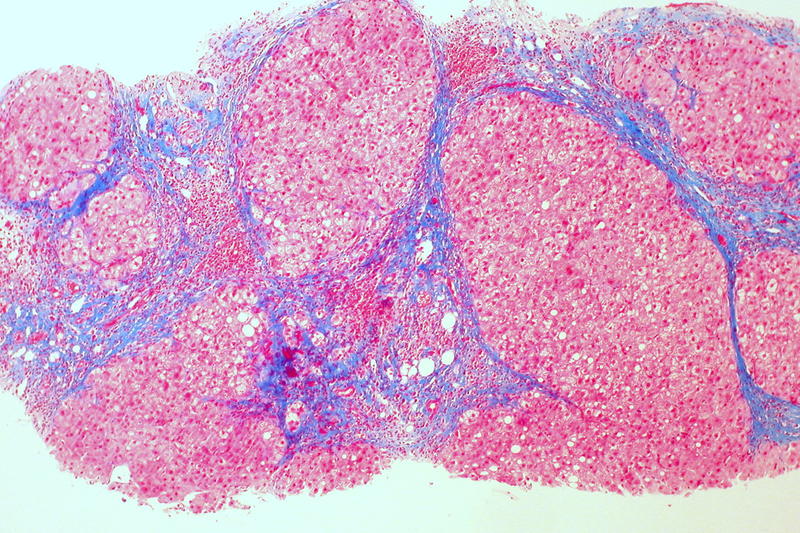
Cirrhosis of the liver as shown with staining. [Ed Luthman, Creative Commons (BIT.LY/31QRFNM)]
 
Kansas News Service

Kansas can no longer put off care for Medicaid patients with hepatitis C because of a recent legal settlement. But hundreds of the state’s prison inmates not covered by that lawsuit will have to wait another year for the pricey treatment.

That raises concerns about whether the delay constitutes cruel and unusual punishment under the U.S. Constitution, civil rights lawyers say, because inmates have the right to medical care.

“This is a fairly clear Eighth Amendment violation,” said Lauren Bonds, legal director for the ACLU of Kansas, which brought the Medicaid lawsuit. “Delayed treatment is unconstitutional.”

Kansas prison officials say more than 700 inmates currently have hepatitis C, a virus that attacks the liver and that’s most commonly contracted by sharing needles to inject illegal drugs. The state Department of Corrections expects about half will receive treatment this year, starting with those who’ve developed liver cirrhosis from the virus.

That’s on top of about 100 inmates treated in recent months, agency spokeswoman Jeanny Sharp said.

“The treatment strategy,” she said, “aligns with what many other states that were sued were asked to do.”

Kansas, she said, is doing it voluntarily.

Legal challenges

States landed in legal hot water in recent years for limiting hepatitis C treatment for their Medicaid and prison populations in response to the sky-high cost of new drugs. The drugs offered highly effective treatment to clear infections up, but with price tags that could total nearly $100,000 per person.

Kansas settled the Medicaid lawsuit, agreeing to no longer limit coverage of hepatitis C medication to those with more advanced liver scarring, while forcing others to wait.

Read the state’s settlement with the ACLU over Hep C coverage.

The suit didn’t cover prisons, but last fall, Kansas began screening all inmates for hepatitis C.

The corrections department says costs vary, but tend to run between $15,000 and $17,000 to treat the typical inmate. That can involve several months of daily medication.

The state will spend $6 million in fiscal 2020 on treating about half of its inmates with hepatitis C, a corrections official last week told a meeting of state leaders charged with signing off on the expense. Gov. Laura Kelly and the legislative leaders agreed unanimously.

Waiting for treatment

As it stands, inmates with less advanced hepatitis C will need to wait until fiscal 2021.

The corrections department wanted more funding to treat them this year instead, but the governor’s office didn’t request the full amount from the Legislature.

A spokeswoman said Tuesday Kelly is committed to ensuring inmates get treatment.

The state “will move as quickly as possible to treat every prisoner affected,” Dena Sattler wrote, “and if additional funding is required to keep providing treatment before the next fiscal year, the Governor will make additional budget recommendations as necessary.”

More inmates are testing positive for hepatitis C than initially estimated — about 13 percent of people entering the prison system.

It can take years for the outward signs and symptoms of the virus to develop, such as jaundice and fatigue.

About one in four people who get hepatitis C fend it off naturally. For most, the disease takes its toll, causing chronic infections.

As many as one in five eventually develop cirrhosis and one in 20 get liver cancer. Some cases require liver transplants.

Studies suggest early hepatitis C treatment benefits patients, while delaying treatment can harm their long-term health.

The costs of hepatitis C treatment are just one of the woes the corrections department is juggling. It’s struggled, for example, to pay guards well enough to keep prisons adequately staffed.

Bonds, of the ACLU, wouldn’t rule out heading back to court to press for speedier hepatitis C treatment in prisons. At the same time, she said the ACLU understands the system is facing budgetary hurdles.

“We do want to recognize and at least acknowledge that there has been some progress made,” she said. “We do want to be reasonable and see if there is a non-litigation means to get prisoners treated more quickly.”

The ACLU is continuing to monitor hepatitis C treatment for Medicaid patients, too. Under the terms of the state’s settlement with the group, Kansas agreed to hand over quarterly updates on how many patients are prescribed treatment and whether their requests get approved.

Previously, the state’s privatized Medicaid program, KanCare, approved only patients with the most serious liver scarring. It made them pass extensive sobriety tests, too.

The settlement says Kansas can only impose a three-month drug-free period instead of six, and that it can’t reject patients for using alcohol or illegal drugs that aren’t taken by needle.

Celia Llopis-Jepsen is a reporter for the Kansas News Service, a collaboration of KCUR, Kansas Public Radio, KMUW and High Plains Public Radio covering health, education and politics. You can reach her on Twitter @Celia_LJ or email celia (at) kcur (dot) org.

Fireworks-related blaze destroys house, 2 vehicles in Smolan

Photo courtesy Saline County Sheriff’s Office

Salina Post

SMOLAN — No one was injured when a fireworks-related blaze destroyed a home in Smolan Thursday night.

Saline County Sheriff Roger Soldan said Friday that deputies and Rural Fire District No. 6 personnel were dispatched to 201 S. Front in Smolan at 11 p.m. Thursday.

The owners of the house, Mayo (age 60) and Jerre Morgan (age 69), reported that they had their teenage granddaughter and a couple of friends over to shoot fireworks, Soldan said. Afterward, the fireworks debris was picked up and placed in a cardboard box in the garage, he said. At approximately 11 p.m., the couple went to check on popping noises they heard coming from the garage and found the garage on fire, Soldan said.

Everyone was able to escape without injury, he said.

Two vehicles, one in the driveway and one in the house, also were destroyed.

In addition to the house, a 2011 Ford Escape parked in the driveway and a 2017 Ford Explorer parked in the garage were destroyed, Soldan said. Total loss was estimated at $261,500, he said.


KDOT rejects suggestion it is to blame for bluestem invasion

TOPEKA (AP) — A road maintenance official is pushing back against suggestions that the Kansas Department of Transportation is to blame for an invasion of a plant threatening native grasses.

The Topeka Capital-Journal reports that KDOT’s potential role in spreading bluestem grass is a point of contention as the state Department of Agriculture contemplates quarantining invasive varieties now in 103 of 105 of the state’s counties.

Ranchers and others attending a Department of Agriculture comment session last month on a possible quarantine said KDOT’s mowing regimen carried seed for invasive grasses to new roads.

KDOT maintenance chief Clay Adams said the agency includes bluestem varieties in seeding mixtures applied beside highways but not the invasive varieties targeted by the Department of Agriculture. KDOT mows from April to October to improve visibility for motorists.

2 K.C. firefighters injured in house fire blamed on fireworks

KANSAS CITY, Mo. (AP) — Authorities in Kansas City, Missouri, believe fireworks are to blame for a Fourth of July blaze at a home that sent two firefighters to the hospital with minor injuries.

Deputy Fire Chief Jimmy Walker said two firefighters received burns on their ears and necks in fighting a fire at a two-story home early Thursday. They were treated at a local hospital and released.

The Kansas City Star reports that an elderly resident safely fled the home.

It’s unclear when the fire began. Walker said the fireworks could have been smoldering long before igniting the home. He believes they came from a neighbor, not the resident of the home.

He said, “That’s why fireworks are illegal in the city.”

Walker said another home was damaged Wednesday in a fireworks-related fire.

Group launches hotline to take complaints against KCK police

KANSAS CITY, Kan. (AP) — A social-justice advocacy group says it is launching a hotline in Kansas City, Kansas, for people to report police misconduct.

The Kansas City Star reports that Wednesday’s announcement by the Metro Organization for Racial and Economic Equity comes about a month after it marched on local government offices.

A federal lawsuit against the department alleges that now-released Lamonte McIntyre spent 23 years in prison for two 1994 murders he didn’t commit because of police misconduct.

Another federal lawsuit was filed by a former police cadet alleging she was dismissed after reporting reported sexual harassment and assault by a supervising officer.

The police department says it has received complaints relating to only 0.1% of police calls. Local officials say police have a complaint line and there’s a Wyandotte County ethics hotline.

Kansas university wins grant targeting Hispanic teachers

JOPLIN, Mo. (AP) — A recently awarded grant will help local teachers who are Hispanic or who teach in districts with large Hispanic populations.

The Joplin Globe reports that the Laura Bush 21st-Century Librarian program awarded Pittsburg State University’s College of Education a $530,281 grant to provide scholarships, mentoring and laptops to 25 teachers from Kansas, Missouri, Oklahoma and Arkansas.

University officials said school districts in those four states have experienced significant growth in their Hispanic populations in the past five years.

The project to be funded by the grant is called Building Bridges Across Cultures. It will enable 25 future school librarians to earn master’s degrees online with an emphasis in library media.

A 2013 grant to Pittsburg State focused on Native American culture in teaching and provided scholarships to 25 school librarians.

Flooding in central Kansas forces evacuations in small town

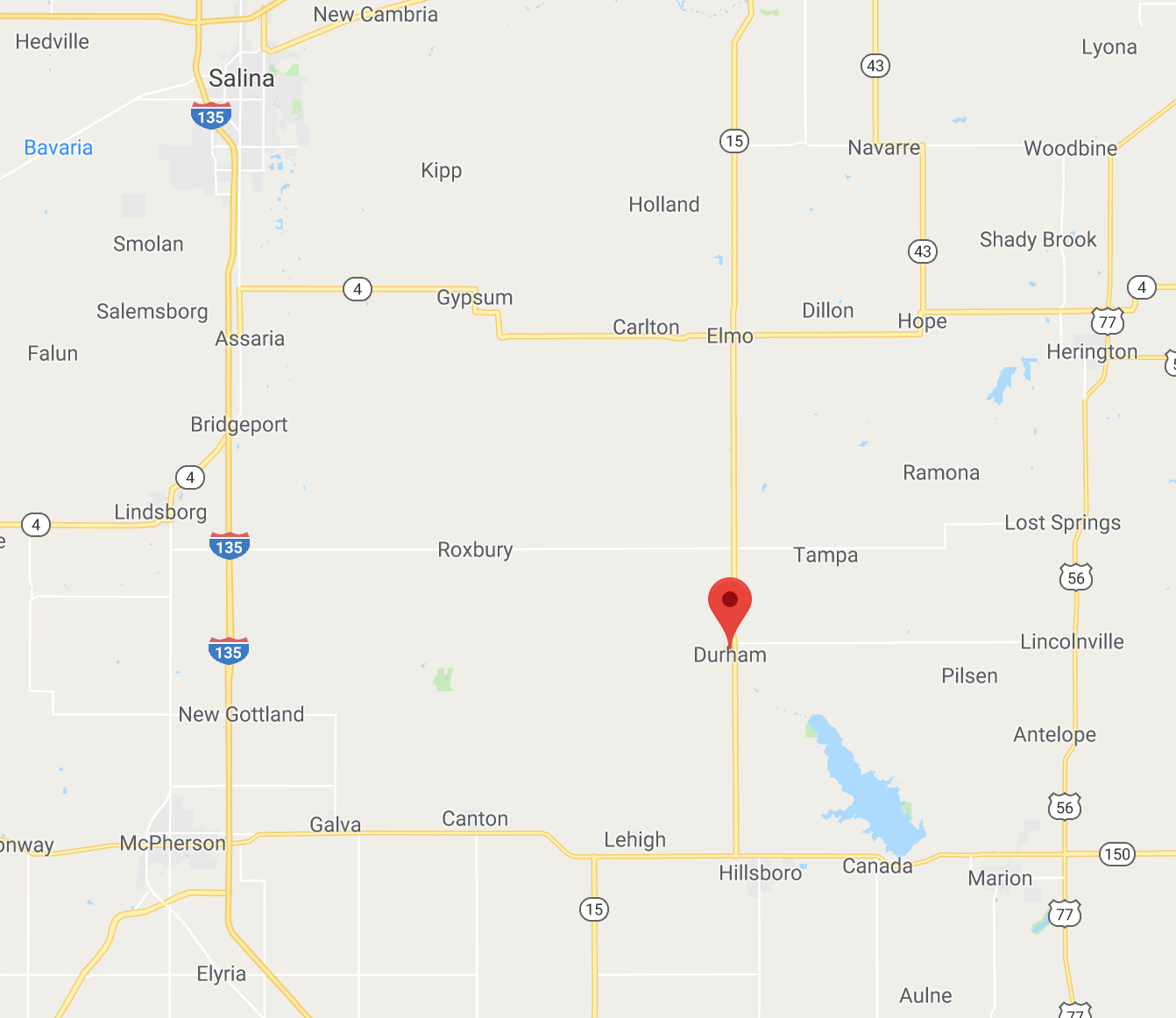
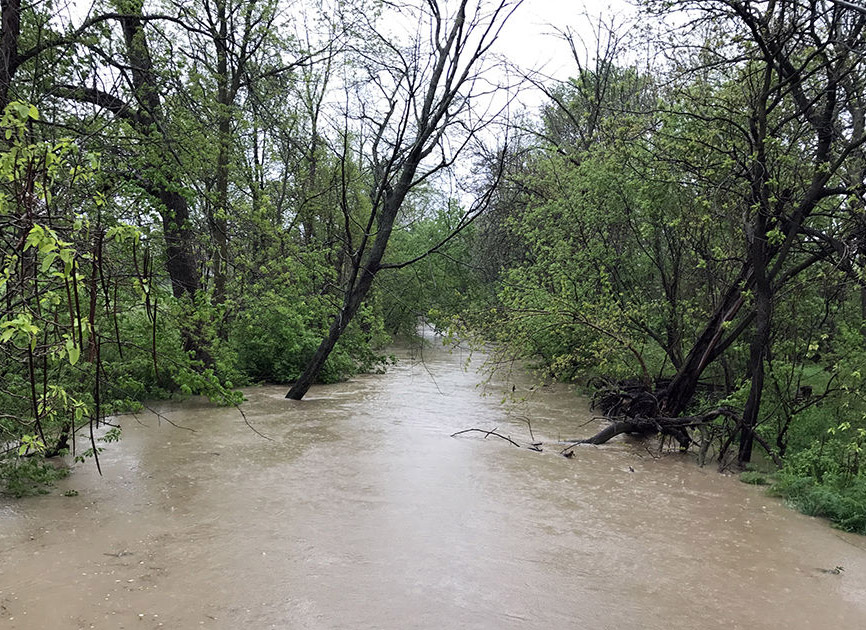
DURHAM (AP) — Flooding in central Kansas has forced evacuations in a small town along the rain-swollen North Cottonwood River.

The flooding resulted from heavy rains Thursday morning. Parts of Saline County received more than 8 inches of rain, while 6 inches fell in Marion County.

KAKE-TV reports that about 10 homes in Durham in northwest Marion County along the North Cottonwood had to be evacuated. Mayor Mike Sorensen said the downtown in the community of about 110 residents was under 3 feet of water.

Longtime resident Anna Maegoertz said she had to be rescued by boat after water surrounded her house and “It rose quickly. I couldn’t get out.”

Flooding also forced water rescues in Gypsum, southeast of Salina, along Gypsum Creek.

KU Study: AI identifies ‘Kissing Bugs’ that spread Chagas disease

KU NEWS SERVICE

LAWRENCE — New research from the University of Kansas shows machine learning is capable of identifying insects that spread the incurable disease called Chagas with high precision, based on ordinary digital photos. The idea is to give public health officials where Chagas is prevalent a new tool to stem the spread of the disease and eventually to offer identification services directly to the general public.

Chagas is particularly nasty because most people who have it don’t know they’ve been infected. But according to the Centers for Disease Control and Prevention, some 20 percent to 30 percent of the 8 million people with Chagas worldwide are struck at some later point with heart rhythm abnormalities that can bring on sudden death; dilated hearts that don’t pump blood efficiently; or a dilated esophagus or colon.

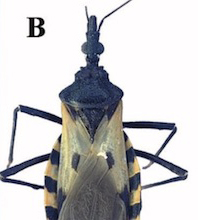
Left, an example image of an individual of Triatoma dimidiata. (A) Raw image and (B) final image with background removed digitally. Courtesy Khalighifar, et al. Right, this image shows that with more data (such as digital images of triatomine), the accuracy of deep learning used by the KU researchers increases whereas prior techniques plateau after a certain point. (Courtesy MDPI under a Creative Commons license)

The disease is caused most often when triatomine bugs — more commonly known as “kissing bugs” — bite people and transmit the parasite Trypanosoma cruzi into their bloodstreams. Chagas is most prevalent in rural areas of Mexico, Central America and South America.

A recent undertaking at KU, called the Virtual Vector Project, sought to enable public health officials to identify triatomine that carry Chagas with their smartphones, using a kind of portable photo studio for taking pictures of the bugs.

Now, a graduate student at KU has built on that project with proof-of-concept research showing artificial intelligence can recognize 12 Mexican and 39 Brazilian species of kissing bugs with high accuracy by analyzing ordinary photos — an advantage for officials looking to cut the spread of Chagas disease.

Ali Khalighifar, a KU doctoral student at the Biodiversity Institute and the Department of Ecology and Evolutionary Biology, headed a team that just published findings in the Journal of Medical Entomology. To identify the kissing bugs from regular photos, Khalighfar and his colleagues worked with open-source, deep-learning software from Google, called TensorFlow that is similar to the technology underpinning Google’s reverse image search.

“Because this model is able to understand, based on pixel tones and colors, what is involved in one image, it can take out the information and analyze it in a way the model can understand — and then you give them other images to test and it can identify them with a really good identification rate,” Khalighifar said. “That’s without preprocessing — you just start with raw images, which is awesome. That was the goal. Previously, it was impossible to do the same thing as accurately and certainly not without preprocessing the images.”

Khalighifar and his coauthors — Ed Komp, researcher at KU’s Information and Telecommunication Technology Center, Janine M. Ramsey of Mexico’s Instituto Nacional de Salud Publica, Rodrigo Gurgel-Gonçalves of Brazil’s Universidade de Brasília, and A. Townsend Peterson, KU Distinguished Professor of Ecology and Evolutionary Biology and senior curator with the KU Biodiversity Institute — trained their algorithm with 405 images of Mexican triatomine species and 1,584 images of Brazilian triatomine species.

At first, the team was able to achieve, “83.0 and 86.7 percent correct identification rates across all Mexican and Brazilian species, respectively, an improvement over comparable rates from statistical classifiers,” they write. But after adding information about kissing bugs’ geographic distributions into the algorithm, the researchers boosted the accuracy of identification to 95.8 percent for Mexican species and 98.9 percent for Brazilian species.

According to Khalighifar, the algorithm-based technology could allow public health officials and others to identify triatomine species with an unprecedented level of accuracy, to better understand disease vectors on the ground.

“In the future, we’re hoping to develop an application or a web platform of this model that is constantly trained based on the new images, so it’s always being updated, that provides high-quality identifications to any interested user in real time,” he said.

Khalighifar now is applying a similar approach using TensorFlow for instant identification of mosquitoes based on the sounds of their wings and frogs based on their calls.

“I’m working right now on mosquito recordings,” he said. “I’ve shifted from image processing to signal processing of recordings of the wing beats of mosquitoes. We get the recordings of mosquitoes using an ordinary cell phone, and then we convert them from recordings to images of signals. Then we use TensorFlow to identify the mosquito species. The other project that I’m working right now is frogs, with Dr. Rafe Brown at the Biodiversity Institute. And we are designing the same system to identify those species based on the calls given by each species.”

While often artificial intelligence is popularly portrayed as a job-killing threat or even an existential threat to humanity, Khalighifar said his research showed how AI could be a boon to scientists studying biodiversity.

“It’s amazing — AI really is capable of doing everything, for better or for worse,” he said. “There are uses appearing that are scary, like identifying Muslim faces on the street. Imagine, if we can identify frogs or mosquitoes, how easy it might be to identify human voices. So, there are certainly dark sides of AI. But this study shows a positive AI application — we’re trying to use the good side of that technology to promote biodiversity conservation and support public health work.”

Images: Left, an example image of an individual of Triatoma dimidiata. (A) Raw image and (B) final image with background removed digitally. Courtesy Khalighifar, et al. Right, this image shows that with more data (such as digital images of triatomine), the accuracy of deep learning used by the KU researchers increases whereas prior techniques plateau after a certain point. Courtesy MDPI under a Creative Commons license.

Kansas inmate ordered to stand trial for attack on jailer

HUTCHINSON (AP) — A Kansas prison inmate serving 50 years for a brutal murder has been ordered to stand trial for attempted rape last year of a female correctional officer.

The Hutchinson News reports a judge found sufficient evidence to bind 42-year-old Tanner Lee Green over for trial on Wednesday on alternate counts of attempted rape, aggravated sexual battery, and battery on a law enforcement officer.

The corrections officer testified Green grabbed her and pushed her to the ground. The two struggled until she was able to push her panic alarm on her belt to summon help.

A prison investigator testified cameras in the cellblock captured the assault.

Green was convicted of first-degree murder in 2000. His lengthy criminal record includes aggravated assault on a law enforcement officer, aggravated escape and other crimes.

Study: Kansas benefits most from federal disaster grants

TOPEKA (AP) — A study has found that Kansas saves more money, on average, than any other state that uses federal grants to mitigate natural disasters.

The Pew Charitable Trusts recently released its data analysis showing that for every $1 of federal funds spent on protecting against flood and tornado damage, Kansas avoided $6.81 in potential recovery costs. Researchers drew from a previous study of federal disaster mitigation grants between 1993 and 2016.

The data shows Missouri trailed close behind, with each federal dollar saving $6.72, the Kansas News Service reported.

The findings come after Kansas saw heavy rain and flooding this spring, delaying wheat harvests. A May tornado near Pittsburg damaged buildings and toppled power lines and trees.

The mitigation programs in Kansas and Missouri only addressed threats of wind and flooding, but the projects had a large payback in the two states.

Federal programs typically have a match — typically 25% — that must be paid by the state or local government receiving the grant. Researchers found Kansas and the federal government spent roughly $220 million on wind and flood mitigation, which netted about $1.5 billion in savings.

“The mitigation projects that the Kansas Division of Emergency Management are able to support or implement are largely reliant on the federal grants,” said Bryan Murdie, director of the Planning and Mitigation Branch at the Kansas Division of Emergency Management.

California, which is prone to earthquakes and fires, ranked near the bottom of the list, with every dollar of mitigation saving $3.26.

Colin Foard, one of the study’s authors, said governments should find ways to fit mitigation costs into their budgets.

“The takeaway for policymakers really should be that investing in mitigation saves,” Foard said.

Former Kansas legislator to serve as US observer in Ireland

TOPEKA (AP) — A former Kansas legislator who also served on a federal parole board will represent the U.S. in meetings of a group that promotes peace in Ireland and Northern Ireland.

Former state Sen. Ed Reilly says he expects to attend meetings of the board of the International Fund for Ireland in November. He was appointed as a U.S. observer last month by President Donald Trump’s administration.

The 82-year-old Reilly is a Leavenworth native who now lives in the Washington area after serving as a member and chairman of the U.S. Parole Commission.

He served 29 years in the Kansas Legislature as a Republican. He was appointed to fill a vacancy in the House in 1964, won a Senate seat that year and served there until 1992.

Zookeeper hurt in tiger attack back to work at Kansas zoo

Kristyn Hayden-Ortega-photo courtesy Topeka zoo
TOPEKA (AP) — A zookeeper who spent two months recovering from a tiger attack at a Kansas zoo is now back to work.

Topeka zoo director Brenden Wiley told KSNT-TV that Kristyn Hayden-Ortega returned to work Tuesday.

She was seriously injured in the April 20 attack by a 7-year-old Sumatran tiger named Sanjiv.

The zoo released a lengthy report last month that said “multiple” protocols and procedures concerning spaces occupied by tigers had prevented any similar attack at the zoo for decades. Its report says protocol was not followed when the keeper entered the tiger’s outdoor habitat without ensuring that the animal was locked inside.

Other zoo employees lured the animal away with meat so emergency responders could treat Hayden-Ortega.

Heat, runoff heighten risk of blue-green algae in Kansas ponds and lakes

Photo courtesy KSRE

Cyanobacteria is toxic to livestock and other animals, says K-State veterinarian

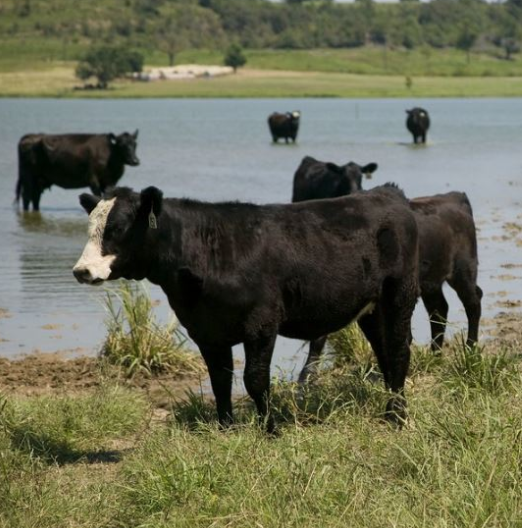
MANHATTAN – The extreme heat that hailed the end of June in Kansas combined with the heavy runoff from rains earlier in the month put many of the state’s waterways at risk to a waterborne toxin that could impact livestock and other animals around the farm.

Kansas State University veterinary toxicologist Steve Ensley said that the incidence of blue-green algae in farm ponds “has become more frequent in the last 15-20 years,” creating headaches for farmers who rely on those ponds to keep livestock hydrated during the hot, summer months.

When blue-green algae blooms, it creates a toxin that can affect the liver or the nervous system of animals that drink affected water. Animals may recover from toxins that affect the liver, but when they ingest toxins affecting the nervous system, those animals often die – sometimes within hours of exposure.

“There is no antidote for this toxin,” Ensley said. “If we have animals that look sick, we’ll try to do supportive care. If the damage is to the liver, there are things we can do to treat animals to get them over the initial damage they may have.”

But, he adds, “neurotoxins are very acute, so typically they lead to sudden death. In the last two years in Kansas, I have had grazing animals that have died…horses, cattle, sheep, goats and even dogs that swim in the water and drink as they’re swimming through the pond.”

Blue-green algae can form in a pond or other waterway from runoff that carries nitrogen or phosphorus into the body of water. The algae grow and bloom as temperatures reach 75 degrees or higher.

Farmers and others should be on the lookout for a blue, green or even orange color in the water. The bacteria will often give the impression of paint in the water, or a growth mat, according to Ensley. Blue-green algae is a threat to surface water only; it does not affect ground water. Well water typically is not affected.

“If you see something different about your pond or surface water, you need to investigate it,” Ensley said. “You need to get a sample taken and send it in to be tested.”

The Kansas State University Veterinary Diagnostic Lab can test water samples for blue-green algae, but Ensley said farmers can also work through their local veterinarian or extension agent.

Until water is confirmed safe, Ensley said farmers should keep animals away from the pond, and look for other ways to provide water to the herd.

“It takes about two weeks from when we see a bloom for it to get rid of the toxin,” Ensley said. “That’s kind of the guideline. Get them off that water for two weeks and then we can re-evaluate.”

For the future, Ensley noted that farmers can lessen the risk of toxins forming in their ponds by installing “as much grass and buffer strips between crop fields and surface water as possible so that we can slow down the movement of nitrogen and phosphorus into that water.”

Some short-term solutions to prevent algae blooms include installing solar-powered aerators to keep water moving; or adding water-soluble dyes to the water, which block the amount of sunlight that can get to the pond.

For more information, talk with your local veterinarian or extension agent, or visit the K-State Veterinary Diagnostic Lab at www.ksvdl.org.

Copyright Eagle Radio | FCC Public Files | EEO Public File