KANSAS CITY, MO. -The ‘dog days of summer’ are upon us and millions of Americans will find refuge from the heat at pools, ponds, lakes, rivers and streams across our nation during the Independence Day weekend.
The Kansas City District, U.S. Army Corps of Engineers (USACE) reminds everyone that no matter the size of the water you recreate in you should never forget about water safety.
Here are some tips to remember when you are in or around the water this 4th of July:
* Alcohol and water do not mix. When under the influence of alcohol and underwater, you can suffer from an inner ear condition (caloric labyrinthitis) that causes you to become disoriented and not know which way is up.
* High water and flooding conditions still persist. Many lakes, rivers, and streams are still at flood stage from record rainfall this spring. Keep an eye out for visible and submerged objects while on the water. Avoid swift currents that make boating difficult and unsafe.
* Give your life jacket an annual checkup. Test the buckles, stitches, straps, and fabric to make sure everything is still in good shape. A life jacket will not save your life if it can no longer function as intended. Your life is worth more than a $40 purchase from the local outdoor store.
* Prepare for sudden weather changes. Anyone from the Midwest knows that if you wait 10 minutes the weather will change. Don’t get caught on the water in severe weather. If you are caught in an unexpected storm make sure everyone has on their life jackets and have them sit on the bottom of the boat close to the centerline.
* Leave fireworks at home. Using pyrotechnics poses a high risk of starting fires in parks and habitat areas, and are not allowed on Corps lands, to include all lakes in the Kansas City District. Recreation officials encourage visitors to attend local fireworks displays in nearby communities.
* Campfires and barbecues are only allowed in designated areas. Some locations have restrictions on open fires, so check the information kiosks at recreation areas for site-specific fire restrictions and safety notices. If charcoal briquettes are allowed, be sure they cool completely before disposal — never dump hot coals onto the ground where they can ignite nearby vegetation. Be mindful of fire risks before lighting wood, charcoal or gas fire.
* Wear your life jacket. The majority of water tragedies may have been prevented by simply wearing a life jacket. Please do your friends and loved ones a favor – and wear it.
Please take the time to consider all of these safety tips while recreating over the busy Independence Day weekend. For more information on these and other safety information please follow us on Facebook, Twitter, and visit Pleasewearit.com.
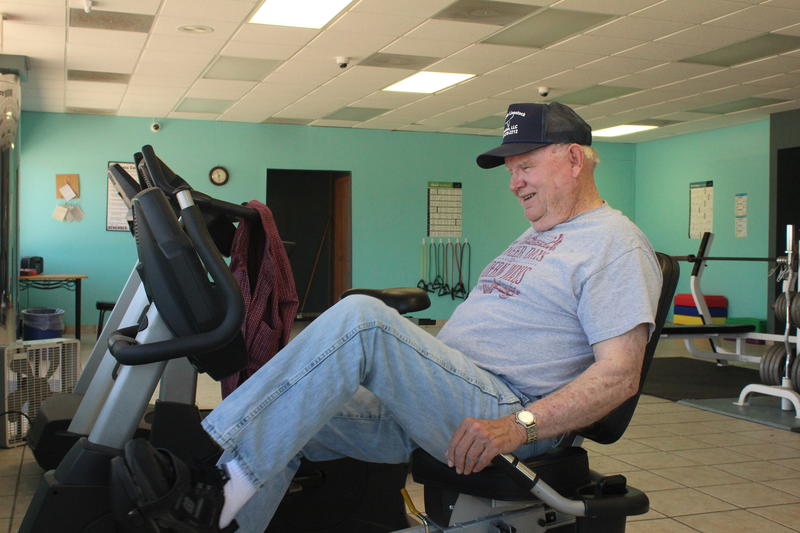
Elmer Drennan works out at 54 Fitness in Moran, Kansas.
By STEPHAN BISAHA Kansas News Service
It’s what you’d expect in a small gym. Treadmills. Squat rack. Elliptical machine.
But 54 Fitness, located in the 500-person town of Moran in Allen County, still holds remnants of the building’s previous lives. Tile flooring. Booth seating. A washroom designed for rinsing off grease, not sweat.
Before becoming the town’s fitness center, the gym was a steakhouse. And before that, a gas station.
“There was a lot of grease dirt that had to be lifted up out of the tile,” said Larry Ross, a retired conformance lab manager who helped with the conversion. “We literally scrubbed each one of these tiles a dozen times.”
Despite the open land and escape from congested cities and suburbs, Kansans living in remote parts of the state often exercise less than city folk. Sidewalks are rare. Driving is more common than walking. And there’s a distinct lack of fitness centers.
Small towns often lack the money for large recreational centers. Or have enough gym rats to tempt a private owner to open up shop.
At least one consequence: higher rates of obesity and other diseases linked to inactivity.
That’s left some communities experimenting with creative, and relatively cheap, ways to help people burn calories.
Farming is becoming increasingly mechanized, even robotized. That’s meant less physical strain on farmers, but also larger waistlines as the job becomes more sedentary.
La Harpe, Kansas, converted part of its city hall into an exercise room.
One fix suggested by the CDC includes building more workout centers.
“Even if you want to be physically active in rural areas,” said Geoffrey Whitfield, an epidemiologist with the CDC’s Division of Nutrition, Physical Activity and Obesity, “you might not have the ability to do so because the facilities just don’t exist.”
While exercise has been linked to reducing the risk for all those factors, getting a gym to move into — or stay open — in a rural town is challenging.
Small, urban and specialized fitness studios have grown in popularity — think hip-hop yoga and swimming pool spin classes. But small, rural gyms lack the membership numbers needed to pay the rent.
“Lots and lots of small gyms have gone out because they just couldn’t make money,” said Greg Ferris, the lobbyist for the Kansas Health and Fitness Association.
Yet economic development group Thrive Allen County said those living in the eastern Kansas county still want a place to work off the fat.
That led Thrive to help small towns in Allen County earn grants to fund creative ways to bring exercise to their communities. Both Elsemore and La Harpe took rooms in their schools-turned-city halls and transformed them into workout spaces.
Thrive made the investment to improve not just residents’ physical health, but also their social well-being.
“I look at it as preventative health,” said Thrive Allen County CEO Lisse Regehr. “The more you breakdown on social isolation, the more you help people as they age be more active and physically fit.”
The town of Moran converted a gas station into a public gym called 54 Fitness in reference to the highway it sits on.
Moran was looking to find its own spot for a fitness center in 2017. That’s when one of its council members thought about the failed gas station-turned-failed steakhouse. Located at the intersection of U.S. 54 and U.S. 59, it was being used as a storage space.
The city decided to convert the old filling station into what is now 54 Fitness.
It lacks personal trainers and locker rooms. Yet the former gas station comes with advantages. Big windows provide a front row view of a wind farm going up above the tree-line. The gym’s located at the (relatively) heavily trafficked intersection.
Moran isn’t the only place to recognize that gas stations tend to sit on prime real estate. Sneaker-maker Reebok hopes to follow Moran’s lead and turn more gas stations into gyms.
Those living and working in Moran have the option to drive 15 minutes to Iola for a workout. But the motivation to go to the gym can be hard enough without adding a 30-minute round trip.
School psychologist Foster LaVon said she wouldn’t bother spending a chunk of her morning on an elliptical machine if it wasn’t for the convenience of having a workout spot in Moran.
The Kansas Department of Health and Environment says gyms can be helpful, but it doesn’t provide funding for them.
Instead, it suggests towns invest in improving their man-made environment. Sidewalks that make a town more walkable can help the health of everyone, not just those willing to drag themselves to the gym or with the extra money to spend on a membership.
But improving that can prove expensive. A mile of sidewalk can be a six-figure cost. Making a town more dense for easier walking is a huge undertaking.
Meanwhile, a grant shy of $30,000 covered the equipment for Moran’s 54 Fitness. Volunteer and donations covered most of the rest.
Other rural towns with deeper pockets have decided that new gyms are worth the investment. Humboldt in Allen County recently built an 11,000-square-foot recreational center. Wichita County in western Kansas is looking to do the same.
Local boosters in Wichita and Allen County said gyms are also a way to attract and retain young people. Millennials value a good sweat, along with a nice place to do it, more than previous generations.
Even a small center like 54 Fitness holds appeal for young people. Hanna Hoffman recently moved out of Moran with her fiance. Both value fitness and in her argument to move back to Moran, having that exercise option is a clear selling point.
“We have a gym and there’s a restaurant and a gas station,” Hoffman said. “That’s really all we need.”
Stephan Bisaha reports on education for KMUW in Wichita and the Kansas News Service, a collaboration of KMUW, Kansas Public Radio, KCUR and High Plains Public Radio covering health, education and politics. Follow him on @SteveBisaha or email bisaha (at) kmuw (dot) org.
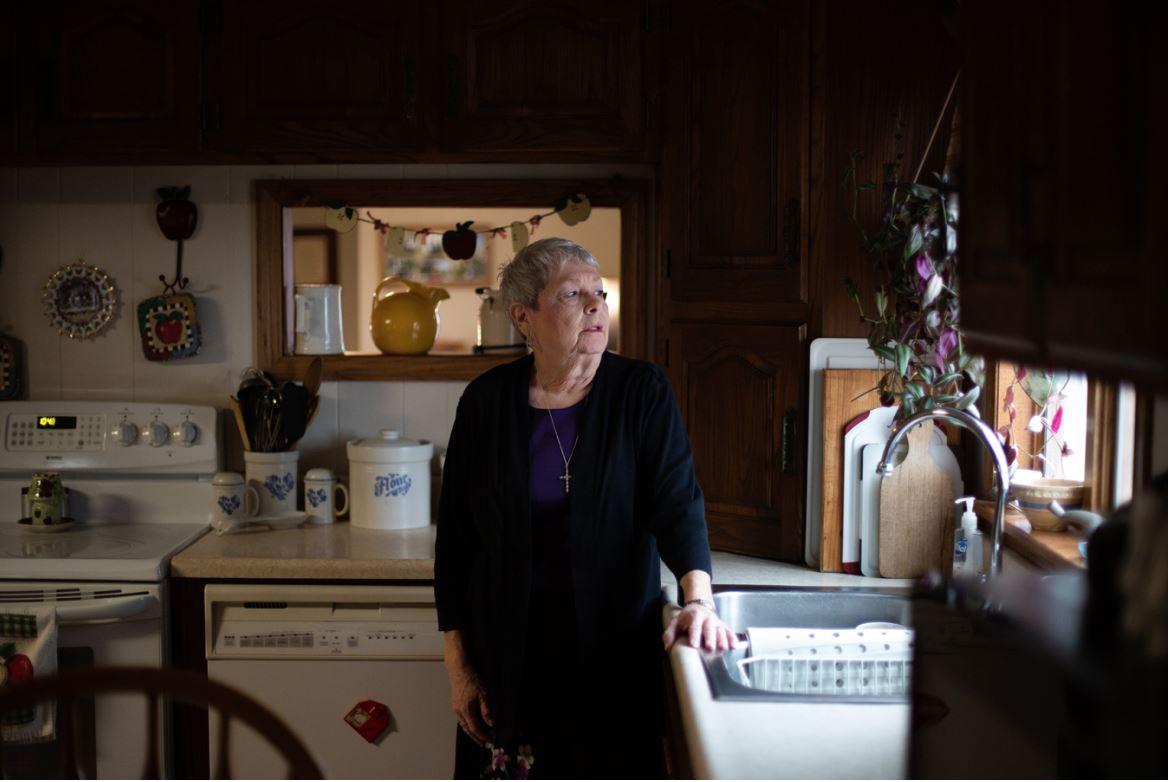
When the cancer clinic at Mercy Hospital Fort Scott closed in January 2019, cancer patients such as Karen Endicott-Coyan had to continue their treatment in different locations. Endicott-Coyan has a rare form of multiple myeloma and now drives an hour from her farm near Fort Scott to Chanute for weekly chemotherapy injections. Credit Christopher Smith for KHN
By SARAh JANE TRIBBLE Kaiser Health News
One Monday in February, 65-year-old Karen Endicott-Coyan gripped the wheel of her black 2014 Ford Taurus with both hands as she made the hour-long drive from her farm near Fort Scott to Chanute. With a rare form of multiple myeloma, she requires weekly chemotherapy injections to keep the cancer at bay.
She made the trip in pain, having skipped her morphine for the day to be able to drive safely. Since she sometimes “gets the pukes” after treatment, she had her neighbor and friend Shirley Palmer, 76, come along to drive her back.
Continuity of care is crucial for cancer patients in the midst of treatment, which often requires frequent repeated outpatient visits. So when Mercy Hospital Fort Scott, the rural hospital in Endicott-Coyan’s hometown, was slated to close its doors at the end of 2018, hospital officials had arranged for its cancer clinic — called the “Unit of Hope” — to remain open.
Then “I got the email on Jan. 15,” said Reta Baker, the hospital’s CEO. It informed her that Cancer Center of Kansas, the contractor that operated and staffed the unit, had decided to shut it down too, just two weeks later.
“There are too many changes in that town” to keep the cancer center open, Yoosaf “Abe” Abraham, chief operating officer of the Cancer Center of Kansas, later told KHN. He added that patients would be “OK” because they could get treated at the center’s offices in Chanute and Parsons.
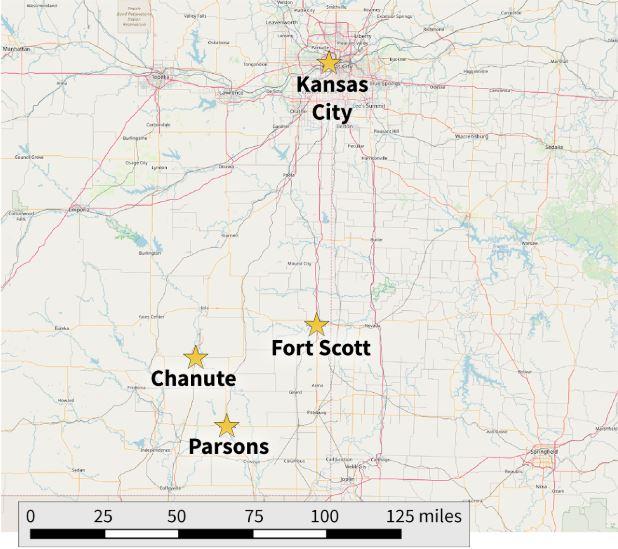
From Fort Scott, those facilities are 50 and 63 miles away, respectively.
For Endicott-Coyan and dozens of other cancer patients, the distance meant new challenges getting lifesaving treatment. “You have a flat tire, and there is nothing out here,” Endicott-Coyan said, waving her arm toward the open sky and the pastures dotted with black Angus and white-faced Hereford cattle on either side of the shoulderless, narrow highway she now must drive to get to her chemo appointment.
Nationwide, more than 100 rural hospitals have closed since 2010. In each case, a unique but familiar loss occurs. Residents, of course, lose health care services as wards are shut and doctors and nurses begin to move away.
But the ripple effect can be equally devastating. The economic vitality of a community takes a blow without the hospital’s high-paying jobs and it becomes more difficult for other industries to attract workers who want to live in a town with a hospital. Whatever remains is at risk of withering without the support of the stabilizing institution.
The 7,800 residents of Fort Scott are reeling from the loss of their 132-year-old community hospital that was closed at the end of December by Mercy, a St. Louis-based nonprofit health system. Founded on the frontier in the 19th century and rebuilt into a 69-bed modern facility in 2002, the hospital had outlived its use, with largely empty inpatient beds, the parent company said. For the next year, Kaiser Health News and NPR will track how its citizens fare after the closure in the hopes of answering pressing national questions: Do citizens in small communities like Fort Scott need a traditional hospital for their health needs? If not a hospital, what then?
When Wichita-based Cancer Center for Kansas closed its Fort Scott location, patients were told to travel to Parsons or Chanute to continue seeing their oncologist and receiving treatment. This map provides a look at what that meant in miles.
Credit Lydia Zuraw / KHN
Reta Baker, the hospital’s president who grew up on a farm south of Fort Scott, understood that the hospital’s closure was unavoidable. She scrambled to make sure basic health care needs would be met. Mercy agreed to keep the building open and lights on until 2021. And Baker recruited a federally qualified health center to take over four outpatient clinics, including one inside the hospital; former employees were bought out and continue to operate a rehabilitation center; and the nonprofit Ascension Via Christi Hospital in Pittsburg reopened the emergency department in February.
But cancer care in rural areas, which requires specialists and the purchase and storage of a range of oncology drugs, presents unique challenges.
Rural cancer patients typically spend 66% more time traveling each way to treatment than those who live in more urban areas, according to a recent national survey by ASCO, the American Society of Clinical Oncology. Dr. Monica Bertagnolli, a cattle rancher’s daughter who is now chair of ASCO’s board, called this a “tremendous burden.” Cancer care, she explained, is “not just one visit and you’re done.”
ASCO used federal data to find that while about 19% of Americans live in rural areas, only 7% of oncologists practice there.
People in rural America are more likely to die from cancer than those in the country’s metropolitan counties, according to a Centers for Disease Control and Prevention report in 2017. It found 180 cancer deaths per 100,000 people a year in rural counties, compared with 158 deaths per 100,000 in populous metropolitan counties.
The discrepancy is partly because habits like smoking are more common among rural residents, but the risk of dying goes beyond that, said Jane Henley, a CDC epidemiologist and lead author of the report. “We know geography can affect your risk factors, but we don’t expect it to affect mortality.”
From an office inside a former Mercy outpatient clinic, Fort Scott’s cancer support group, Care to Share, continues its efforts to meet some of the community’s needs — which in some ways have increased since the Unit of Hope closed. It provides Ensure nutritional supplements, gas vouchers and emotional support to cancer patients.
Lavetta Simmons, one of the support group’s founders, said she will have to raise more money to help people pay for gas so they can drive farther to treatments. Last year, in this impoverished corner of southeastern Kansas, Care to Share spent more than $17,000 providing gas money to area residents who had to travel to the Mercy hospital or farther away for care.
The group expects to spend more on gas this year, having spent nearly $6,000 during the first four months of 2019.
And the reserves of donated Ensure from Mercy are running out, so Simmons is reaching out to hospitals in nearby counties for help.
With Mercy Hospital Fort Scott closed, the likelihood of residents here dying from their cancer will grow, experts worry, because it’s that much harder to access specialists and treatments.
Krista Postai, who took over the Fort Scott hospital’s four primary care clinics, said it’s not unusual for her staff to “see someone walk in [with] end-stage cancer that they put off because they didn’t have money, they didn’t have insurance, or it’s just the way you are. … We wait too long here.”
‘If they can’t cure me, I’m done’
Art Terry, 71, a farmer and Vietnam veteran, was one of them. Doctors discovered Terry’s cancer after he broke a rib while baling hay. When they found a mass below his armpit, it was already late-stage breast cancer that had metastasized to his bones.
With his twice-weekly chemotherapy treatment available in the “Unit of Hope,” Terry spent hours there with his son and grandchildren telling stories and jokes as if they were in their own living room. The nurses began to feel like family, and Terry brought them fresh eggs from his farm.
“Dad couldn’t have better or more personalized care anywhere,” said his son, Dwight, bleary-eyed after a factory shift.
Art Terry, center, stands for a family photo at the Mercy Hospital Fort Scott cancer unit before its January closure. From left are Terry’s daughter-in-law, Sabrina; granddaughters Aubry and Shaylee; son Dwight; and grandson Blaiton. Credit Courtesy of Dwight Terry
Terry knew it was difficult to find trustworthy cancer care. The shortage of cancer specialists in southeastern Kansas meant that many, including Mercy Hospital Fort Scott’s patients, counted on traveling oncologists to visit their communities once or twice a week.
Wichita-based Cancer Center of Kansas has nearly two dozen locations statewide. It began leasing space in Fort Scott’s hospital basement in the mid-2000s, the center’s Abraham said. The hospital provided the staff while the Cancer Center of Kansas paid rent and sent roving oncologists to drop in and treat patients.
At its closing, the Unit of Hope served nearly 200 patients, with about 40% of them on chemotherapy treatment.
When Art Terry was diagnosed, his son tried to talk to him about seeking treatment at the bigger hospitals and academic centers in Joplin, Mo., or the Kansas City area. The elder Terry wasn’t interested. “He’s like, ‘Nope,’” Dwight Terry recalled. “I’m going right there to Fort Scott. If they can’t cure me, I’m done. I’m not driving.’”
In the end, as the elder Terry struggled to stay alive, Dwight Terry said he would have driven his father the hour to Chanute for treatment. Gas — already a mounting expense as they traveled the 20 miles from the farm near tiny Prescott, Kan., to Fort Scott — would be even more costly. And the journey would be taxing for his father, who traveled so little over the course of his life that he had visited Kansas City only twice in the past 25 years.
As it turned out, the family never had to make a choice. Art Terry’s cancer advanced to his brain and killed him days before the hospital’s cancer unit closed.
What happens next?
As Endicott-Coyan and her friend Palmer drove to Chanute for treatment, they passed the time chatting about how the hospital’s closure is changing Fort Scott. “People started putting their houses up for sale,” Palmer said.
Like many in Fort Scott, they had both spent their days at the Fort Scott hospital. Endicott-Coyan worked in administration for more than 23 years; Palmer volunteered with the auxiliary for six years.
The hospital grew with the community. But as the town’s fortunes fell, it’s perhaps no surprise that the hospital couldn’t survive. But the intertwined history of Mercy and Fort Scott is also why its loss hit so many residents so hard.
Fort Scott began in 1842 when the U.S. government built a military fort to help with the nation’s westward expansion. Historians say Fort Scott was a boomtown in the years just after the Civil War, with its recorded population rising to more than 10,000 as the town competed with Kansas City to become the largest railroad center west of the Mississippi. The hospital was an integral part of the community after Sisters of Mercy nuns opened a 10-bed hospital in 1886 with a mission to serve the needy and poor. Baker, Mercy Hospital Fort Scott’s president, said the cancer center was an extension of that mission.
The Unit of Hope began operating out of the newest hospital building’s basement, which was “pretty cramped,” Baker said. As cancer treatments improved, it grew so rapidly that Mercy executives moved it to a spacious first-floor location that had previously been the business offices.
“Our whole purpose when we designed it was for it to be a place where somebody who was coming to have something unpleasant done could actually feel pampered and be in a nice environment,” Baker said.
The center, with its muted natural grays and browns, had windows overlooking the front parking lot and forested land beyond. Every patient could look out the windows or watch their personal television terminal, and each treatment chair had plenty of space for family members to pull up chairs.
When Endicott-Coyan and Palmer arrived at the Cancer Center of Kansas clinic in Chanute in February, things looked starkly different. Patients entered a small room through a rusted back door. Three brown infusion chairs sat on either side of the entry door and two television monitors were mounted high on the walls. A nurse checked Endicott-Coyan’s blood pressure and ushered her back to a private room to get a shot in her stomach. She was ready to leave about 15 minutes later.
The center’s Abraham said the Chanute facility is “good for patients for the time being” and not a “Taj Mahal” like Mercy’s Fort Scott hospital building, which he said was too expensive to maintain. Cancer Center of Kansas plans to open a clinic at a hospital in Girard, which is about 30 miles from Fort Scott, he said.
Some oncology doctors would say driving is not necessary. Indeed, a few health care systems across the country, such as Sanford Health in South Dakota and Thomas Jefferson University Hospitals in Pennsylvania, are administering some chemotherapy in patients’ homes. Oncologist Adam Binder, who practices at Thomas Jefferson in Philadelphia, said “over 50% of chemotherapy would be safe to administer in the home setting if the right infrastructure existed.”
But the infrastructure — that is, the nurses who would travel to treat patients and a reimbursement model to pay for such care within our complex health care system — is not yet in place.
Back in the car, Palmer took the wheel and Endicott-Coyan began planning for future cancer treatments in the void left by Mercy Hospital Fort Scott’s closure. “I put a note on Facebook today and said, ‘OK, I have drivers for the rest of February; I need drivers for March!’”
This is the first installment in KHN’s year-long series, No Mercy, which follows how the closure of one beloved rural hospital disrupts a community’s health care, economy and equilibrium.
Stock / Clay County, Mo., photoLIBERTY, Mo. (AP) — Authorities suspect foul play in the death of a man who was assaulted and shot at less than two months ago at a suburban Kansas City home where a man’s dismembered remains were found.
The body of 56-year-old Floyd Wood’s body was discovered Monday night in the Kansas City suburb of Claycomo. Police haven’t said how he died.
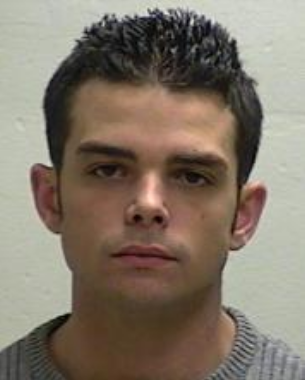
He was a key witness in the first-degree murder case against 30-year-old Colton Stock. Court documents in that case say Wood fled in May after Stock assaulted and shot at him. The gunfire led police to Stock’s house, where officers saw a fire.
After firefighters extinguished the flames, police found the remains of Matthew Calkins of Gardner, Kansas.
Stock is jailed on $1 million bond. He’s entered a not guilty plea.
Zebra mussel found at Lyon State Fishing Lake near Emporia
KDWPT
TOPEKA – The Kansas Department of Wildlife, Parks and Tourism (KDWPT) has confirmed the presence of invasive zebra mussels in Lyon State Fishing Lake in Lyon County. Routine samples collected by KDWPT Aquatic Nuisance Species staff to detect zebra mussels were found to contain zebra mussel larvae (also called veligers). Upon finding the veligers, staff returned to the lake and located an established population of adult zebra mussels. Similar sampling is conducted by KDWPT at more than 100 waterbodies across the state.
The 135-acre lake is located 12 miles north and two miles east of Emporia on Rd 270. Lyon State Fishing Lake is owned and operated by KDWPT. The lake and surrounding wildlife area are popular destinations for fishing, hunting, hiking, and a variety of other outdoor-related activities.
While the zebra mussel population is currently small, there is no known method to completely rid a lake of this invasive species. The zebra mussels were likely introduced by “hitchhiking” with un-suspecting lake-goers. Adults are able to attach to boats or other equipment and the microscopic zebra mussel veligers may be present in any water originating from an infested lake or stream. Densities as high as 1,000 veligers per gallon have been recorded in Kansas waters.
“This is the first new population of zebra mussels found in the state in 18 months, which is the longest period of time between new lake infestations since 2006. While it is unfortunate that zebra mussels have been spread to a new lake, I remain hopeful that these occurrences will be less frequent as more people have become aware of zebra mussels, their impacts, and how to prevent moving them,” said Chris Steffen, aquatic nuisance species coordinator for KDWPT.
Lyon State Fishing Lake will be added to the list of ANS-designated waters in Kansas, and notices will be posted at various locations around the waterbody. Live fish may not be transported from ANS-designated waters. The sharp-shelled zebra mussels attach to solid objects, so lake-goers should be careful when handling mussel-encrusted objects and when grabbing an underwater object when they can’t see what their hands may be grasping. Visitors should protect their feet when walking on underwater or shoreline rocks.
Zebra mussels are just one of the non-native aquatic species that threaten our waters and native wildlife. After using any body of water, people must remember to follow regulations and precautions that will prevent their spread:
Clean, drain and dry boats and equipment between uses
Use wild-caught bait only in the lake or pool where it was caught
Do not move live fish from waters infested with zebra mussels or other aquatic nuisance species
Drain livewells and bilges and remove drain plugs from all vessels prior to transport from any Kansas water on a public highway.
For more information about aquatic nuisance species in Kansas, report a possible ANS, or see a list of ANS-designated waters, visit ProtectKSWaters.org.
ABOUT ZEBRA MUSSELS
Zebra mussels are dime-sized mollusks with striped, sharp-edged, two-part shells. They can produce huge populations in a short time and do not require a host fish to reproduce. A large female zebra mussel can produce 1 million eggs, and then fertilized eggs develop into microscopic veligers that are invisible to the naked eye. Veligers drift in the water for at least two weeks before they settle out as young mussels which quickly grow to adult size and reproduce within a few months.
After settling, zebra mussels develop byssal threads that attach their shells to submerged hard surfaces such as rocks, piers, and flooded timber. They also attach to pipes, water intake structures, boat hulls, propellers, and submerged parts of outboard motors. As populations increase, they can clog intake pipes and prevent water treatment and electrical generating plants from drawing water. In 2012, two Kansas communities, Council Grove and Osage City, experienced temporary water shortages from zebra mussel infestations before water intake structures could be cleaned up. Removing large numbers of zebra mussels to ensure adequate water flow can be labor-intensive and costly.
Zebra mussels are native to the Black and Caspian seas of western Asia and eastern Europe and were spread around the world in the ballast water of cargo ships. They were discovered in Lake St. Clair and the Detroit River in 1988 and quickly spread throughout the Great Lakes and other rivers including the Mississippi, Illinois, Ohio, Tennessee, Arkansas and Hudson. They were first discovered in Kansas in 2003 at El Dorado Reservoir. Despite public education efforts to alert boaters about the dangers of zebra mussels and how to prevent spreading them, the species continues to show up in new lakes every year. Moving water in boats and bait buckets has been identified as a likely vector.
BUTLER COUNTY — A Greenwood County teenager was killed early Wednesday morning in a two-vehicle accident.
The Kansas Highway Patrol reported a 2017 Toyota Corolla driven by Matthew C. Crouch, 19, Climax, was westbound on U.S. 400 when the car crossed the centerline.
The Toyota struck a 2015 Ford F450 driven by Steven K. Simpson, Cottonwood Falls. The KHP said weather conditions might have contributed to the accident.
Crouch was transported to a local funeral home. Simpson was not hospitalized, but the KHP reported a suspected minor injury.
Both were wearing seat belts at the time of the accident.
MANHATTAN — Secretary of Agriculture Mike Beam announced this week that Kelsey Olson has been named Assistant Secretary of Agriculture at the Kansas Department of Agriculture. Olson began serving in the new role on July 1.
“I’m excited to add Kelsey to the team,” said Secretary Beam. “Her knowledge of the diverse agriculture sectors in Kansas, experiences with constituent services, and passion for rural Kansas makes her a perfect fit at the Kansas Department of Agriculture.”
Olson will assist in leading the agency by serving as a liaison between the agency and industry stakeholders, assisting the Secretary with attendance and participation to meeting/event invitations, participating in regulatory and legislative policy deliberations, and coordinating special projects and initiatives of KDA.
Olson has been with Syngenta in Junction City since 2010, specializing in portfolio management, trend analysis, investing and sales within the agriculture industry. She also worked in the office of U.S. Congressman Jerry Moran as a district agricultural representative.
Olson grew up in Norton, Kansas, then attended Kansas State University where she earned a bachelor’s degree in international agribusiness and master’s degree in agricultural economics. She resides in Manhattan with her husband, Casey, and their two children.
SALINA — A Salina man wanted on several district court warrants was located by police hiding under a comforter in a bedroom in the north part of town.
Salina Police Captain Paul Forrester said Wednesday that officers were dispatched to the 600 block of North 13th after police received a call that Ernest Outland, Jr., 30, was sitting in a driveway in that block. When police got there, Outland was not in sight, but after making contact with the resident at the address where he was seen, police obtained permission to search the residence, Forrester said. It was then that Outland was found hiding under a comforter in a bedroom of the residence, Forrester added. Additionally, Outland was found to be in possession of a small amount of cocaine, Forrester noted.
Forrester said that in addition to the active warrants — one for probation violation-aggravated battery and two violation of protection orders out of Saline County District Court — Outland was arrested on suspicion of the following.
Possession of a stimulant
Possession of drug paraphernalia
Felony interference with a law enforcement officer
SALINE COUNTY — When an early morning cry for help awakened a rural Saline County man Tuesday, the plea was not what he expected it to be.
According to Saline County Undersheriff Brent Melander, deputies responded to a residence in the 1300 block of East Stimmel Road at 4:49 a.m. Tuesday after Matthew Hockman, 41, reported hearing a cry for help.
Upon investigation, Hockman discovered that the cry for help was coming from his own basement, Melander said. There, Hockman found Jamey Sanders, 39, of rural Saline County, stuck upside-down on Hockman’s father’s inversion table, Melander explained.
He said that when Hockman asked Sanders what he was doing in the basement, Sanders replied that “they told me to come here.” Melander said it appeared that Sanders was under the influence of some sort of drug.
Hockman escorted Sanders from the residence and deputies found him a short while later outside the residence with some Ocean Spray cranberry juice belonging to Hockman, Melander said.
Sanders was transported to Salina Regional Health Center and then to the Saline County Jail where he was booked on suspicion of aggravated burglary, Melander said.
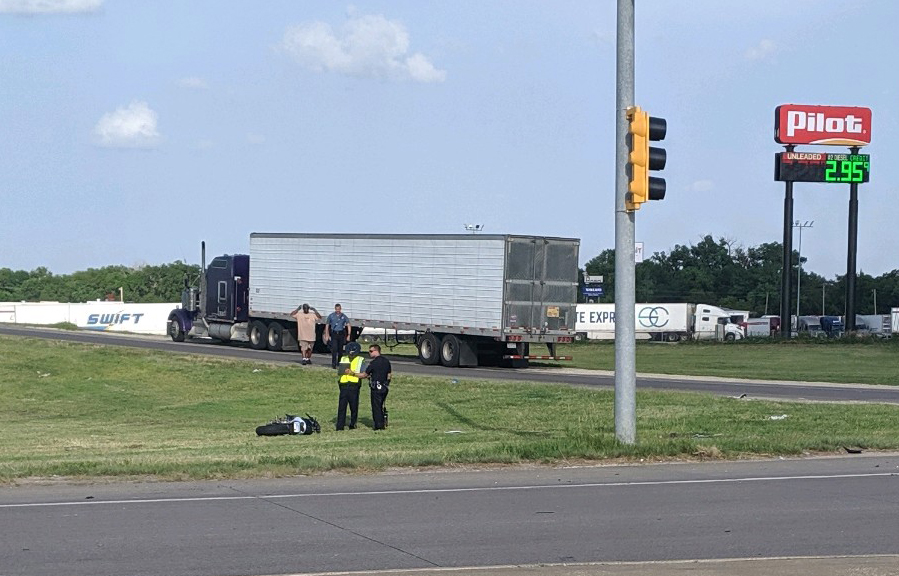
SALINA — A 22-year-old Salina man was injured late Tuesday afternoon in a two-vehicle accident on North Ninth Street.
According to the Kansas Highway Patrol, Codey M. Shute was northbound on North Ninth Street on a 2007 Kawasaki motorcycle when the motorcycle overturned, ejecting him to the east onto a grassy shoulder.
The riderless motorcycle then slid into a semi pulling a trailer that was turning from southbound Ninth Street onto the eastbound Interstate 70 on-ramp, the KHP reported. The truck was driven by Orlando C. Pitts, 53, of Henderson, Nev.
After striking the truck, the motorcycle came to rest near the eastbound ramp to I-70.
According to the KHP report, Shute was transported to Salina Regional Health Center with an unspecified suspected serious injury.
The accident occurred shortly after 5:30 p.m. Tuesday, the KHP noted.
OLATHE (AP) — Court records say a former suburban Kansas City school district employee fraudulently used the district’s credit card to make community college payments for her child and to buy clothes, food and gas.
The Kansas City Star reports that the charging affidavit was released Tuesday for 42-year-old Mikita Watson-Burton, who is charged with felony theft. Her attorney didn’t immediately return a phone message from The Associated Press.
She left her job in August as the secretary of elementary services for the Shawnee Mission School District.
Court documents say another employee discovered odd expenditure in August, triggering an audit. The affidavit says 174 unauthorized charges totaling $12,500 were found, including five community college payments.
The affidavit says she met with a detective in January and admitted to making the purchases.
Overland Park Republican Sen. Jim Denning sued The Star after it published a column by Steve Rose attacking Denning’s opposition to Medicaid expansion. File photo
A Johnson County judge on Tuesday tossed a defamation lawsuit brought by Kansas Sen. Majority Leader Jim Denning against The Kansas City Star, finding Denning failed to prove malice.
Judge Paul Gurney also ordered Denning to pay the newspaper’s attorney fees, which could run as high as $40,000.
Gurney ruled that Denning had not met the requirements of the Kansas Speech Protection Act, which is designed to end meritless lawsuits that target the exercise of free speech.
Gurney found The Star was not driven by ill will or evil intent when it published a column by Steve Rose in January criticizing Denning’s opposition to Medicaid expansion.
Denning, an Overland Park Republican, sued The Star and Rose a couple of days later, claiming Rose had attributed statements to him that he did not make. Rose tendered his resignation as an unpaid guest columnist a few days later.
The judge said he would rule at a later date on Denning’s defamation claims against Rose, who was present in the courtroom Tuesday.
Denning could not immediately be reached for comment.
Gurney issued his ruling from the bench after listening to arguments from The Star’s attorney, Bernie Rhodes, and Denning’s attorney, Mike Kuckelman, who was elected earlier this year as chairman of the Kansas Republican Party.
“This is a case about fake news, but not the fake news that Mr. Denning wants you to believe,” Rhodes told Gurney as he launched into his argument.
Rhodes said Denning sued The Star to divert attention from his longstanding opposition to Medicaid expansion in Kansas.
“He can’t stand the heat,” Rhodes said, declaring that Denning had stood in the way of 150,000 Kansans acquiring health coverage.
Rhodes also attacked Kuckelman, calling him Denning’s “lackey” and saying he campaigned for the GOP chairmanship “on this lawsuit and using the same PR firm.”
Kuckelman retorted that he wasn’t going to engage in personal attacks and urged Gurney to let the case go before a jury.
The Public Speech Protection Act, he said, doesn’t give The Kansas City Star “unlimited license to make up quotes” and mislead the public into believing that Denning made statements he never made.
“They don’t have unfettered license to lie,” Kuckelman said.
The Star urged Gurney to strike Denning’s petition on the grounds that Denning had not proved “actual malice” when it published Rose’s column.
The U.S. Supreme Court, in its landmark 1964 New York Times v. Sullivan decision, unanimously ruled that in order to prove libel, a public official such as Denning must show that the allegedly libelous statements were made with “actual malice” – that is, with knowledge that they were false or with reckless disregard for whether they were false or not.
Denning had an additional hurdle to overcome. The Kansas Public Speech Protection Act, which the Legislature enacted in 2016 and Denning supported, goes beyond the First Amendment’s actual malice standard and requires proof that the defendant acted “with actual evil-mindedness” or “specific intent to injure.”
Rhodes contended that Denning couldn’t prove either because The Star’s editorial page editor, Colleen McCain Nelson, who was Rose’s editor, had no reason to doubt the accuracy of Rose’s column when she approved its publication.
Nelson termed the lawsuit “a political ploy” from the start “and an attempt to generate headlines — not a legitimate lawsuit.”
“With this decision, the judge affirmed that Sen. Denning’s claim against The Star was entirely without merit, and more importantly, he protected the First Amendment rights of The Star and all journalists,” Nelson said in an email.
The Public Speech Protection Act allows the prevailing party to recover its attorney fees, and Gurney directed Denning to pay those fees. Asked by Gurney how much he had racked up in legal fees, Rhodes said about $40,000. Gurney said Denning could contest the reasonableness of the fees if he wishes.
The Public Speech Protection Act also allows courts to impose sanctions on the losing party. Gurney declined, saying the attorney fees were sanction enough.
LEAWOOD (AP) — A doctor who ran three Kansas anti-aging clinics has surrendered his medical license.
The Kansas City Star reports that the Kansas Board of Healing Arts issued an emergency suspension of Michael Simmons’ license in March after evaluators said it wasn’t safe for him to practice medicine.
The reasons weren’t disclosed, although his Kansas license was temporarily suspended in 2002 because he had sexual relationships with patients and a co-worker. Simmons also ran into trouble in Missouri in 2013 for prescribing controlled substances without state registration.
Simmons sued before agreeing to voluntarily give up his license. The Simmons Center for Health and Wellness is located in the Kansas City suburb of Leawood. His website says he also has clinics in Frontenac and Galena.
Simmons’ attorney didn’t respond to a request for comment.

 USACE
USACE