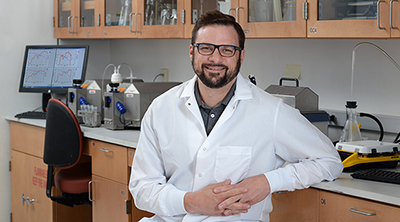
John Thyfault, Ph.D., professor in the Department of Molecular and Integrative Physiology at the KU School of Medicine. Photo by Selena Jabara, KU Medical Center
By KRISTI BIRCH KU News Service
A researcher in the Department of Molecular and Integrative Physiology at the University of Kansas School of Medicine has launched a new study to investigate some surprising ways that statins, which are some of the most prescribed medications in the world, can adversely impact a person’s health over time.
In the United States, where cardiovascular disease is the leading cause of death, slightly more than half of American adults, more than 40 million people, take a statin to lower their cholesterol and ward off heart attack and stroke, according to the Centers for Disease Control and Prevention.
John Thyfault, Ph.D., who is also a research scientist at the Kansas City VA Medical Center, is collaborating with Darrell Neufer, Ph.D., director of the East Carolina Diabetes and Obesity Institute and professor in the Department of Physiology at Brody School of Medicine at East Carolina University, to conduct a clinical trial to determine how atorvastatin, the most prescribed statin in the United States, can impede skeletal muscle function and, ironically, lessen the benefits of the simplest, most effective way to improve cardiovascular health: aerobic exercise. The study is supported by a $3 million grant from the National Institutes of Health.
Statins were designed to fight cardiovascular disease by blocking the liver’s production of low-density lipoprotein, also known as “bad” cholesterol, that at high levels forms blockages that stop the flow of blood to the heart and brain. In 2013, the American Heart Association and the American College of Cardiology jointly recommended that statins be prescribed not only when a patient has survived a cardiovascular event or has high levels of bad cholesterol, but also for prevention of cardiovascular disease when a patient has other metabolic risk factors, such as obesity and high blood pressure. This change in guidelines encouraged providers to prescribe statins for primary prevention (before disease even occurs) to patients with even a moderate risk of a heart attack.
“That’s a big question: should statins be used for primary prevention or not?” said Thyfault.
Thyfault and Neufer both stress that the purpose of the study is not to discount the life-saving benefit that statins offer people with, or at high risk for, cardiovascular disease. “Millions of people take and benefit from them,” said Thyfault. “Statins are important. “But we don’t know enough yet about the risk-benefit ratio for taking them. That’s why we’re doing this study.”
Dr. Thyfault and a cardiologist at the University of Kansas Health System discuss this research and how it could impact patient care
A Catch-22
Before joining forces, Thyfault and Neufer each conducted research separately on the effect of statins on a critical biological component of metabolic health: skeletal muscle mitochondria. Mitochondria are tiny energy factories in the cell that consume oxygen and use it to convert food into energy. The more high-functioning mitochondria that skeletal muscles have, the more they can consume oxygen. Muscle mitochondria plays a key role in aerobic fitness, which is the capacity for the body to use oxygen during exercise and a critical indicator of a person’s cardiovascular health.
Research in animals had shown that some statins reduce the number of mitochondria in muscles and their ability to use oxygen. Neufer’s research team in North Carolina wanted to see if the same thing were true in humans. They put study participants on a high dose of a daily statin, and took skeletal muscle biopsies before and throughout the eight-week study period. The result? By the end of the study, the capacity of the mitochondria to consume oxygen was cut in half. “We’d never seen anything like that in a human,” said Neufer. “It was kind of shocking.”
Meanwhile, Thyfault had led a 2013 study looking at how taking statins impact the benefits of doing regular aerobic exercise. Aerobic exercise improves aerobic fitness, the body’s ability to consume and utilize oxygen, and skeletal muscle is a key component. Aerobic fitness has been shown to be a significant predictor of a person’s cardiovascular health and their risk for early death. Regular aerobic exercise should lead to higher aerobic fitness and better skeletal muscle mitochondrial function, important exercise adaptations that improve health.
In this study, a group of overweight, sedentary participants were put on a 12-week exercise program, either jogging or walking on a treadmill for 5 days each week. Meanwhile, half the participants took a daily statin, while the other half did not. At the end of 12 weeks, the statin-free participants increased their aerobic fitness and their skeletal muscle mitochondrial content by at least 10 percent. Meanwhile, those on the statin had no increase in their aerobic fitness — and the number of mitochondria in their muscles actually declined.
Thyfault and Neufer knew the drop in mitochondrial function demonstrated in both studies was meaningful as well as concerning. For one thing, it could explain statins’ already-known potential side effects: mild muscle pain and weakness and an increased risk for type 2 diabetes.
But it also presented an interesting catch-22: People on statins are routinely advised to get regular aerobic exercise to further minimize their chance of having a cardiovascular problem. At what point does the benefit of a statin cease to outweigh its potential to curtail the cardiovascular gains made by exercising?
Cost-benefit analysis
Instead of looking at the impact of just one dosage of statins, Thyfault and Neufer’s ongoing new study will measure the effects of both low (20 milligrams) and high (80 milligrams) dosages of atorvastatin at multiple points in time over the course of a year. In doctor’s offices all across the country, patients are routinely prescribed the high dose because previous large trials had shown that dose lowered mortality in patients who had already had a heart attack or stroke. “But the truth is, 20 milligrams also lowers cholesterol significantly, and many people might not need that 80 milligram dose,” said Thyfault.
At different timepoints during the study year, skeletal muscle biopsies will be taken and put into a machine that measures the capacity of mitochondria to “respire,” or use oxygen. Mitochondrial content in muscle will also be measured. Participants will also undergo blood tests, as well as assessments of skeletal muscle function, strength, and performance as well as aerobic capacity. These measures will show whether the statin causes a progressive decline in muscle mitochondrial function and aerobic fitness, and how the decline is determined by the dose of the statin and how long it was taken.
In the second part of the study, the researchers will also examine how low or high statin therapy affects the ability of the participants to improve aerobic fitness following a 12-week exercise intervention. The participants will exercise — either on a bike, treadmill or elliptical machine — five times per week. At the beginning and end of the trial, the researchers will measure aerobic fitness and other indicators of skeletal muscle mitochondrial function. Participants will breathe into a machine that measures how much oxygen they consume while they are exercising. The more oxygen they take in, the better their aerobic capacity.
By comparing these measurements as well as other factors such as heart rate after exercise, the researchers can determine if the statin lessens the aerobic fitness benefits of exercise, and if so, how that impairment is determined by the duration and dose of the statin.
They expect the high dose of the statin, and longer durations of taking it, to lead to decreased mitochondrial function. Their hope is that the 20 milligram dose will not have a negative effect on skeletal muscle mitochondrial function or interfere with a person’s ability improve their aerobic fitness. Ultimately Thyfault and Neufer want their research to help both physicians and patients understand the cost-benefit ratio of prescribing and taking a statin.
“If we’re right, that means some patients could potentially take the low dose of a statin and exercise, and get all the benefits of both without the negative effects of the statin,” said Thyfault. “That seems like a better way to go.”
And as Neufer points out, the study has other implications as well. It could, for example, indicate how different doses of a statin affect the natural muscle loss that occurs with aging. People lose muscle mass gradually after age 30, and reason for that is believed to be that muscles lose mitochondrial function over time. “One of our concerns is that statins could accelerate that process,” he said. “This study is a starting point to understand that.”
Photo courtesy of the U.S. Army Corps of Engineers
OMAHA, Neb. (AP) — The amount of water flowing into the lower Missouri River will remain high throughout the summer and fall, and that water will likely continue to exacerbate flooding downstream.
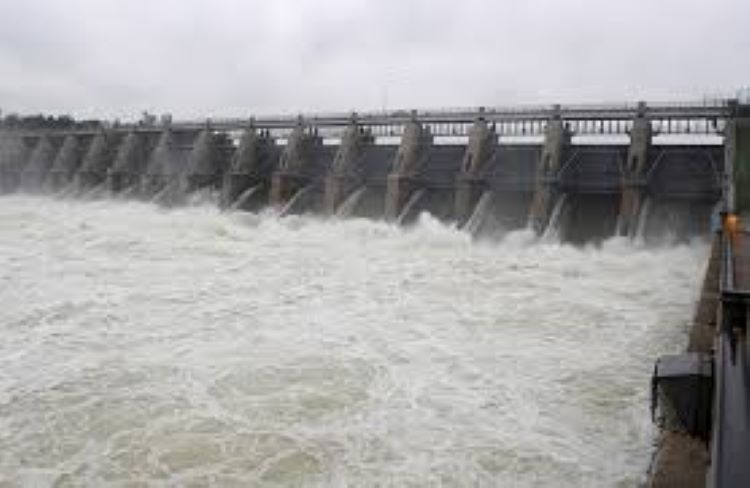
The U.S. Army Corps of Engineers says it plans to keep releases from Gavins Point Dam on the Nebraska-South Dakota border near current levels — which are more than double the average amount.
The high releases will likely continue worsening flooding downstream — in Iowa, Nebraska, Missouri and Kansas — where many levees were damaged during severe March flooding.
Officials say the releases of 70,000 cubic feet per second of water are needed because the upstream reservoirs remain quite full. The amount of water entering the dams in June was 159 percent of normal, and it has been a wet year.
HUTCHINSON — After a long career as a Wichita-based journalist, Tim Potter has been named a regional public affairs manager for the Kansas Department of Transportation.
Potter
Potter is based in the Hutchinson office of KDOT’s District Five, which spans 18 south-central Kansas counties: Barber, Barton, Butler, Comanche, Cowley, Edwards, Harper, Harvey, Kingman, Kiowa, Pawnee, Pratt, Reno, Rice, Rush, Sedgwick, Stafford and Sumner.
For the past 22 years working as a staff writer for The Wichita Eagle, Potter reported on a variety of public safety issues, including traffic safety.
“It’s fitting for me to work for KDOT because safety is a huge part of its mission,” he said.
His job now entails writing about KDOT’s District Five operations and employees. He interacts with the public and KDOT’s partners. A key part of his focus is getting useful and timely information to motorists to help make their travel smooth and safe.
Potter grew up in Kansas City, Missouri. He received a bachelor’s degree in journalism from the University of Missouri-Columbia.
FREMONT, Neb. (AP) — University of Nebraska students are beginning to work in several communities through a summer service program that was created in the wake of this year’s devastating flooding.
The program projects are varied and include documenting flood damage to roads and bridges, and developing multilingual disaster recovery materials to help with landscape design and GPS mapping.
“Our commitment to Nebraskans from the beginning has been that the University of Nebraska will be a partner for as long as it takes for our state to rebuild,” said Chuck Hibberd, dean and director of Nebraska Extension. “Our students have a wealth of knowledge and an eagerness to serve. The flood serviceship program is a perfect opportunity for them to gain real-world experience in meeting the needs of our communities.”
The Fremont Tribune reported that 24 students representing the Kearney, Lincoln and Omaha campuses are helping 14 communities, with more students being placed as the university matches students’ skills with local needs.
Alyssa Spartz, an emergency management major at the Omaha campus, is helping organize an event celebrating volunteers who helped rebuild the Washington County Fairgrounds in Arlington. The fair is scheduled to open July 26.
“Unfortunately, individuals across the county may not realize the major impacts the flooding caused and the amount of time, resources and effort it will take to recover,” Spartz said.
The flood recovery service jobs run a maximum of 10 weeks and 40 hours per week, and are based on a student’s schedule and a community’s needs. Students are paid $12.50 an hour and may be able to earn college credit for their work.
Students engaged in the program come from several study areas, including agriculture, business administration, communications and engineering.
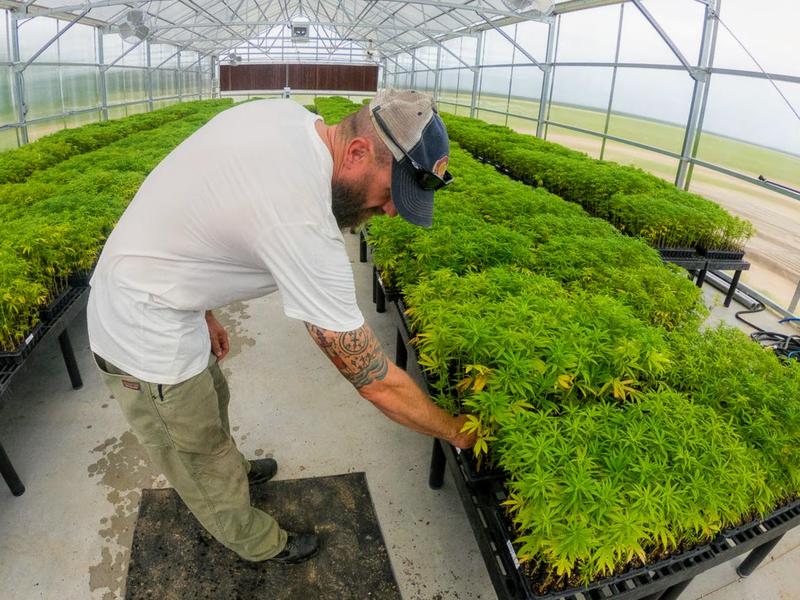
P.J. Sneed checks on some of his hemp plants waiting to be planted at his farm in Plevna, Kansas. Brian Grimmett / Kansas News Service
By BRIAN GRIMMETT Kansas News Service
PLEVNA, Kansas — P.J. Sneed walks through his small greenhouse in central Kansas checking on rows and rows of small hemp plants just waiting to be put into the ground.
The plants inside the greenhouse near Plevna look rather healthy. Problematically, they look better than the plants in the few acres he’s already planted just outside of the greenhouse.
“Day One, we planted an acre and a half,” he said. “Huge storm came through and it blew probably half the plants just over or out of the ground.”
But looks can be deceiving. The roots of the hemp plants sitting indoors have run out of room in the small plastic containers they sit in, the same kind of containers you’d find flowers sitting in at a nursery.
That’s because these plants should have been planted a few weeks ago. But like farmers of more traditional crops, Sneed’s been delayed by the wet weather that’s kept him from planting hemp in his fields.
People who signed up for an industrial hemp test program got licenses based on research proposals. But this year’s unusual weather could skew the results of the studies, impacting the kind of information the state has to gauge the prospect of growing hemp in Kansas.
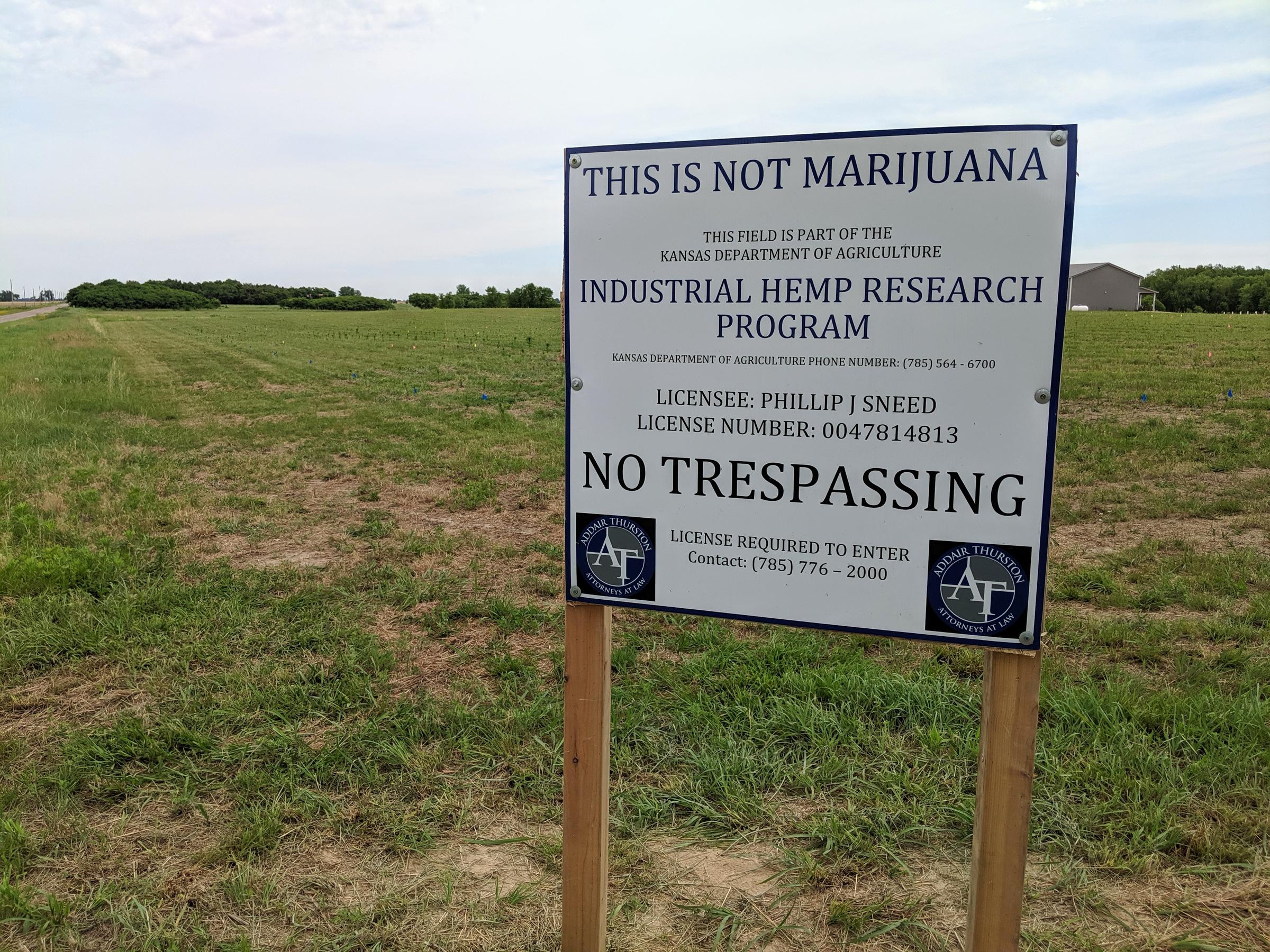
State officials want to better understand the potential for the specialty oilseed crop, colloquially known as industrial hemp. The scientific name for the plant is cannabis sativa, and it’s the same plant that marijuana comes from.
A mandatory sign posted outside of P.J. Sneed’s farm with his license information. Credit Brian Grimmett / Kansas News Service
The difference between whether or not the product of the plant is considered marijuana or industrial hemp is the amount of the psychoactive chemical THC that’s present.
Lawmakers approved the pilot program last year. Each grower licensed to participate in the program is studying some aspect of hemp cultivation.
Some are looking into how much water is needed to grow hemp, while others are investigating how industrial hemp fits into regenerative agriculture practices such as using it as a cover crop or how it impacts soil health. Growers are also providing detailed planting and harvesting information to the state.
So far this year, the state has received 392 applications and issued 248 — 192 of those approved licenses are for growers.
In total, 5,200 acres in 71 counties have been approved for growing hemp, even though it’s likely total planted acres won’t be close to that.
As of July 1, 680 acres of hemp have been planted in the state. That number is expected to grow significantly in the next few weeks as the ground across the state begins to dry out enough for planting that first planned to happen weeks earlier.
The state will issue a report at the end of the year analyzing the data gathered from all the projects. While the extraordinary weather will likely impact results, it’s too early to know how much.
“Here in Kansas … we kind of have extremes from one season to another season, and, at this point, precipitation plays a large factor,” said Braden Hoch, a hemp specialist for the Kansas Department of Agriculture.
Rain has delayed planting for some farmers, but the variety of hemp, and what the grower hopes to use it for, will also play a large role in how successful this year could be.
Hemp plants are generally grown for one of three things — its seed and grain, its fiber, or its floral material.
CBD oil typically comes from the floral material. Varieties grown for their floral material typically only need a 90-day period from planting to harvest, meaning there’s still time to get those plants in the ground and still have a good chance at a successful harvest.
Hoch said the state is ultimately trying to gather data to show whether or not hemp is a viable alternative crop for Kansas farmers, and this year’s trial could help build that case.
But even with the optimism, some hemp farmers, such as Sneed, still worry plenty about how the wet weather stunted the growth of their plants.
“This year’s crop, as wet as we are, will be affected across the board,” Sneed said. “Whether it’s CBD level or fiber level.”
Brian Grimmett reports on the environment, energy and natural resources for KMUW in Wichita and the Kansas News Service. You can follow him on Twitter @briangrimmett or email him at grimmett (at) kmuw (dot) org. The Kansas News Service is a collaboration of KCUR, Kansas Public Radio, KMUW and High Plains Public Radio focused on the health and well-being of Kansans, their communities and civic life.
JUNCTION CITY — The high water at Milford Lake has created problems for the private business sector. That subject arose during a town hall meeting conducted by Senator Jerry Moran in Junction City Monday evening.
Geary County Commissioner Keith Ascher was among those in attendance. On the lake issue he noted there’s no help right now for private sector operations. “Some of your campgrounds are out of business right now. They expressed their concerns that they needed some to help to even reopen, if they can.”
Ascher said he felt the senator took the lake issue to heart because of the impact on a lot of lakes in Kansas.
The Corps of Engineers has had to hold water in reservoirs including Milford Lake in order to prevent downstream flooding.
WICHITA — A 22-year-old Hutchinson woman was taken to a Wichita hospital after a semi crossed into her lane and struck her vehicle Sunday.
Sebastiana Romero was in one lane of K-96. A semi driven by 42-year-old Christopher Lunsford of Wichita was in the other lane. Lunsford started to merge into the Romero lane and the two vehicles collided.
Romero complained of pain after the accident and was transported to Wesley Medical Center for treatment. Lunsford was not injured.
The accident occurred around 11:40 a.m. Sunday, about a half-mile east of West Street on K-96 in Wichita.
WICHITA (AP) — Authorities say one person has died after coming into contact with a power line in north Wichita.
KAKE-TV reports emergency crews responded at around 11 a.m. Tuesday to an electrocution. A dispatch supervisor says the person was pronounced dead at the scene about 50 minutes later.
Power was disconnected in the area while crews extricated the person from the bucket of a vehicle.
Circumstances surrounding the death were not immediately released.
WICHITA (AP) — Kansas drivers can no longer be charged with a crime for refusing a field sobriety test under a new state law.
The Wichita Eagle reported that a change in state law that took effect Monday means police can’t ticket suspected drivers for not taking the test, but refusal to comply comes with a yearlong license suspension — the same as the longest suspension for failing a breathalyzer or blood test.
Field sobriety tests are usually administered before a driver submits to a breath test to determine intoxication. They can include things like standing on one leg or walking in a straight line. Drivers who refuse to be tested can still be prosecuted for a DUI based on other evidence.
The decision to strike the law designating a separate violation comes as state appellate courts and the U.S. Supreme Court have reversed course on whether motorists give implied consent to sobriety tests.
“The court interpretations have continued to change, so sometimes the Legislature feels like it has been chasing a moving target,” said John Carmichael, D-Wichita, ranking minority member on the Kansas House Judiciary Committee.
The Kansas DUI Judicial Council, which is made up of lawyers and other experts, is still working on a new overall scheme for DUI laws.
“In the meantime, they felt like there were some immediate changes that needed to be made,” Carmichael said.
Ed Klumpp, a Judicial Council member and a lobbyist for law enforcement groups, acknowledged that there may be some DUI cases that police officers won’t be able to make now.
“There was a benefit to having that for the test refusals simply because it encouraged more people to take the test,” he said of the compulsory testing. “Let’s face it — that’s what it was designed to do.”
Suspensions for drivers who refuse to be tested will likely be more severe than for those who take the test and fail, he said.
“In the long run, I think maybe this makes it a little more difficult for our law enforcement officers, but the job they do out there — I’m not concerned that our highways or streets are going to be any less safe based on the officers’ ability to get drunk drivers off the road,” said Bradley Ralph, the Republican vice chairman of the House Judiciary Committee.
TOPEKA (AP) — Kansas is reporting that it collected nearly $33 million more in taxes than anticipated in June and ended its 2019 budget year with solid revenue growth.
The state Department of Revenue said Tuesday that Kansas collected nearly $782 million in taxes last month. The state’s fiscal forecast had predicted a little more than $749 million in taxes, making the surplus about 4.4%.
Tax collections exceed expectations 24 of the past 25 months.
The state collected nearly $7.5 billion in taxes during its 2019 budget year, or $191 million more than expected. That was a surplus of 2.6%.
The budget year’s tax collections grew nearly 6.3% from the 2018 budget year, or by $440 million.
It’s likely that Kansas ended its 2019 budget year with $1 billion in cash reserves.
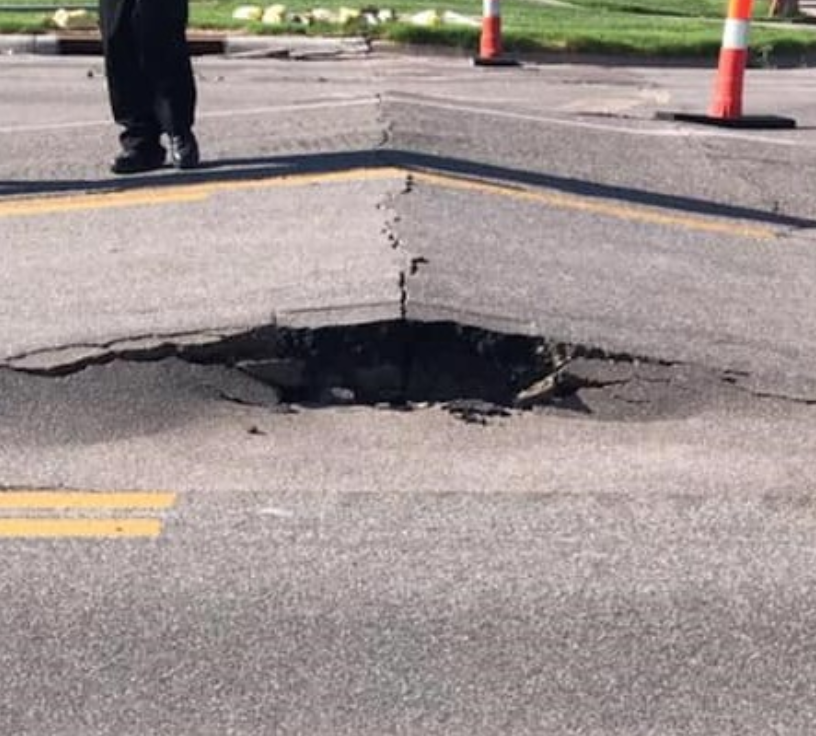
GREAT BEND — Anyone driving down 10th Street in Great Bend needs to pay heed of construction work being handled at the intersection with Grant Street, but this past Saturday an unexpected hazard surfaced. Motorists may have seen a large portion of the middle turning lane on 10th Street buckle.
Great Bend City Administrator Kendal Francis says crews had to cut the damaged portion of the road out and temporarily filled the damaged area with asphalt millings.
“Once the 10th & Grant project is complete, the buckled area will be repaired correctly,” Francis said.
City staff believe heat was the main cause for the road buckling.
Francis does urge motorists to use caution while driving through the 10th & Grant area with construction to widen the intersection expected to continue until September.
“The traffic signals have been removed so that adds another element to the whole project,” said Francis. “It is a significantly reduced speed so we just ask that motorists follow the speed limit and be aware of their surroundings.”
The third phase of construction is expected to begin July 9 to reconstruct the middle lanes. All left turns will be prohibited in the project area during the third phase.
A building and equipment owned by Roger Mattison burn Monday evening. Photos courtesy Saline County Sheriff’s Office
Salina Post
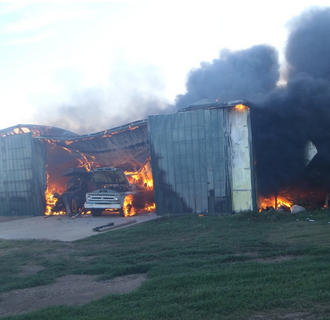
SALINA — A Salina man is dealing with the loss of multiple farm implements and the building they were in after a fire Monday evening northeast of Salina.
Saline County Undersheriff Brent Melander said Tuesday that deputies were called to the 4300 block of East Campbell Road at 7:15 p.m. Monday for the report of a farm shed on fire. When deputies arrived, they found an approximate 40-foot Morton Building engulfed in flames, he said. The building and its contents are owned by Roger Mattison, 66, of Salina, Melander said.
Firefighters from Rural Fire District No. 5 were on scene but were unable to save the building and its contents. The building was valued at $48,000, Melander said. Equipment in the building included the following, he said.
A square baler
A pickup
A grain cart
A tractor
A combine
Some diesel engines
Rural Fire District No. 5 firefighters responded to the blaze.
According to Melander, the total loss, including the building, was estimated at $149,000.
The cause of the fire has not been determined, he said.







 By DEWEY TERRILL