We have a brand new updated website! Click here to check it out!

First Five: New Assange charges raise two First Amendment alarms

Gene Policinski

Two First Amendment alarms are sounding in the wake of new federal charges against WikiLeaks founder Julian Assange, but only one is being heard by most of us — for now.

Initially, federal prosecutors charged Assange with just one crime: conspiring in 2010 with former Army Private Chelsea Manning to hack a government computer password, which allowed Manning access to a trove of classified information that she turned over to WikiLeaks.

For weeks, free press advocates worried that the Department of Justice would go beyond prosecuting Assange for computer hacking and expand the charges into journalists’ territory —publishing classified information.

These fears were not unfounded. On May 23, the unsealing of an 18-count indictment under the 1917 Espionage Act, accusing Assange of working directly with Manning to obtain secret government documents, set off Alarm #1 for most journalists. The new charges implicate the work of journalists, which often involves talking with sources and at times possessing and publishing secret documents.

In trying to thread a legal needle, Justice Department lawyers said the Assange indictment avoids a collision with the First Amendment because he is not a journalist, as they define the profession.

And therein is Alarm #2: the government defining who is and who is not a journalist. This was the very activity that the nation’s founders — who had first-hand experience with the abuses inherent in a system where the crown licensed printers and publishers — ruled out in 1791 by creating unequivocal First Amendment protection for a free press.

How did we get to these alarming places?

The broadly written Espionage Act criminalizes the taking, possession and distribution of government secrets by any unauthorized person for any reason. But federal officials through the years have acknowledged that the role of a free press historically has meant at times providing the public with information that government officials of the moment wanted to keep secret. For that reason, journalists in the U.S., particularly those reporting on national security issues, have operated for decades with the tacit acceptance that they would not be prosecuted for receiving illegally obtained information from a third party as long as there was no involvement by the journalists themselves in the actual taking of the information property.

So it mainly has been policy, not law, protecting journalists receiving stolen information related to national security. The law explicitly protects publishing that information since the 1971 Pentagon Papers decision in which a splintered U.S. Supreme Court said “prior restraint” by government to stop publication of secret materials was unconstitutional. Seen generally as a free press win, often left unsaid is that the justices left open the issue of what penalties the government could impose on journalists after publication of classified materials.

That’s why the Assange indictment, if it stands, could dramatically change the delicate balancing act that has existed until now, in which the government sought to protect its secrets by prosecuting leakers, but did not go after reporters and news outlets that produced news reports based on leaked materials.

In announcing the indictment, the Associated Press reported, justice officials said Assange was “not charged simply because he is a publisher,” but rather because he actively encouraged Manning to steal hundreds of thousands of secret documents related to U.S. military and diplomatic actions in Iraq, Afghanistan and elsewhere, cracking a password that gave Manning access to the materials and “publishing a narrow set of classified documents in which Assange also allegedly published the unredacted names of innocent people who risked their safety and freedom to provide information to the United States and its allies.”

In a telephone conference call with reporters, Assistant U.S. Attorney General John Demers said the indictment does not destroy the Department of Justice’s informal agreement not to pursue journalists for publishing leaked information, saying the department “… takes seriously the role of journalists in our democracy … Julian Assange is no journalist.”

Demers then ventured into the definition zone — triggering Alarm #2 — that the nation’s founders thought to exclude: “No responsible actor, journalist or otherwise, would purposely publish the name of individuals he or she knew to be confidential human sources in war zones, exposing them to the gravest of dangers.”

While the journalists I know would agree with that assessment, and Demers may well be sincere in his words, the important element is that such a statement must be journalism’s self-definition, not one provided by a government official or established by ordinance, edict or, in a backhanded fashion, through an indictment.

The nation’s founders knew all too well that what the government can grant, it can take away. The danger in allowing the Justice Department to expand its Assange indictment into “publishing” is that can hand current and future administrations a cover under which they may pursue, in instances of leaked secrets, those reporters they disfavor.

There is real debate among First Amendment advocates whether to recognize Assange and WikiLeaks as a non-traditional journalist/journalism or as a political activist and subversive enterprise hiding behind a false shield. The government does need to protect many secrets.

Congress could avoid touching off future alarms by writing into the 102-year old Espionage Act more specific language that reflects what it was really meant to target: Those who steal and reveal U.S. government secrets with the purpose of harming the nation and exposing its citizens to danger.

Surely such a revision could make a safe space for those whose goal is to help, not hurt, the public by relaying classified information that properly holds government accountable — and that aids and abets not crime, but self-governance.

Want a few examples? The Pentagon Papers’ history lesson, which showed how government hid its decades-long engagement in Vietnam. The revelations about the massive surveillance system that grew up in the early 2000s without Americans being aware their phone calls (and later, their email traffic) was being stored and parsed by a huge government program. The reports revealing that newly designed vehicles to protect soldiers from landmines in Iraq and Afghanistan were slow in reaching the front lines, even as dozens or more died needlessly. The list is much longer if you care to look.

In the process of revisiting that law and those stories, let’s also keep in mind the core First Amendment principle that we know journalism when we see, read or hear it, not when a government official tells us.

Gene Policinski is president and chief operating officer of the Freedom Forum Institute. He can be reached at [email protected], or follow him on Twitter at @genefac.
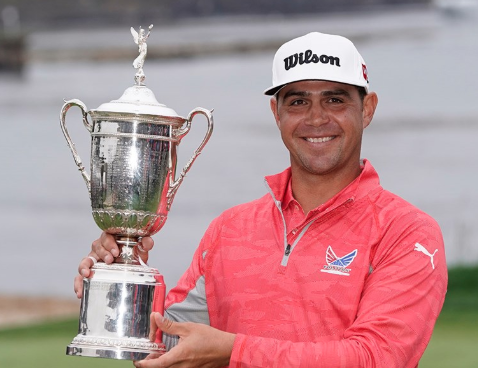
Social media celebration as Kansan wins the U.S. Open golf title

Photo courtesy University of Kansas Athletics
PEBBLE BEACH, Calif. (AP) — Gary Woodland of Topeka captured the U.S. Open, overcoming the back-nine pressure at Pebble Beach to hold off two-time defending champion Brooks Koepka for a three-shot victory. 

The social media world exploded celebrating Woodland’s win. From the President of the United States and Kansas Governor and many others sent their congratulations.

Woodland all but sealed his first major title when he chipped off a tight lie on the green on the 17th hole to tap-in range at a pin tucked in the back left. His par there preserved the two-shot lead.

Then, he made it a three-shot edge when he knocked in a 30-foot birdie putt on 18. It pushed him to 13-under 271 — beating by one shot the score Tiger Woods posted during his 15-shot victory at Pebble in the 2000 U.S. Open.

Woodland shot 2-under 69 to become the fifth player to break 70 in all four rounds of the U.S. Open.

The fourth was Koepka, who wrapped up his round of 68 a few minutes earlier. He’s the first to accomplish that feat and not win.

Koepka failed in his quest to become the first player since Willie Anderson in 1905 to win three straight U.S. Opens. But this second-place finish adds to a runner-up at the Masters and his title at the PGA last month.

Xander Schauffele, Jon Rahm, Chez Reavie and Justin Rose finished in a four-way tie for third and 7 under.

___
PEBBLE BEACH, Calif. (AP) — In front of Gary Woodland was a 263-yard shot to the scariest green on any par 5 at Pebble Beach, especially with a U.S. Open on the line. Behind him by one shot on the leaderboard was Brooks Koepka, the most dangerous figure in major championship golf these days.

The safe shot was to lay up on the 14th and take his chances with a wedge

“The idea was to play for the win,” Woodland said.

With an extra boost of confidence from his caddie — Brennan Little, who was on the bag for Mike Weir in his Masters victory — Woodland delivered the shot of his life with a 3-wood that narrowly cleared a bunker, settled on the edge of the green and set up a birdie that gave him the cushion he needed.

The rest was pure theater — a 90-foot pitch off the 17th green he nearly holed, a 30-foot birdie putt on the final hole for a 2-under 69 and a three-shot victory that denied Koepka’s bold bid to match a century-old record with a third straight U.S. Open.

Woodland’s pitch across the 17th green over a hump that checked and trickled to tap-in range effectively clinched it, taking its place with other big moments on the 17th green in the U.S. Open such as Jack Nicklaus and his 1-iron off the pin and Tom Watson’s chip-in birdie. It even got the attention of Nicklaus.

“Took a lot of guts,” Nicklaus said on Twitter.

Woodland had that it abundance, along with a message from an inspirational friend.

“You got this.”

Until Sunday, when he cradled the silver trophy at Pebble Beach, Woodland got more attention from one hole in a pro-am at the Phoenix Open. He was gracious and encouraging to Amy Bockerstette, a 20-year-old with Down Syndrome and sheer optimism. Woodland invited her to hit a shot on the par-3 16th (into a bunker). He wanted to blast it out of the sand but she said, “I got this.” She hit it out to 8 feet and made the putt. The PGA Tour-produced video has more than 20 million views.

“I told myself that a million times today,” Woodland said. “I’ve got this.”

Koepka didn’t make it easy, keeping the pressure on Woodland until the very end.

Both represent the modern athlete in golf. Both are unflappable.

Needing three putts to win, Woodland finished in style. He raised both arms in the air to salute the crowd, turned toward the Pacific and slammed down his fist.

“I never let myself get ahead,” Woodland said. “Once that went in, it all came out of me. It’s special to finish it off here at Pebble Beach.”

Koepka had to settle for a footnote in history. He closed with a 68, making him the first player with all four rounds in the 60s at a U.S. Open without winning.

“It was awesome to come this close to going three in a row. It’s incredible,” Koepka said. “I didn’t really think about it until I was done on 18 and realized how close I actually was to not making history, but tying it, I guess you could say. Just wasn’t meant to be this week.”

Distance was no problem for Woodland on the 14th hole. It was the potential outcome.

“Left is not good, right is out-of-bounds, long is not ideal and the bunker speaks for itself,” Woodland said. “So to execute that shot under the pressure, under the situation, that shot gave me the confidence. I felt better after hitting that shot on the golf course today than I had in a long, long time.”

He believes it allowed him to hit one just as good on the 17th.

Woodland dropped the 5-iron from his hands when it sailed well to the right of the green with the pin 90 feet away over a hump.

Up ahead on the par-5 18th, Koepka drilled a 3-iron just over the back of the green, leaving him a 50-foot chip for eagle to tie, with a birdie likely to do the trick considering what Woodland faced on the 17th. Koepka chipped to 10 feet and narrowly missed the birdie putt.

Woodland, unable to hit putter and get anywhere near the hole, opted to pitch it with a 64-degree wedge. He clipped it perfectly just over the hump, and it checked about 12 feet from the hole and trickled by the pin to secure par, and effectively the U.S. Open.

“I was just trying to get it over that hump,” Woodland said. “I thought it had a chance to go in, but it’s not one I want over.”

Woodland played conservatively down the 18th and made one last birdie that only mattered in the record book. He was aware that Tiger Woods had a 12-under 272 during his historic rout at Pebble Beach in 2000, and he topped him.

That birdie put him at 13-under 271 and earned him $2.25 million, the richest payoff in golf.

The difference was Woods won by 15 shots and was the only player under par. With a marine layer blocking the sunshine, and no significant wind at Pebble Beach all week, 31 players finished under par.

Koepka started four shots behind in his bid to join Willie Anderson as the only players to go back-to-back-to-back in the toughest test in golf. He made up ground quickly with four birdies in five holes.

“I felt like, ‘We’ve got a ball game now,'” Koepka said.

He failed to get up-and-down from a bunker for birdie on the par-5 sixth, and missed a 6-foot birdie putt on the par-3 seventh. Still, he stayed within range, just like he wanted, knowing that anything could happen on the back nine of a U.S. Open.

Something wonderful happened to Woodland.

“Gary played a hell of a round today,” Koepka said. “Props to him to hang in there. To go out in style like that is pretty cool.”

Of the four other players who had a shot at three straight U.S. Opens, no one came closer than Koepka. He now has a victory in the PGA Championship and runner-up finishes in the Masters and U.S. Open.

Justin Rose was the only one who caught Woodland all day, with a birdie on the opening hole. Rose bogeyed from the bunker on No. 2 as Woodland birdied, and he never caught up. Rose fell out of the race with three bogeys in a four-hole stretch on the back nine. He shot 74 and shared third with Xander Schauffele (67), Jon Rahm (68) and Chez Reavie (71).

Woods birdied six of his last 12 holes and was never a factor. He tied for 21st, 11 shots behind.

Kan. man must pay 15 victims restitution as part of child porn sentence

KANSAS CITY, KAN. – A Kansas man who pleaded guilty to possessing child pornography was sentenced Thursday to 70 months in federal prison, according to U.S. Attorney Stephen McAllister.

Joel Haines photo Kan. offender registry

In addition, the defendant was ordered to pay $5,000 to the Justice for Victims of Trafficking Act Fund and $3,000 to each of 15 victims who requested restitution.

Joel Haines, 61, Paola, Kan., pleaded guilty to one count of possessing child pornography. At sentencing, the prosecutor said investigators found 1,433 digital child pornography images on Haines’ computer. The images included children under the age of two being sexually abused as well as images of girls ages 6 to 12.

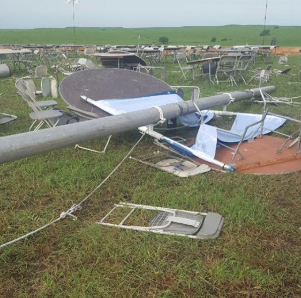
Rural Kan. symphony event cancelled after storms damage tents

WICHITA, Kan. (AP) — Organizers have cancelled this year’s annual Symphony in the Flint Hills performance because storms did extensive damage to the tents and other equipment for the event.

Storm damage photo courtesy Symphony in the Flint Hills

The group that planned the performance doesn’t plan to offer refunds for the tickets that sold for between $50 and $95. Past events attracted roughly 7,000 people to rural Kansas.

Organizers initially delayed Saturday’s planned performance from Saturday to Sunday, but later decided that the damage from a Friday-night storm was too extensive. Sunday’s forecast also called for the possibility of more severe weather.

The event would have featured a performance by the Kansas City Symphony. The ticket sales raise money to help educate people about tallgrass prairie and preserve it.

Report: Number of Mexican immigrants in the US illegally declines

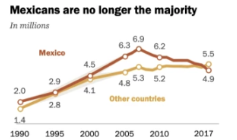
WASHINGTON (AP) — The number of Mexican immigrants in the U.S. illegally has declined so sharply over the past decade that for the first time, they no longer make up the majority of that category, according to an estimate by the Pew Research Center Wednesday.But the number of Central Americans in the country illegally is increasing — from 1.5 million in 2007 to 1.9 million in 2017, the study found.The numbers reflect the conundrum the U.S. is facing at the southern border: The number of Central American migrants crossing the U.S.-Mexico border is rising dramatically, and they are not easily returned over the border — unlike in previous years when the majority of the border crossers were single men from Mexico.

Curbing immigration is President Donald Trump’s signature political issue, but his hard-line and chaotic border policies have failed to stem the tide, and in fact, the numbers have increased since he took office.

There were about 4.9 million Mexicans in the U.S. illegally in 2017, down 2 million from 2007. The decrease was the major driver in bringing down the overall population of immigrants in the country illegally. In 2017 it was about 10.5 million — the lowest since 2004. The research group found the peak was in 2007 at about 12.2 million. Previously, Mexican nationals made up most of that population. Now, it’s a combination, with Central America having the second-largest, and Asia following with 1.4 million.

Pew based the estimates on government data and used a so-called “residual” method to determine the estimate. The method is similar to those used by Homeland Security’s Office of Immigration Statistics and other groups that track immigration, like the Migration Policy Institute and Center for Migration Studies.

The method uses U.S. census counts and government surveys to calculate the number of immigrations living in the U.S. in a particular year, followed by immigrant admissions and other official counts. The number of lawful immigrants is subtracted to get the estimate of immigrants here illegally. The estimate includes some 320,000 people with Temporary Protected Status, and about 700,000 beneficiaries of the Deferred Action for Childhood Arrivals, two programs ended by Trump that are on hold dude to court challenges.

Their research found that longterm residents outnumber more recent arrivals. There are also fewer people working who are not legally allowed to be in the country. Five states had increases in the number of people there illegally: Louisiana, Maryland, Massachusetts, North Dakota and South Dakota.

Kansas man sentenced to 18 years for man’s shooting death

Foster -photo Shawnee Co.

TOPEKA, Kan. (AP) — A Kansas man has been sentenced to nearly 18 years in prison for the July shooting death of another man.

Tony Lee Foster, 33, Topeka, was sentenced Friday. A Shawnee County jury found him guilty in March of second-degree murder and a weapons count in the July 9 fatal shooting of 36-year-old David Payne, of Topeka.

Officers responding to report of a shooting at a home in the northern part of the city found Payne with a gunshot wound to his torso. He was rushed to a hospital, where he later died.

New Exec. Dir. at American Legion Boys State of Kansas Leadership Academy

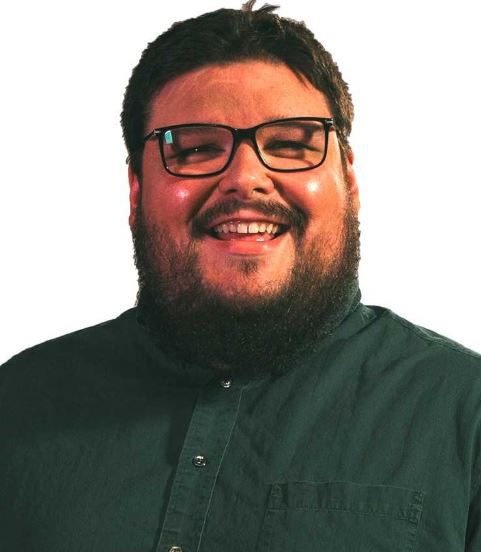
Shane Wilson
ALBSKLA

MANHATTAN – The American Legion Department of Kansas’ Boys State Committee has appointed Shane Wilson to serve as the executive director of the American Legion Boys State of Kansas Leadership Academy.

Wilson’s three-year term began on June 8 at the close of the 2019 ALBSKLA session. He takes over for Jake Ellis who served in the role for the past four years.

Wilson, a resident of Lawrence, Kan., was a Kansas Boys State delegate in 2006 from Abilene High School before graduating there in 2007. He has served KBS in a variety of volunteer positions since 2007, most recently as its dean of counselors for the last two years. Wilson previously served Kansas Boys State as a general advisor in 2017, as a coordinator from 2014-16 and in various counselor roles from 2007-13.

Wilson is employed as a product support specialist for PROSOCO Inc., in Lawrence. He earned a Bachelor of Science degree in economics from Emporia State University in 2014. Wilson is pursuing Master of Arts in educational leadership from Saint Mary’s University (Minn.). He is a member of the
Shawnee Tribe of Indians based in Miami, Okla.

As executive director for the American Legion Boys State of Kansas Leadership Academy, Wilson is responsible for the direction and oversight of all objectives for the program. Along with implementation of strategic planning and visioning, Wilson is accountable for the long-term health and longevity of the
ALBSKLA and its resources.

The ALBSKLA provides a relevant, interactive, problem-solving experience in leadership and teamwork that develops self-identity, promotes mutual respect and instills civic responsibility. Boys State is a “learning by doing” political exercise that simulates elections, political parties and government at the state, county and local levels, providing opportunities to lead under pressure, showcasing character and working effectively within a team. It’s also an opportunity to gain pride and respect for government and the price paid by members of the military to preserve democracy.

Approximately 410 young men from across the State of Kansas, all of whom will enter their senior year of high school this fall, participated in the 2019 session of the American Legion Boys State of Kansas Leadership Academy. The event, which concluded its 82nd year, was held June 3-8 at Kansas State University in Manhattan for the 28th consecutive year. The 2020 session will begin on Sunday, May 31.

Drug task force locates Kansas meth lab, makes arrest

GEARY COUNTY —Law enforcement authorities are investigating a suspect after finding a meth lab in Geary County.

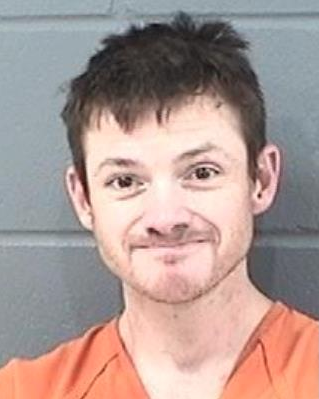
Pierson photo Geary Co.

Early Saturday morning the Junction City – Geary County Drug Operations Group conducted a search warrant in the 300 block of North Washington Street for a methamphetamine manufacturing investigation. A clandestine methamphetamine lab was located and processed, according to a media release.

Authorities reported that Avery Louis Pierson, 35, Junction City, was arrested on suspicion of manufacturing methamphetamine, possession of methamphetamine, felony possession of drug paraphernalia, possession of marijuana and felony interference with law enforcement.

The search warrant was served with the assistance of the Junction City Police Department, Geary County Sheriff’s office, Grandview Plaza Police Department the Riley County Police Department Emergency Response Unit, Hazardous Material Response Team and the Junction City Fire Department.

The Drug Operations Group is a joint task force composed of members of the Junction City Police Department, Geary County Sheriff’s Department and the Grandview Plaza Police Department.

4 adults, child hospitalized after boat explosion at Lake of the Ozarks

LAKE OF THE OZARKS — Five people were injured in an accident just before 2:30p.m. Saturday at Lake of the Ozarks.

The Missouri State Highway Patrol reported a 1993 Chris Craft had just been filled with fuel at the Millstone Marina dock.

The driver Robert C. Baber, 71, Kansas City, started the engine creating an explosion due to lack of ventilation and a mechanical failure. The explosion ejected passenger Patrick Baber, 39, Kansas City from the boat.

Life Flight transported passenger Carl Harris, 42, Kansas City, to University Hospital.

Camden County Ambulance transported Robert and Patrick Baber to Lake Regional Hospital.

Lake West Ambulance transported Kathryn G. Harris, 6, and Cynthina O. Sterling, 48, both of Kansas City to Lake Regional Hospital. The child was the only occupant wearing a life jacket, according to the MSHP.

Kan. High Court: State can’t limit lawsuit payouts for pain and suffering

The Kansas Supreme Court held that the cap on noneconomic damages violates the state constitution’s right to a trial by jury.
BIGSTOCK

A Kansas law that caps jury awards for noneconomic damages — things like pain and suffering — violates the right to a trial by jury, the Kansas Supreme Court ruled on Friday.

“This is huge,” said attorney Thomas M. Warner Jr., who represented Diana K. Hilburn, the plaintiff in the case. “We’ve had these caps on the books since 1986 in Kansas. Basically, the politicians decided that they would be in a better position to determine the amount of damages for noneconomic damages than juries. And so this decision allows juries to make that decision again.”

Kansas is one of many states that have limited noneconomic damages, particularly in medical malpractice cases, out of concern that runaway jury awards cause skyrocketing insurance premiums and hurts the economy.

The cap has been revised upward over the years and now stands at $325,000. It was scheduled to increase to $350,000 in 2022.

Hilburn was injured in 2010 when the car she was riding in was rear-ended by a semi-trailer truck. Hilburn sued the truck’s owner, Enerpipe Ltd., for negligence. A jury awarded her $335,000, including $301,509.14 for noneconomic losses.

Because Kansas at the time capped noneconomic damages at $250,000, the total award was reduced to $283,490.86. Hilburn appealed and the Kansas Court of Appeals rejected her argument that the cap was unconstitutional.

In reversing that decision, the Kansas Supreme Court held that the cap violates the Kansas Constitution’s Bill of Rights, which states that the “right of trial by jury shall be inviolate.”

The court rejected its own reasoning in a 2012 medical malpractice case that the right to a jury trial could be modified if certain conditions were met.

The Kansas Court of Appeals found those conditions were met in Hilburn’s case, but the Supreme Court said it should never have applied that test to a fundamental constitutional right.

“ … we simply cannot square a right specially designated by the people as ‘inviolate’ with the practical effect of the damages cap: substituting juries’ factual determinations of actual damages with an across-the-board legislative determination of the maximum conceivable amount of actual damages,” Justice Carol Beier wrote for the court.

Justice Marla Luckert dissented, saying she would have followed the 2012 malpractice case and upheld the cap.

The case drew widespread interest. The Kansas Chamber of Commerce and Industry and the Kansas Association of Defense Counsel filed friend-of-the-court briefs urging the court to uphold the damage cap. The Kansas Trial Lawyers Association filed a friend-of-the-court brief urging it to find the cap unconstitutional.

“This is a game-changer,” said David Morantz, who wrote the trial lawyers’ brief. “It’s a very big ruling.”

“This has been an issue that has troubled and really hurt personal injury victims for years,” he said. “It’s been an issue of the Legislature trying to substitute its judgment for that of Kansas juries and preventing Kansas juries from deciding the full measure of personal injury victims’ damages.”

Judges will still retain the ability to rein in runaway jury verdicts, under a legal doctrine known as remittitur.

“But today’s opinion does a good job of putting these issues and questions back in juries’ hands and keeping the legislature out of it,” Morantz said.

Dan Margolies is a senior reporter and editor in conjunction with the Kansas News Service. You can reach him on Twitter @DanMargolies.

Kansas man hospitalized after hit running across highway

RENO COUNTY — One person was injured in an accident just after 10:30p.m. Saturday in Reno County.

The Kansas Highway Patrol reported a 2018 Toyota Rav4 driven by Wade A. Phillips, 46, Lewis,  was  eastbound in the right lane of U.S. 50 just east of Whiteside Road.

The Toyota struck a pedestrian identified as Christopher Marshall, 25, Hutchinson, who ran across the highway.

EMS transported Marshall to Hutchinson Regional Medical Center. Phillips was properly restrained at the time of the accident and not injured, according to the KHP.

STUDY: Adults with disabilities have challenges insurance, despite ACA improvements

(Photo credit: Pexels.com)

LAWRENCE — Expansion of the Affordable Care Act in 2014 improved access to insurance and represented gains in health care for adults with disabilities. But while those gains were documented, what wasn’t known was what challenges still existed in accessing care for that population. A new study from the University of Kansas documents the challenges adults with disabilities still face in accessing health care and offers recommendations to improve care and accessibility.

Researchers in KU’s Institute for Health & Disability Policy Studies conducted interviews with 22 adults with a variety of disabilities and health insurance types about barriers they faced in accessing health care after the expansion of ACA coverage. They found challenges exist in five major areas:

  • Information and understanding of coverage
  • Out-of-pocket expenses
  • Prescription medications
  • Provider networks
  • Transportation

“We want to make it clear this is not an indictment of the Affordable Care Act. The ACA has expanded coverage for many, but that said, we want to look at what barriers still exist and what can still be improved,” said Jean Hall, institute director and one of the article’s authors.

Co-written by Noelle Kurth and Sarah Smith of KU and Gilbert Gimm of George Mason University, the study is forthcoming in the Disability and Health Journal.

The individuals interviewed provided a sample of American adults from across the U.S. with different types of disabilities and coverage provided by Medicaid, private insurers, the ACA marketplace and other sources.

Nearly all reported trouble accessing information and understanding their coverage. A longstanding problem, the Affordable Care Act didn’t change that for many respondents. Some reported confusion when switching from Medicare or Medicaid to private insurance about which doctors were in their networks or what services were covered. Information could be hard to find, and it was often incorrect. Studies have previously found more than half of private insurers have incorrect or out-of-date information regarding providers on their websites.

Other individuals reported being referred to see specialists, even if they were not part of their plan’s network. That was part of the also longstanding problem of out-of-pocket expenses. Problems existed even when specialists or other services were covered.

“People with disabilities have to see specialists more often, which adds up in out-of-pocket expenses,” Hall said. “That’s an extra burden for people who tend to be in lower-income brackets to begin with.”

In terms of medications, numerous respondents reported not having all of their medications covered, having co-occurring conditions that require different prescribed medications or being prescribed medicines that contraindicate each other. The result of some being covered and not others, or confusion on which were needed, often led to people being forced to choose which medicine to go without or having to pay for needed prescriptions on their own. Appeals processes do exist, but they can take a long time to resolve, which is compounded by going without a medication, Hall said.

Transportation was one of the most frequently reported issues. Numerous respondents reported having to travel long distances to see their doctor. One respondent in Alaska was forced to travel out of the state to find an in-network provider. Others had to take time from work to travel several hours, and others were unable to drive because of their disability, requiring a second person to come with them, all of which added to the time required and financial strain resulting from travel.

“There was one woman who reported she not only had to travel to her doctor but had to pay for parking each time she had an appointment. That may not seem like much, but it adds up and made it hard for her to be able to afford the travel,” Hall said. “And if you need another person to travel with you, either to drive or to provide assistance, that adds to the difficulty.”

The authors make several recommendations for policy to address the issues individuals with disabilities face. While Medicaid is required to cover transportation for people with disabilities for non-emergency visits, several problems still exist. Encouraging insurers to provide travel vouchers could help address the problem, the researchers argue. Requiring insurers to have up-to-date information and either penalizing those who don’t or providing incentives for those who do could help address confusion in coverage, while moving to coverage of medications known to be cost-effective and lowering co-pays and out-of-pocket costs to ensure they are available when needed would help as well, they write.

All of the barriers not only had negative effects on the individuals’ health, access or finances, they also influenced whether they were able to continue working. Being unable to work, earn income and keep insurance can all negatively affect health and well-being as well.

“We need to be cognizant of the fact that having health insurance doesn’t necessarily mean you have access to health care and work to ensure that access is available,” Hall said.

Woman sentenced to prison for Kan. crash that killed 4 returning from state football

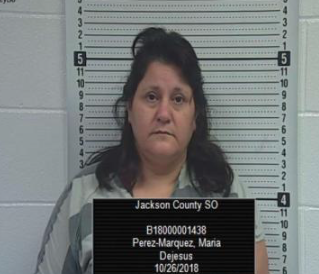
Maria De Jesus Perez-Marquez photo Jackson County

HOLTON, Kan. (AP) — A Nebraska woman has been sentenced to more than four years in prison for a November 2017 head-on crash in northeastern Kansas that killed four members of a Sabetha family who were returning home from a state championship football game.

49-year-old Maria Perez Marquez, of Omaha, Nebraska, was sentenced Friday to four years and one month in prison. She pleaded no contest to aggravated battery and three misdemeanor counts of vehicular homicide for the crash that killed 42-year-old Carmen Ukele, her 11-year-old daughter, Marlee Ukele, and her brother-in-law, 62-year-old Stephen Ukele. Carmen Ukele’s husband, 60-year-old Lee Ukele, initially survived the crash but died last month of his injuries.

Investigators say the family was returning home from watching the Sabetha High School football team win the state championship when Perez Marquez crashed into their minivan while trying to pass another vehicle. At the time, two of Lee Ukele’s sons played on the team.

Copyright Eagle Radio | FCC Public Files | EEO Public File