We have a brand new updated website! Click here to check it out!

Kansas Lawmakers Had A Deal To Expand Medicaid Next Year, Until They Didn’t

A deal to clear the way for Medicaid expansion next year that some Kansas lawmakers thought they had brokered in the waning hours of their just-finished legislative session appears to be unraveling.

Republican lawmakers met several times during the last hours of the legislative session to negotiate among themselves about Medicaid expansion. Their deal appears to have dissolved.
JIM MCLEAN / KANSAS NEWS SERVICE

Instead, the conservative leaders and moderate rank-and-file Republicans find themselves splitting in an intra-party fight.

Then, on the session’s final night, Hineman told reporters that his forces had reached an agreement with Senate leaders.

“We have achieved some assurances that have moved the ball in the right direction,” Hineman said.

The handshake deal, he said, committed the Senate to voting on a compromise expansion bill at the outset of the 2020 session. Importantly, he said, Senate leaders also agreed to leave the writing of the bill to a bipartisan committee of House and Senate members rather than a “handful” of conservative senators.

A week later, differing accounts of that agreement now undermine trust and the chances that lawmakers will start the 2020 session with anything approaching consensus on how to expand Medicaid coverage to tens of thousands more low-income Kansans.

Senate Majority Leader Jim Denning, an Overland Park Republican, said Hineman’s account is “fairly accurate” with one big exception: Senate leaders didn’t agree to let a joint study committee — with legislators from both the House and Senate, Republican and Democrat — write the compromise bill.

Instead, he said, a Senate committee headed by Sen. Gene Sullentrop, a Wichita Republican and expansion opponent, will take the lead.

Notably, the House had passed an expansion bill. In the Senate, Denning and Senate President Susan Wagle refused to bring that bill to the floor for a vote.

“The House doesn’t set the Senate agenda,” Denning said in a recent interview with the Kansas News Service.

Denning said he was “very clear with Representative” Hineman about how he planned to proceed.

“No,” Hineman said when reached for a response, he wasn’t.

“That is certainly not my interpretation of the discussion we had,” Hineman said. “That’s very discouraging.”

Rep. John Eplee, an Atchison Republican who also participated in the negotiations, confirmed Hineman’s account that Senate leaders, including Denning, agreed to allow a joint committee to write the bill.

“That’s what he promised us in the meeting,” Eplee said, adding that Denning also pledged to use the governor’s bill as a starting point.

Believing they had won all the concessions they were going to get, Eplee said moderate Republicans dropped their demand for an immediate Senate vote.

“That helped turn the fire down,” he said.

But it ignited House Democrats’ frustration. Rep. Tim Hodge, a Democrat from Newton, said the coalition would have prevailed if moderate Republicans had continued to block passage of the budget.

“We all stayed and a bunch of you strayed,” Hodge said on the session’s final night. “We could have done this.”

The governor was also frustrated. Kelly anchored her campaign on expansion and thought she could get it done in her first session.

But, she said, moderate Republicans should have known better than to trust Denning, who for years had been one of the Legislature’s most outspoken opponents of expansion.

“The fact that he’s now reneging now on what some thought was a promise is not shocking at all,” Kelly said.

Kelly’s expansion bill passed the House 69-54 in March. A majority of senators also supported the bill, but Wagle and Denning wouldn’t allow it to come to a vote despite intense pressure from advocates who accused Republican leaders of denying life-saving care to thousands of vulnerable Kansans.

“I don’t run on emotion,” Denning said. “I understand the need to look at Medicaid expansion. I plan on doing it.”

Denning said he makes no apologies for tackling other priorities first, such as paying off state pension fund obligations and resuming construction on suspended highway projects before committing to expanding an already “very big entitlement program.”

“Once you turn that program on, there’s no turning it off,” he said. “That’s why I think it needs to have a lot of good due diligence.”

Hineman and other legislative supporters of expansion are concerned that the Senate bill will include a work requirement and host of other provisions favored by conservatives but opposed by Democrats and the interest groups pushing the issue, including the Kansas Hospital Association.

“That means we’re back in the middle of a probably very contentious wrangle over what the final product should be,” he said.

Wagle seemed to confirm those concerns at a late session news conference when she said any expansion plan that clears the Senate “will be very different” than the one that passed the House this year.

Medicaid Expansion in Brief:

  •  Kelly’s expansion plan would extend coverage under KanCare — the state’s privatized Medicaid program — to an estimated 130,000 more low-income Kansans.
  • A Medicaid expansion bill similar to the one introduced by Kelly and passed by the House was approved by the 2017 Legislature. It was vetoed by then Republican Gov. Sam Brownback and the Legislature narrowly failed to override his veto.
  • Expansion would cover Kansans making up to 138 percent of the federal poverty level. That’s $17,236 for an individual or $35,535 for a family of four.
  • Currently, the Kansas Medicaid program provides health coverage for children, pregnant women, individuals with physical and cognitive disabilities and elderly Kansans who have exhausted their resources. Adults with children are eligible, but only if they make less than 38 percent of the federal poverty level —- $9,538 for a family of four. Adults without children aren’t eligible for coverage no matter their income.
  • States and the federal government jointly fund Medicaid. Kansas’ share of those costs is approximately $1.3 billion annually. If Kansas expands its program, the federal government would cover 90 percent of the additional costs. The state’s share would be between $34 million and $42 million per year.
  • Expansion would generate an additional $913 billion in federal Medicaid funding for Kansas, according to the Kansas Hospital Association.  Supporters claim an associated boost in state tax receipts would help cover the cost of expansion.
  • Thirty-seven states and the District of Columbia have adopted Medicaid expansion. Kansas and Missouri are among 14 that haven’t.

Jim McLean is the senior correspondent for the Kansas News Service. You can reach him on Twitter @jmcleanks

Kansas reports safest hunting season yet

KDWPT

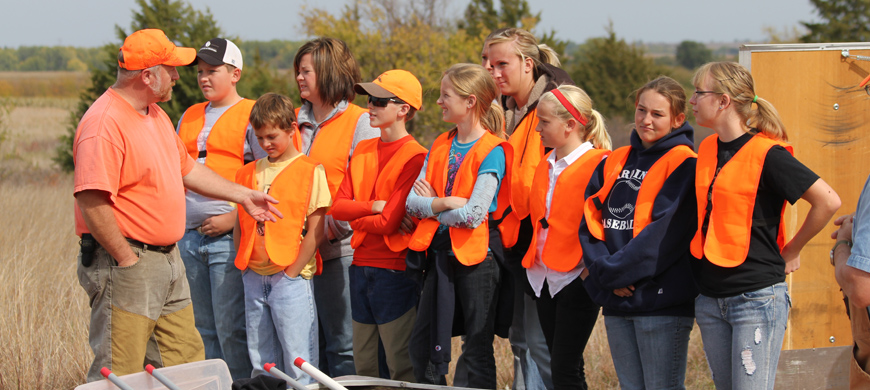
PRATT – It can be difficult to quantify the positive effect a public program has, but when it comes to the Kansas Hunter Education program, there’s no denying the program is not only working, but exceeding expectations. The 2018 Kansas hunting season has proved the safest one yet ­– with zero fatalities and a record-low of just four reported firearm-related incidents.

“It has been years of hard work and dedicated services that has brought us to this point,” says Kansas Department of Wildlife, Parks and Tourism (KDWPT) Hunter Education Program coordinator Kent Barrett. “Having said that, we also know that next year will bring us a whole new set of circumstances that will test us once again.”

Of the four incidents reported in 2018, two were the result of hunters swinging on game; one was attributed to poor firearm handling; and one was the result of the unsafe use of a decoy. Thankfully, none of the reported incidents were fatal.

Though no firearms were involved, Hunter Education staff keep record of treestand-related incidents, as well. Two were reported for 2018, and in both cases the hunters were not wearing fall arrest systems. Neither incident proved fatal.

Kansas Hunter Education staff attribute these record-breaking low numbers to one thing: the program’s more than 1,400 volunteer hunter education instructors who share with students safe firearm handling practices, ethics, wildlife regulations and conservation principles.

According to Barrett, volunteer instructors meet with, teach, and certify approximately 9,000 students per year.

While staff and volunteers would ideally like to see the number of incidents dropped to zero, current reports remain a stark contrast to statistics from 50 years ago when seven lives were lost in a year, two years in a row.

Hunting remains one of the safest outdoor activities in Kansas, but everyone must do their part to keep it that way. As any Kansas Hunter Education instructor will tell you, the best piece of equipment a hunter can have afield is right between his or her ears.

To find a Hunter Education class near you, visit ksoutdoors.com/Services/Education/Hunter.

U.S. Marshals capture Kan. man wanted for shooting victim in car repair dispute

TOPEKA— Law enforcement authorities are investigating a Kansas man sought by the U.S. Marshals Service Fugitive Task Force on a felony Shawnee County warrant for charges of Aggravated Battery and Criminal possession of a firearm.

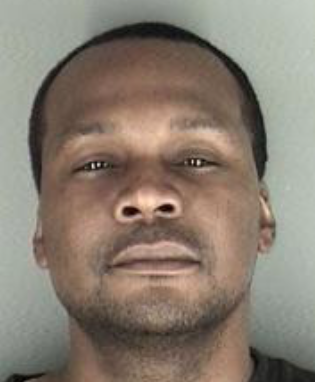
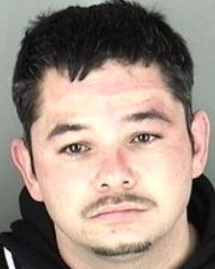
Mario O’Neal photo Shawnee Co.

Those charges stem from a shooting incident that occurred on April 30, in the 2200 block of SE Turnpike Avenue in Topeka, according the U.S. Marshals Service Fugitive Task Force.  On Thursday, member of the task force apprehended 35-year-old Mario O’Neal Sr.

He is accused of shooting the victim multiple times over a dispute about mechanical repairs on his vehicle.

The Fugitive Task Force had been searching for O’Neal for several days when their investigation led them to an apartment complex in the 3700 block of SW Park South Court in Topeka.

A search warrant for O’Neal was served by the task force at one of the apartments in the complex and O’Neal was located and arrested on the warrants. He was subsequently booked into the Shawnee County jail on the charges and is awaiting further court proceedings

The Fugitive Task Force is comprised of various law enforcement agencies to include the United States Marshals Service, ICE, the Kansas Department of Corrections, and the Topeka Police Department.

Kansas man dies after vehicle overturns end over end

RENO COUNTY — One person died in an accident just after 1p.m. Saturday in Reno County.

The Kansas Highway Patrol reported 2013 Ford Focus driven by Charles D. Ruff, 49, Harper, was northbound on Kansas 14 just north of Greenfield Road.

The vehicle left the roadway to the left, entered the west ditch, struck a culvert and overturned end over end approximately three times coming to rest on its wheels.

Ruff and a passenger Lisa Marie Moreno, 49, Santa Clara, CA., were transported to Hutchinson Regional Medical Center where Ruff died. He was not wearing a seat belt, according to the KHP.

Police: 1 killed in southeast Wichita shooting

WICHITA, Kan. (AP) — Police in southeastern Kansas are investigating a fatal shooting.

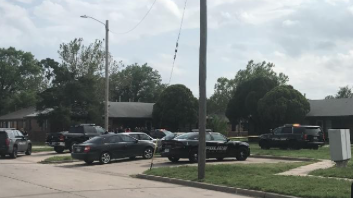
Police on the scene of the shooting investigation photo courtesy KWCH

The shooting happened Friday afternoon in southeast Wichita.

Officers were called to the area shortly before 4:30 p.m. Friday and found one person dead.

No other details, including the identity of the victim, had been released by midday Saturday.

No injuries, but some damage reported from Kansas twisters

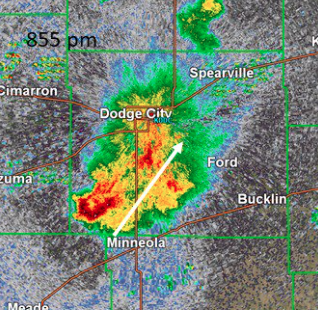
DODGE CITY, Kan. (AP) — Authorities say there have been no reports of serious injuries from a spate of tornadoes that raked southwest Kansas Friday night.

The National Weather Service says eight tornado sightings had been reported in the area by late Friday night, including one near Dodge City and the tiny town of Ford. Officials are conducting surveys to see whether some of the sightings were of the same tornado.

Emergency management offices in the area said several homes, some outbuildings and sheds were damaged in the storms. Officials reported that the twisters also knocked down power lines.

Kansas unemployment remained steady in April; jobs grew

TOPEKA, Kan. (AP) — Kansas is reporting that its unemployment rate remained at 3.5% in April and that the number of private sector jobs grew slightly over the previous year.

The state Department of Labor is reporting that the seasonally adjusted April unemployment rate was slightly higher than the 3.4% rate in April 2018. The state’s unemployment rate has remained below 4% for more than two years.

The department also says that the number of private-sector, nonfarm jobs was 10,500 higher than it was in April 2018, exceeding 1.16 million. The growth was 0.9%.

Construction experienced the biggest gain, 3.6%.

The state also added 5,600 private-sector nonfarm jobs from March to April, for growth of 0.5%.

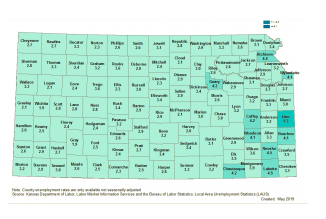
Only 10 of the state’s 105 counties had unemployment rates above 4 percent in April.

🎥 Sen. Moran commemorates 65th anniversary of Brown v. Topeka Board of Education

OFFICE OF SEN. MORAN

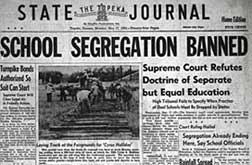
WASHINGTON – U.S. Senator Jerry Moran (R-Kan.) commemorated the 65th anniversary of Brown v. Topeka Board of Education, a landmark decision that started the legal process of integrating schools across the nation in a speech on the floor of the United States Senate Friday.

“On this anniversary of Brown v. Board of Education, we remember the legacy left behind by Linda Brown and her parents,” said Sen. Moran. “Linda Brown just passed away last year, and we honor her, her family and all those involved in the civil rights movement. This legacy is one which requires all Americans, each of us, to uphold the self-evident truth that all men and women are created equal. Let us remember the legacy of Brown v. Topeka Board of Education, and in doing so, I ask every American to commit to racial justice and equal opportunity.”

Earlier this week, Sen. Moran joined the Kansas delegation in introducing a resolution recognizing the 65th anniversary of the Supreme Court’s decision and its importance to Kansas and our country.

Remarks as delivered: 

“Mr. President, thank you. On the 65th anniversary of the Supreme Court decision, Brown v. Board of Education, I rise to pay tribute to Kansas families, led by the Browns, and all Kansans who took part in challenging the injustice of racial segregation. 

“For 60 years leading up to Brown, much of America adhered to the Supreme Court ruling in Plessy v. Ferguson that established the doctrine, ‘separate but equal.’ But, when applied to our school buildings and the education of our children, nothing about it was equal. 

“In 1951, Linda Carol Brown was in the third grade and she would walk six blocks to a bus stop that would take her to Monroe Elementary more than a mile away from her home. This, despite the fact that Sumner Elementary just was seven blocks from her home. Even after repeated applications for attendance at the neighborhood school, the Browns and other families were rejected because of the color of their skin. 

“In that year, 13 parents – led by Linda’s father, Oliver – filed suit against the Topeka Board of Education on behalf of their 20 children. Combining other cases throughout the country, Thurgood Marshall argued on their behalf before the United States Supreme Court; the court that he would later join as a justice. 

“On May 17, 1954, the Supreme Court unanimously issued its landmark decision, announcing Plessy’s ‘separate but equal’ doctrine violated the Fourteenth Amendment. While full integration would take years to accomplish, the events set in motion by these intrepid parents were irreversible, and they are worthy of our respect and honor today. 

“Nowhere was this truer than in the city where it all started. Before the case had even reached the Supreme Court, the Topeka Board of Education began integrating its primary schools. 

 “Kansas has its pre-Civil War bloodshed to determine whether the territory would enter the union as a free or slave state, and Wichita was home to one of the first sit-ins to integrate drugstore lunch counters, but it is Brown v. Board of Education that is our state’s greatest connection to the nation’s pursuit of racial justice. 

“That these events happened in Kansas reflect the imperfect history of our state – and our nation – but also the resolve of individual Kansans and national organizations like NAACP to right wrongs and to make a ‘more perfect union’ that our Constitution contemplates. 

“On this anniversary of Brown v. Board of Education, we remember the legacy left behind by Linda Brown and her parents. Linda Brown just passed away last year, and we honor her, her family and all those involved in the civil rights movement. This legacy is one which requires all Americans, each of us, to uphold the self-evident truth that all men and women are created equal. 

“Let us remember the legacy of Brown v. Topeka Board of Education, and in doing so, I ask every American to commit to racial justice and equal opportunity.”

KDWPT Commission action proves fruitful for furharvesters

KDWPT

PRATT – At its April 25 meeting in Colby, the Kansas Wildlife, Parks and Tourism (KWPT) Commission voted on a number of amendments to current regulations, a few of which will benefit furharvesters.

  • In a 6-0 vote, Commissioners voted in favor of amending current furbearer regulations to clarify how to measure the jaw spread on body-gripping and foothold traps.
  • Commissioners approved an amendment to current furbearer regulations eliminating the requirement that furharvesters permanently surrender the lower canine teeth of an otter when presenting it to the department for tagging.
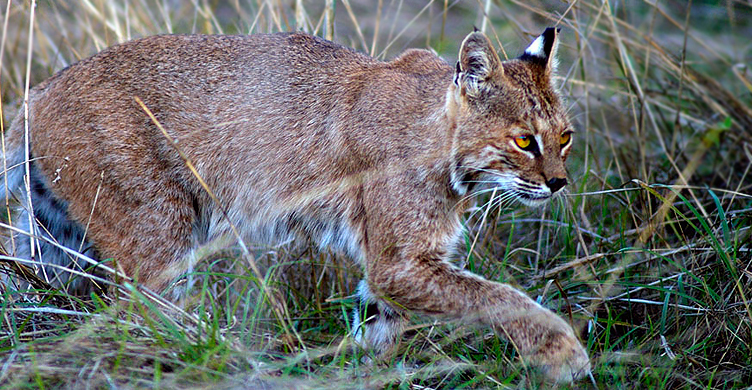
  • Commissioners approved amendments to current bobcat trapping regulations, removing outdated provisions related to tagging and effective dates on nonresident bobcat hunting permits.
  • Passing 6-0, Commissioners voted to accept an amendment to current fur dealer regulations that will allow the sale of swift fox pelts from states that don’t have tagging requirements for swift foxes.

Other items voted on and approved during the public hearing portion of the meeting include:

  • A series of amendments to regulations which establish hunting, fishing and furharvesting restrictions on department-managed lands. Current restrictions can be viewed on ksoutdoors.com by clicking “Laws, Regulations and Enforcement,” “Law and Regulations,” then “All Regulations.” See K.A.R. 115-8-1.
  • Amendments that will simplify the application process for field trial permits, removing extensive event mapping requirements.
  • An amendment to current dove hunting regulations that will remove pellet guns as a legal method of take.

Commissioners also approved 2019-2020 waterfowl seasons as follows:

Youth

High Plains Unit: Oct. 5-6, 2019

Low Plains Early Zone: Oct. 5-6, 2019

Low Plains Late Zone: Oct. 19-20, 2019

Low Plains Southeast Zone: Nov. 2-3, 2019

Teal

High Plains Unit: Sept. 21-29, 2019

Low Plains Zones: Sept. 14-29, 2019

Duck

High Plains Unit: Oct. 12, 2019 – Jan. 05, 2020 and Jan. 17-26, 2020

Low Plains Early Zone: Oct. 12-Dec. 8, 2019 and Dec. 14-29, 2019

Low Plains Late Zone: Oct. 26-Dec. 29, 2019 and Jan. 18-26, 2020

Low Plains Southeast Zone: Nov. 9, 2019 – Jan. 5, 2020 and Jan. 11-26, 2020

Goose

White-fronted geese: Oct. 26-Dec. 29, 2019 and Jan. 25-Feb. 16, 2020

Dark/Light geese: Oct. 26-27 and Nov. 6, 2019 – Feb. 16, 2020

Light Goose Conservation Order: Feb. 17 – April 30, 2020

The next KWPT Commission meeting is scheduled for Thursday, June 13, 2019 at the Rolling Hills Zoo, 625 N. Hedville Road, in Salina.

Police investigation leads to arrest of Kansas shooting suspect

TOPEKA— Law enforcement authorities are investigating a shooting and have made an arrest.

Shaun Hightower-photo Shawnee Co.

Just after 2p.m. Tuesday, police responded to a local hospital on the report of a male victim arriving with a gunshot wound.  Upon arrival, officers discovered the incident occurred in the area of the 3100 Block of SE Pisces in Topeka, according to Lt. Jerry Monasmith. The victim appeared to have non-life threating injuries.

On Friday, following an  investigation police identified a suspect as 44-year-old Shaun Hightower. On May Just after 12:31 p.m. officers observed  Hightower in a local convenience store, and later located him in the 2100 Block of NW Lower Silver Lake Road, according to Monasmith. Police took him into custody without incident on requested charges of Aggravated Battery and transported to the Shawnee County Department of Corrections.

Why Kansas Cops Don’t Want To Legalize Marijuana — Medical Or Otherwise

When it comes to marijuana, Kansas is a red state in an increasingly green country.

Three of its neighbors — Colorado, Oklahoma and Missouri — have legalized some form of the drug in recent years. Yet Kansas remains one of four states in the country without a comprehensive medical or recreational marijuana program.

Law enforcement agencies in Kansas say legalizing even medical marijuana could lead to more black market activity. But it’s hard to know what impact marijuana could have because the state doesn’t collect much information about it.

That’s not for lack of trying. This spring, the Legislature passed a bill allowing patients and caregivers to possess CBD — one chemical in marijuana — containing small amounts of THC, a psychoactive component of the plant. The Kansas Health Institute reports that lawmakers have introduced 18 medical marijuana bills since 2006. This year, one got a hearing at the Capitol.

But law enforcement officers representing several of the state’s agencies and professional organizations testified against it. The bill never made it to a vote.

“I only ask that you give deference to the experience, to the opinions of the law enforcement community,” said Kirk Thompson, director of the Kansas Bureau of Investigation, the top law enforcement agency in the state. “We’ve seen the negative side of this issue.”

The agency denied requests for an interview with Thompson and didn’t answer emailed questions about its marijuana enforcement strategy. But Thompson’s statement echoes the position of many of the state’s law enforcement agencies and organizations.

They argue that even legalization of medical marijuana would increase car accidents and violent crime and make it easier for foreign drug cartels to move weed onto the black market.

Law enforcement officers say weed is inherently tied to violence, especially from Mexican cartels. And they report an increase in marijuana-related traffic stops in Kansas, especially since Colorado legalized recreational sales of the drug in 2014.

“In every way, marijuana is driving up public health and public safety concerns,” said Jeffrey Stamm, executive director of the Kansas City-based Midwest High Intensity Drug Trafficking Area, under the Office of National Drug Control Policy. “In terms of the psychopharmacology, the economic, the criminal, the social costs of marijuana use, cops, in fact, are the experts.”

But ultimately, it’s hard to know what impact marijuana has on public safety in Kansas because the state doesn’t collect much of that information.

Anecdotes and Statistics

The federal Drug Enforcement Administration publishes data on its Cannabis Eradication Program, including arrests, number of plants seized and the value of assets seized in each state.

But the Kansas Bureau of Investigation doesn’t do the same.

KBI says in 2018, more 45% of its crime lab’s blood drug tests came back positive for THC. In 2013, only 29% of those blood tests indicated the presence of THC. But the agency doesn’t track the total number of marijuana seizures in the state, nor does it track the total number of marijuana arrests.

In an email, a spokeswoman said the agency’s statewide crime reporting system was “extremely outdated,” deriving statistics from police reports that don’t distinguish which specific drugs were involved in an incident.

The agency also doesn’t track the origin of marijuana seizures in Kansas — whether the drugs came from inside the state, from another U.S. state such as Colorado or California, or from an international source like a Mexican cartel.

A 2016 survey of law enforcement agencies conducted by the Kansas Attorney General’s office found that it’s hard for police to conclusively find out where drugs are from. They rely on statements from suspects, receipts,  labels on packages, or stops near Kansas’ western border to determine whether marijuana comes from pot-friendly Colorado.

Some survey respondents said they had made an increasing number of arrests for DUIs and people carrying marijuana products, especially edibles, since 2014. Others, however, noted no increase or said sample sizes were too small to tell.

Kansas Highway Patrol Lt. Chris Bauer, who teaches officers to recognize whether drivers have been using drugs, said the patrol has noticed an increase in drivers being impaired by marijuana. The Highway Patrol says 62% of lab tests of impaired drivers in 2018 came back positive for THC. Two years earlier, 54% of labs found traces of the drug. Yet those tests aren’t always a reliable indicator of how recently someone used cannabis.

In a phone interview, Bauer said he believes the increase is a result of “society’s changing attitude toward cannabis, and then also the fact that we’re surrounded by states who now have legalized it.”

In 2018, the Kansas Highway Patrol confiscated 13,029 pounds of marijuana in 322 seizures.  In 2017, the agency made 399 seizures and confiscated 7,488 pounds.

Bauer said many troopers have begun getting rid of small amounts of marijuana by the side of the road during traffic stops, rather than arresting and charging everyone for possession. Those stops don’t get recorded.

“Maybe we don’t want to take everybody to jail for a small amount of marijuana,” Bauer said. “Jails are full. We sort of have to triage what we’re doing.”

Kansas Department of Transportation data shows that drug-related traffic collisions have remained at about 0.5% of all accidents over the past decade, but the agency does not collect information on specific drugs.

‘Arrows in Their Quiver’

State Sen. David Haley, a former prosecutor who co-sponsored the medical marijuana bill in the Kansas Senate this year, said the state has a strong law enforcement lobby. He thinks officers want to keep marijuana illegal as a pretext to stop and search people.

“I think law enforcement wants to keep as many arrows, if you will, in their quiver,” he said. “I can’t think of any other reason that their lobby has been so adamant.”

Brian Leininger, another former prosecutor who now works as a defense attorney in DUI cases, agrees.

“Police and other government officials have a lot of social capital,” he said. “They want the status quo. They make their living enforcing the drug laws.”

For about five years, Leininger served as the general counsel for the Kansas Highway Patrol. As a private defense attorney, he still speaks with police regularly and says officers often tell him they oppose the state’s marijuana laws but don’t think they can speak out publicly.

“All the time, officers tell me and other people that ‘it’s really foolish this is illegal. I wish they’d just make it legal. It would make my job easier,’” Leininger said. “‘Alcoholics are violent and dangerous and bad drivers. People under the influence of marijuana are generally calm.’”

He thinks attitudes will change as older officers start retiring and societal attitudes continue to change.

“As the officers get younger, a higher and higher percentage of them grew up with marijuana,” he said. “Eventually, when 45 of the other states have legalized it entirely, maybe Kansas will come around.”

Nomin Ujiyediin reports out of Topeka for the Kansas News Service. You can reach her on @NominUJ

Public input needed for Kansas Monarch Conservation Plan

KDWPT

PRATT – The Kansas Department of Wildlife, Parks and Tourism (KDWPT) is seeking public input on Kansas’ Monarch Conservation Plan through May 30. The Kansas Monarch Conservation Plan outlines a 20-year objective to conserve, enhance and create pollinator habitat on private, public and urban lands through non-regulatory, voluntary efforts.

Kansas is a national stronghold for monarch conservation and is uniquely positioned to conserve and enhance large acreages and landscapes ideal for monarch migratory and breeding habitat.

The Kansas Monarch Conservation Plan serves as a guiding document to support ongoing and future conservation efforts, taking into account that successful implementation of the plan will require a multi-sector approach. For this reason, KDWPT has collaborated with individuals from ranching and farming organizations, conservation organizations, industry, agencies, academia, and tribal nations – representing 68 organizations – to set voluntary goals for the conservation of monarchs and other native pollinators.

Any individual or entity planning, implementing or funding monarch conservation activities in Kansas should reference this document and consider providing input.

To view the draft version online, visit https://ksoutdoors.com/Wildlife-Habitats/Wildlife-Conservation/Kansas-Monarch-Conservation-Plan.

For more information on the plan, and to provide input, contact Megan Rohweder at [email protected].

Police: Car stolen in Kansas in 1993 found in Missouri barn

JOHNSON COUNTY —A 1991 Mustang 5.0 stolen in Kansas back in October 1993 has been recovered. Captain Fredrickson, who took the report as a patrolman got the call Thursday, according to a social media report form Overland Park Police Chief Frank Donchez.

The car was recovered in a Missouri barn and identified by the Missouri State Highway Patrol.

Copyright Eagle Radio | FCC Public Files | EEO Public File