We have a brand new updated website! Click here to check it out!

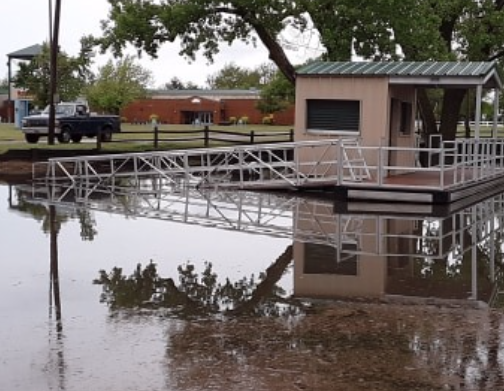
KDHE warns: Avoid lakes and waterways due to recent heavy rains

Kansas Department of Health and Environment

TOPEKA — The Kansas Department of Health and Environment is cautioning residents to stay
out of Kansas waterways because of the recent flooding and associated unsafe water quality conditions.

In addition to the physical dangers associated with entering swift moving flood waters, the potential for high levels of pathogens in those waters exist. KDHE anticipates elevated levels of pathogens in rivers and streams across the state because of runoff. Additionally, over the past several days, numerous wastewater systems have experienced bypasses of sewage that enter local streams.

Individuals are advised to avoid contact with waterways and to restrict pets and livestock from entering
streams and allow flood waters time to recede.

KDHE personnel are in contact with wastewater utilities in Kansas and are evaluating the extent of any
bypassing.

Individuals should contact their local public works departments for questions related to their immediate
area.

New Vatican law: Priests, nuns must report sex abuse, cover-up

VATICAN CITY (AP) — Pope Francis issued a groundbreaking law Thursday requiring all Catholic priests and nuns around the world to report clergy sexual abuse and cover-up by their superiors to church authorities, in a new effort to hold the Catholic hierarchy accountable for failing to protect their flocks.The new church law provides whistle-blower protections for anyone making a report and requires all dioceses around the world to have a system in place to receive the claims confidentially. And it outlines procedures for conducting preliminary investigations when the accused is a bishop, cardinal or religious superior.

It’s the latest effort by Francis to respond to the global eruption of the sex abuse and cover-up scandal that has devastated the credibility of the Catholic hierarchy and his own papacy. And it provides a new legal framework for U.S. bishops to use as they prepare to adopt accountability measures next month to respond to the scandal there.

“People must know that bishops are at the service of the people,” said Archbishop Charles Scicluna, the Vatican’s longtime sex crimes prosecutor. “They are not above the law, and if they do wrong, they must be reported.”

The law makes the world’s 415,000 Catholic priests and 660,000 religious sisters mandated reporters. That means they are required to inform church authorities when they learn or have “well-founded motives to believe” that a cleric or sister has engaged in sexual abuse of a minor, sexual misconduct with an adult, possession of child pornography — or that a superior has covered up any of those crimes.

The law doesn’t require them to report to police, as victims have demanded. The Vatican has long argued that different legal systems in different countries make a universal reporting law impossible, and that imposing one could endanger the church in places where Catholics are a persecuted minority. But the procedures do for the first time put into universal church law that clergy must obey civil reporting requirements where they live, and that their obligation to report to the church in no way interferes with that.

If it is implemented fully, the Vatican could well see an avalanche of abuse and cover-up reports in the coming years. Since the law is procedural and not criminal in nature, it can be applied retroactively, meaning priests and nuns are now required to report even old cases of sexual wrongdoing and cover-ups — and enjoy whistleblower protections for doing so.

Previously such reporting was left up to the conscience of individual priests and nuns. Now it is church law. There are no punitive measures foreseen if they fail to report, and similarly there are no sanctions foreseen if dioceses, for example, fail to comply. But bishops and religious superiors could be accused of cover-up or negligence if they fail to implement the provisions, or retaliate against priests and nuns who make reports against them.

The law defines the crimes that must be reported as: performing sexual acts with a minor or vulnerable person; forcing an adult “by violence or threat or through abuse of authority, to perform or submit to sexual acts,” and the production, possession or distribution of child pornography. Cover-up is defined as “actions or omissions intended to interfere with or avoid” civil or canonical investigations.

Cardinal Marc Ouellet, head of the Vatican’s bishops office, said the inclusion of sex crimes involving adults was a clear reference to cases of sexual abuse of nuns and seminarians by their superiors — a scandal that has exploded in recent months following reports, including by The Associated Press and the Vatican’s own women’s magazine, of sisters being sexually assaulted by priests.

But Scicluna said it obviously covered lay people as well.

In another legal first for the Vatican, the pope mandated that victims reporting abuse must be welcomed, listened to and supported by the hierarchy, as well as offered spiritual, medical and psychological assistance.

The law says victims can’t be forced to keep quiet, even though the investigation itself is still conducted under pontifical secret. And in a novelty, the law requires that if victims request it, they must be informed of the outcome of the investigation — again a response to longstanding complaints that victims are kept in the dark about how their claims were handled.

But the key point of the law is to decree that the church’s own priests and nuns are mandated reporters and require every diocese around the world create an accessible, confidential reporting system to receive claims of sexual abuse and cover-up. The other key element outlines the preliminary investigation procedures to be used when the accused predator is a member of the church hierarchy.

Victims and their advocates have long complained that bishops and religious superiors have escaped justice for having engaged in sexual misconduct themselves, or failed to protect their flocks from predator priests. Bishops and religious superiors are accountable only to the pope, and only a handful have ever been sanctioned or removed for sex abuse or cover-up, and usually only after particularly egregious misbehavior became public.

Last summer, the scandal over ex-Cardinal Theodore McCarrick epitomized the trend: McCarrick rose to the heights of the Catholic hierarchy even though he had credible allegations of sexual misconduct against him that the Vatican had received. Francis ultimately defrocked McCarrick earlier this year after a U.S. church investigation determined he sexually abused minors as well as adult seminarians.

The new procedures call for any claim of sexual misconduct or cover-up against a bishop, religious superior or eastern rite patriarch to be reported to the Holy See and the metropolitan bishop, who is a regular diocesan bishop also responsible for a broader geographic area than his dioceses alone.

Unless the metropolitan bishop finds the claim “manifestly unfounded,” he must immediately ask permission from the Vatican to open a preliminary investigation and must hear back from Rome within 30 days — a remarkably fast turnaround for the lethargic Holy See. The metropolitan then has an initial 90 days to conduct the investigation, though extensions are possible.

The law makes clear he can use lay experts to help, a key provision that is already used in many dioceses to give bishops expert advice on handling cases from people with law enforcement or medical backgrounds. And it recommends that a special fund be set up to pay for the investigations, particularly in poorer parts of the world.

Once the investigation is completed, the metropolitan sends the results to the Vatican for a decision on how to proceed. The new law effectively stops there; existing procedures are in place for further investigation and possible sanction of bishops, though legal experts have said those 2016 procedures too require an overhaul since they are far from clear or efficient.

The new law does, however, require Vatican offices to share information throughout the process, since an untold number of cases have fallen through the cracks thanks to the silo-like nature of the Holy See bureaucracy, where each congregation zealously guards its own turf and files.

The use of the metropolitan bishop to conduct the preliminary investigation was first publicly proposed by Chicago Cardinal Blase Cupich at a meeting of the U.S. Conference of Catholic Bishops in November. Cupich elaborated on it when he addressed Francis’ February sex abuse summit, which the pope convened to demand a global response to the problem.

The procedures published Thursday are likely thus to form a key legal framework for U.S. bishops when they meet in Baltimore June 11-13 to adopt new accountability procedures.

The U.S. hierarchy has been under immense public pressure to hold one another accountable for sexual misconduct and cover-up stemming from both the McCarrick scandal and the release of the Pennsylvania grand jury report. It was apparently an open secret that McCarrick slept with seminarians, and yet his brother bishops allowed him to become their spokesman when they first adopted measures to combat child sex abuse in 2002.

The law goes into effect June 1 for an initial three years. Dioceses must establish the reporting system and confirm it is in place to the local Vatican embassy by June 1, 2020.

Police: KC-area man shot co-worker over social media comments

JACKSON COUNTY —A Kansas City-area man is accused of shooting a co-worker in the foot over comments the victim made about him online.

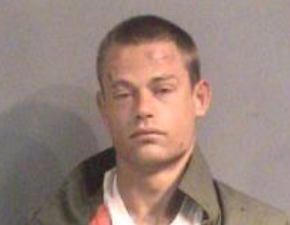
Graham -photo Jackson Co.

Robert Graham, 37, Lee’s Summit, is charged with first-degree assault and armed criminal action, according to Jackson County Prosecutor Jean Peters Baker.

Lee’s Summit police were dispatched to Lee’s Summit Medical Center on Tuesday evening on a reported gunshot wound, according to court records. They found the victim and were told that Robert Graham had shot him in the foot with a sawed-off 410 shotgun after the two had argued.

Police responded to Graham’s house. After a lengthy standoff, Graham surrendered.

Police, after obtaining a search warrant, found in the defendant’s residence a disassembled 410 shotgun and a spent shotgun shell, as well as live rounds. Graham told police he remembered the victim coming to his residence earlier that day.

Graham remains jailed on  a $50,000 bond.


Man accused of kicking black toddler in Kan. store to make court appearance

SEDGWICK COUNTY— A man charged with kicking a toddler and shouting racial slurs inside a Wichita grocery store is scheduled for a status hearing Thursday, according to the Sedgwick County Attorney’s office.

Riff photo Sedgwick County

On March 25, a judge ruled that 32-year-old Trace Riff was competent and could face trial on several charges including attempted aggravated battery.

Prosecutors say Riff kicked a 1-year-old black boy inside a Dillon’s Grocery store in Wichita in December. The boy was not seriously injured.

The boy’s mother and witnesses told police Riff shouted racial slurs and said he was a white supremacist during the incident.

Riff is also charged with interference with law enforcement and disorderly conduct.

Riff’s family says he has a history of mental health and substance abuse problems.

Owners say miniature horse killed, dismembered

BETHANY, Mo. (AP) — The owners of a miniature horse are demanding justice after the animal was found shot and dismembered north of Kansas City.

Tharp’s Horse Shoeing in Bethany posted on Facebook that the 30-inch horse, Quigley, was “tortured for no reason.”

Bethany police say the crime is under investigation. No arrests have been made. Police Chief Brian Groom says officers believe the horse’s death is an isolated incident.

Quigley’s owners say the 4-year-old horse was found in the owner’s pasture.

Kansas felon arrested after punching police officer

HUTCHINSON, Kan. — A Kansas man accused in a drug distribution case was arrested Tuesday after he fought with a Hutchinson police officer.

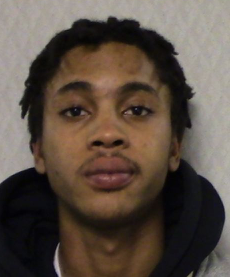
Jackson photo KDOC

Rommie Jackson, 22, was seen walking along Lorraine Street in Hutchinson by a police officer. The officer stopped and made contact with Jackson. While talking with Jackson, the officer repeatedly asked him to keep his hands in plain view. After a short time, Jackson began to fight. The officer attempted to place handcuffs on Jackson. Jackson struck the officer in the eye and left cheek.

Jackson had six outstanding warrants and was arrested for interference with a law enforcement officer, battery of a law enforcement officer and possession of marijuana.

Jackson was arrested last summer after officials received a tip about a man wanting to sell a handgun. That tip led to the search of an apartment. Once inside, officers found drugs including a bag of marijuana in a seller’s quantity, some guns and drug paraphernalia.

Dallas Combs and Jackson were arrested and suspected in the case.

Jackson has numerous prior convictions involving the distribution of drugs and criminal possession of a firearm.

Kansas delegation to FCC: Improve broadband availability maps

OFFICE OF SEN. MORAN

WASHINGTON – U.S. Senators Jerry Moran (R-Kan.) and Pat Roberts (R-Kan.), and U.S. Representatives Roger Marshall (KS-01), Ron Estes (KS-04), Steve Watkins (KS-02) and Sharice Davids (KS-03) Monday encouraged Federal Communications Commission (FCC) Chairman Ajit Pai to address concerns related to the accuracy of Form 477 collection of voice and broadband service and deployment data.

“The FCC’s current broadband availability maps, particularly in the context of fixed broadband access shown by the National Broadband Map, do not utilize data that is granular enough to adequately depict broadband availability in rural communities,” the members wrote.

“Form 477 data collection policies dictate that an entire census block be considered served with broadband service even if that service is only offered to one location within the census block. Since census blocks in rural communities are larger than their urban counterparts, rural communities are particularly threatened by this policy. As a result, Kansas communities could be denied eligibility to participate in existing federal funding programs for broadband deployment regardless of their actual need.”

“Many Kansans’ access to affordable and reliable broadband services relies on federal programs that distribute resources for deployment, like the programs administered within the FCC’s Universal Service Fund, but if the information that the federal government uses is not specific or accurate, the agencies administering these programs are not equipped to make appropriate decisions,” the members continued. “In the interest of effectively allocating federal resources to unserved and underserved communities, we urge the FCC to take immediate action to improve the granularity and accuracy of broadband availability maps, especially as new broadband funding initiatives like the Rural Digital Opportunity Fund are rolled out.”

The FCC established its Form 477 data program in 2000 to collect “data regarding broadband services, local telephone service competition, and mobile telephone services on a single form and in a standardized manner” from providers. In 2017, the FCC adopted a rulemaking to evaluate methods to improve the quality of the data collected by the Form 477.

Full text of the letter is below.

The Honorable Ajit Pai
Chairman
Federal Communications Commission
445 12th Street, SW
Washington, D.C., 20554

Dear Chairman Pai:

We write regarding the Federal Communications Commission’s (FCC) ongoing efforts to improve the accuracy of its Form 477 collection of voice and broadband subscription and deployment data. As the principal tool used by the FCC to gather data on communications services to inform policymaking, the current Form 477 data collection processes fall short in depicting where fixed and mobile broadband services are available or lacking, with one of the most extreme examples of inaccuracy found in our home state of Kansas. This is especially problematic because this data is used to determine where billions of federal dollars are allocated for broadband deployment. As such, we encourage the FCC to address concerns related to the precision of this critical data collection that informs federal funding so important to our rural communities, and prevents the overbuilding of existing broadband networks.

The FCC’s current broadband availability maps, particularly in the context of fixed broadband access shown by the National Broadband Map, do not utilize data that is granular enough to adequately depict broadband availability in rural communities. Form 477 data collection policies dictate that an entire census block be considered served with broadband service even if that service is only offered to one location within the census block. Since census blocks in rural communities are larger than their urban counterparts, rural communities are particularly threatened by this policy. As a result, Kansas communities could be denied eligibility to participate in existing federal funding programs for broadband deployment regardless of their actual need.

Additionally, the validation of data submitted to broadband availability databases needs to be bolstered. As the FCC takes steps to improve the quality of broadband availability maps, it should seriously consider verification mechanisms that extend beyond the self-certification of initial data submissions by providers. The Mobility Fund Phase II initial eligibility map highlighted the issues of relying on self-reported data indicating broadband availability in Kansas, but it also demonstrated the importance of a robust and meaningful challenge process, which required significant time and resources of the challenging parties. Therefore, standardized validation of broadband availability, including a challenge process that allows independent entities to participate, is vital to any data collection that affects the distribution of federal resources for broadband deployment.

Many Kansans’ access to affordable and reliable broadband services relies on federal programs that distribute resources for deployment, like the programs administered within the FCC’s Universal Service Fund. But if the information that the federal government uses is not specific or accurate, the agencies administering these programs are not equipped to make appropriate decisions. In the interest of effectively allocating federal resources to unserved and underserved communities, we urge the FCC to take immediate action to improve the granularity and accuracy of broadband availability maps, especially as new broadband funding initiatives like the Rural Digital Opportunity Fund are rolled out. Thank you for your attention to this important matter.

Sincerely,

Kan. Warden: No idea why instructor accused of sex with inmates was retained so long

TOPEKA, Kan. (AP) — A women’s prison warden says she doesn’t know why the Kansas Department of Corrections retained until December a dental lab instructor who was accused of sexually harassing an inmate two years ago.

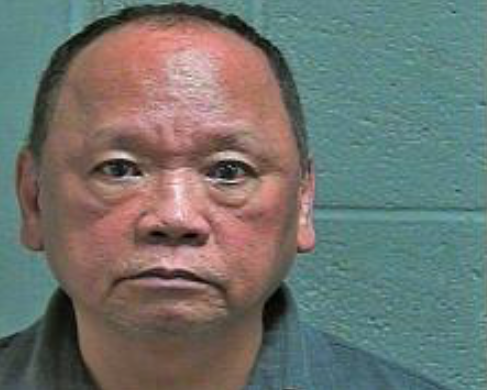
Tomas Co -photo Oklahoma Co. Sheriff

Warden Shannon Meyer recommended firing Tomas Co after an internal investigation in early 2017.

Co supervised a program teaching inmates to make dentures. He was charged last month with seven counts of unlawful sexual relations involving female inmates.

State and federal auditors recommended Co’s firing after the 2017 incident but he continued to work until he was placed on administrative leave in November 2018.

Interim corrections department Secretary Roger Werholtz, appointed by Gov. Laura Kelly in January, says current leadership would have dismissed Co based on the 2017 investigation.

Kansas man sentenced for running illegal gambling business

WICHITA, KAN. – A Kansas man was sentenced Tuesday to serve 24 months of federal probation on federal gambling and tax charges, according to U.S. Attorney Stephen McAllister.

In addition, the defendant agreed to pay more than $117,000 in restitution.

Daven Flax, 48, Wichita, Kan., pleaded guilty to two counts of illegal gambling and one count of making a false tax statement.

In his plea, Flax admitted he operated an illegal gambling business in Wichita. He conducted and managed illegal poker games at numerous locations in the city. His income came from taking a cut or “rake” from the amount of money wagered. He was responsible for paying employees including dealers, waitresses and caterers as well as paying for the use of commercial properties where poker games were held. The games were not open to the public. Only gamblers who were invited could play.

In addition, Flax worked as a sub-bookie for co-defendant Danny Chapman’s sports betting operation.

Flax failed to pay federal income taxes on approximately $346,000 in income from illegal gambling.

Commissioners issue disaster declaration in Reno Co.

Flooding in Reno County Wednesday courtesy photo

HUTCHINSON, Kan. — Reno County Commissioners have signed an emergency declaration and emergency management officials urged residents in the usual flood-prone areas around Cow Creek to evacuate their property if they haven’t done so.

Emergency Mangement Director Adam Weishar says the evacuation is not mandatory, but an Everbridge alert was sent out to residents in that area asking they leave before all roads become impassable.

The emergency declaration was signed late Wednesday afternoon as more rain is in the forecast and water from Rice County moves into the area.

Police: Employee stabbed during Kansas store robbery

SHAWNEE COUNTY — Law enforcement authorities are investigating an attack on a convenience store employee.

Downing -photo Shawnee Co.

Just after 4a.m. Wednesday, police received a call from a citizen at the Kwik Shop, 17th and SW Topeka Boulevard in Topeka of a subject down and bleeding, according to Lt. Beightel.

Upon officers arrival they located the stores, adult male, employee behind the counter suffering from life threatening injuries that appear to be stab wounds.

AMR quickly rushed the victim to an area hospital where he remains in serious condition.

Officers began interviewing witness around the Kwik Shop and were able to locate the suspect, later identified as Anthony Ryan Downing, 33, Topeka on foot near 17th and SW Western. He was taken into custody without incident.

After investigating the scene, reviewing evidence and interviews with several parties, officers booked  Downing into the Shawnee Co. Jail with the charge of Attempted 1st Degree murder.

Company that owned Branson duck boat that sank sells its fleet

LITTLE ROCK, Ark. (AP) — The company that originally owned a duck boat that sank on a Missouri lake last summer killing 17 people has sold the remainder of its fleet to an Arkansas-based investment company.

Stacy Roberts, who owns DUKW Arkansas, LLC, said that his Hot Springs, Arkansas company purchased 18 duck boats on April 23 from Ride the Ducks International.

Ride the Ducks International sold 22 boats to Ripley Entertainment for its Branson tours in late 2017. One of those boats sank last July after getting caught in a storm on a lake near Branson, Missouri. Seventeen people on board died, including nine members of one family. The U.S. Coast Guard’s investigation into the accident is ongoing.

Roberts said he’s not sure what his company will do with their newly acquired boats.

17-year-old Kan. girl arrested for crash that sent 7 to the hospital

SEDGWICK COUNTY — Law enforcement authorities are investigating an injury accident that sent 7 people to the hospital and have made two arrests.

Police on the scene of Tuesday’s reported DUI crash photo courtesy KWCH

Just after 3:30 p.m. Tuesday, police responded to report of an injury crash at the intersection of St. Louis and Young in Wichita, according to officer Charley Davidson.

A 2004 Saturn Ion driven by a 17-year-old girl was westbound on St. Louis and ran a stop sign at Young Street. The vehicle struck the driver’s side of southbound 1999 Ford Econoline van.

The 17-year-old girl was transported to a local hospital, treated and then arrested. She was booked into juvenile detention on requested charges of DUI/drugs, running a stop sign and outstanding warrants, according to Davidson.

A 23-year-old passenger in the Saturn suffered minor injuries and was arrested for an outstanding warrant.

Eight individuals between the ages of 22 and 62 were in the van providing transportation for a business serving those with physical and mental disabilities, according to Davidson. The driver suffered only minor injuries.  The seven passengers were transported for treatment of non-life-threatening injuries and released from the hospital, according to Davidson.

The Sedgwick County District Attorney will review the case to file formal charges.

Copyright Eagle Radio | FCC Public Files | EEO Public File