We have a brand new updated website! Click here to check it out!

Cleanup underway after storm damage in Barton County

BARTON COUNTY — Many residents in Barton County are cleaning up after damage from Sunday night’s storm.

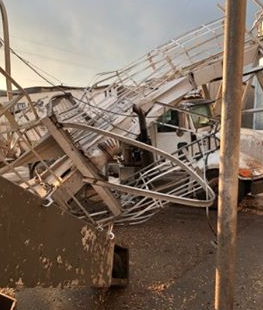
Storm damage at Barton County Feeders -photos Barton Co. Sheriff

Just after 5p.m.,  severe weather and several strong storm cells developed at various  locations in Barton County, according to Barton County Sheriff Brian Bellendir.

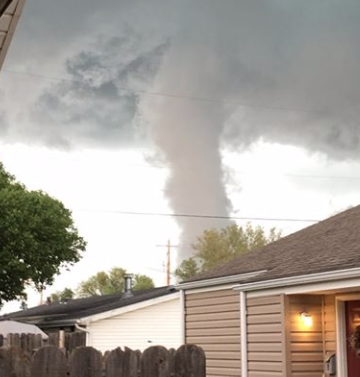
A large funnel cloud was observed just north of the city of Great Bend but did not develop into a tornado. At the same time, funnel clouds were observed west of Ellinwood moving south east.

Sheriff’s deputies went to the area and discovered damage near the intersection of SE 30 Road and Southeast 120 Avenue.

Several structures at Barton County Feeders were damaged as well as other agricultural buildings and equipment in the area.

Powerlines were also destroyed. Some residences in the southeast part of Barton County remained without power Monday morning. It appears a tornado was on the ground for proximally 2 miles. Golf ball size hail was also observed in the area. No injuries were reported according to Bellendir.


George Strait will perform in Wichita in January

Photo courtesy Intrust Bank Arena

WICHITA – Musical icon George Strait will once again take the stage at INTRUST Bank Arena on Friday, Jan. 24, for Visit Wichita Presents Strait To Oz, an exclusive one night engagement. Tickets for Visit Wichita Presents George Strait: Strait To Oz will go on sale Friday, May 17, through Select-A-Seat.

The King of Country’s January concert is the first show announced for INTRUST Bank Arena’s 10th Anniversary Concert Series in 2020, a celebration that will feature multiple artists and events throughout the year to commemorate the Arena’s 10th Anniversary. Visit Wichita Presents Strait To Oz will be one of Strait’s rare live performances in 2020. INTRUST Bank Arena’s first concert took place on January 9, 2010, and featured country superstar Brad Paisley.

“We can’t think of a better way to kick off our 10th Anniversary in January than by welcoming the King of Country, George Strait, back to Wichita,” said AJ Boleski, SMG General Manager at INTRUST Bank Arena. “This concert wouldn’t be possible without the support of Visit Wichita and we are very grateful for their partnership and willingness to share in our vision for bringing Strait To Oz to INTRUST Bank Arena.”

George Strait’s last appearance at INTRUST Bank Arena in April 2014 was part of his final two-year tour, The Cowboy Rides Away Tour. The sold-out concert held the Arena’s single event attendance record for nearly five years and had a significant economic impact of $3.2 million for Wichita.

Strait recently released his brand-new album Honky Tonk Time Machine Friday, March 29 on MCA Nashville, debuting as his record-extending 27th No. 1 Billboard Country album. Comprised of 12 original titles plus Strait’s version of the Johnny Paycheck classic “Old Violin,” Honky Tonk Time Machine marks an incredible 30th career studio album for Strait. Strait, who produced the album alongside Chuck Ainlay, wrote eight of the 13 tracks including “Sing One with Willie” featuring Willie Nelson that the pair happily debuted at a recent Nashville show marking the first time the two country icons have ever shared the stage.

Tickets go on sale to the general public beginning Friday, May 17, at 10:00 a.m. and will be available online at www.selectaseat.com, by phone at 855-755-SEAT (7328) or in person at the Select-A-Seat Box Office at INTRUST Bank Arena. For an opportunity to purchase tickets during a presale period beginning Wednesday, May 15 at 10:00 a.m., fans are encouraged to sign up for INTRUST Bank Arena’s Newsletter at www.intrustbankarena.com. American Express® Cardmembers can purchase tickets before the general public beginning Friday, May 10 at 10:00 a.m. through Thursday, May 16, at 10:00 p.m. Additionally, George Strait’s Fan Club will have an exclusive presale opportunity.

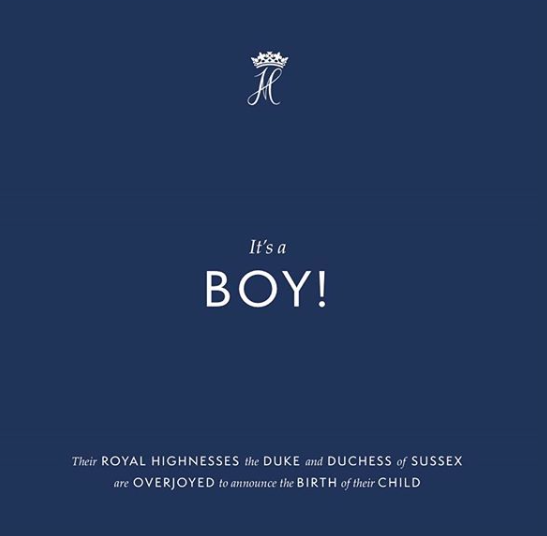
It’s a healthy baby boy for Prince Harry and Meghan

LONDON (AP) — The Latest on the newest royal baby in Britain (all times local):

Prince Harry and his wife Meghan, the Duchess of Sussex, are the proud parents of a new baby boy.

The baby, who has not yet been named, is seventh in line for the British throne and is Queen Elizabeth II’s eighth great-grandchild.

It is the first child for Harry and Meghan, who married a year ago. Harry spoke before cameras on Monday afternoon.

The duchess is a 37-year-old retired American actress formerly known as Meghan Markle. The 34-year-old prince is the son of Prince Charles — next in line for the throne — and Princess Diana, who died in a Paris car crash in 1997.

Harry has long spoken of his desire to start a family.

___

Update: Police identify victims after Kan. police chase, fatal crash

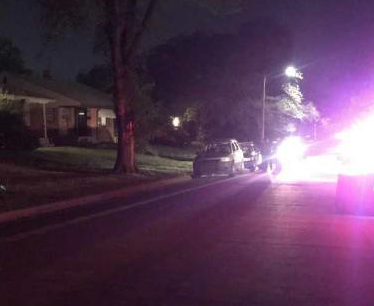
SEDGWICK COUNTY — Law enforcement authorities are investigating a fatal accident that killed two people Sunday in Wichita.

First responders on the scene of the fatal Sunday accident –photo courtesy KAKE

Just after 1:30p.m., police spotted a stolen 2001 BMW SUV driven by Mia M. Collins, 24, Douglas, in the 1100 block of North Broadway in Wichita, according to the Kansas Highway Patrol.

That vehicle immediately sped off at a high rate of speed south on Broadway.  Officers attempted to catch up to the vehicle with activated lights and sirens.  The suspect vehicle gained distance and then collided with a Toyota Camry that was traveling east on Douglas.  There was a third vehicle that was also struck at the intersection.

Collins and a passenger in the BMW Christopher E. English 38, Wichita, were transported to the hospital with serious injuries.

The driver of the Toyota Camry Marla A. Wood, 70 and a passenger Rosemary McElroy, 12, were killed in the collision, according the KHP.

McElroy was ejected from the backseat of the vehicle.  A front seat passenger Jennifer A. Wood, 36, Wichita, was also critically injured and remains hospitalized, according to Wheeler.

The KHP identified Alfred Angel, 65, Wichita as the driver of the third vehicle, a Chevy HHR. EMS transported him to the hospital with serious injuries.

——————-

SEDGWICK COUNTY — Law enforcement authorities are investigating a fatal accident that killed two people Sunday in Wichita.

Just after 1:30p.m., police spotted a stolen BMW SUV in the 1100 block of North Broadway in Wichita, according to Office Kevin Wheeler.

That vehicle immediately sped off at a high rate of speed south on Broadway. Officers attempted to catch up to the vehicle with activated lights and sirens. The suspect vehicle gained distance and then collided with a Toyota Camry that was traveling east on Douglas. There was a third vehicle that was also struck at the intersection.

The suspect driver is a 24-year-old woman. There was also 38-year-old male passenger in the BMW. They were transported to the hospital with serious injuries.

The driver of the Toyota Camry, a 70-year-old female and 12-year-old female passenger were killed in the collision, according to Wheeler. The 12-year-old was ejected from the backseat of the vehicle. A front seat passenger who was also critically injured and remains hospitalized Sunday night, according to Wheeler.

The 65-year-old male driver of the third vehicle, a Chevy HHR, was also taken to the hospital with serious injuries.

Police released no names Sunday.

Broadway between William and 1st streets was closed. Douglas was closed between Market and Topeka Streets.

First Five: Lessons from Brooklyn

Kristen Farrington is executive director of the Religious Freedom Center of the Freedom Forum Institute.

By KRISTEN FARRINGTON
Freedom Forum Institute

E Pluribus Unum. Out of many, one.

In 1782, this Latin phase was adopted by our leaders as part of the Great Seal of the United States. It is not the official motto of our country, but many have adopted it as our motto. Over time, out of many states, one nation has come to represent for many Americans, out of many peoples, one America.

I wonder if E Pluribus Unum reflected the feeling of the people at that moment in time? Or was it aspirational — acknowledging the legal reality and yet knowing that the disparate people who lived in the United States had a long way to go before they’d see themselves as one nation.

As we reflect on the challenges that have faced our nation over the last few centuries — several wars, the Great Depression, social movements calling for the end of institutional racism, sexism, homophobia and domestic and international terrorism — I have no doubt that ordinary citizens like me, of every generation, have wondered — is this even possible?  Did our foremothers and forefathers set us up for failure? Are we as human beings capable of learning to live together despite our deepest differences?

When I spend time with adults, I feel much more pessimistic about the possibility. When I spend time with children and youth, I see that in many ways they have already figured it out. As adults, many of us don’t go out of our way to engage with people who are different from ourselves, but children don’t seem to have the same barriers.

Last week I was on a bus headed to Los Angeles International Airport to catch my flight back to Washington, D.C. The bus was full. Looking at the sea of faces, I was struck by how this group represented the rich diversity of America. Next to me sat Brooklyn, a 2½-year-old who insisted she was 3. In the 15 minutes that I talked with her and watched her engage with the people on the bus, she helped transform the bus from a group of strangers staring at their phones to a community of people laughing and engaging in conversation. With a big smile, Brooklyn talked with everyone, asked us questions, introduced her 8-year-old brother and stuffed Minion to us and told us all about her friends at pre-school. She giggled and smiled, talked and asked questions and waved goodbye to each person as they got off the bus — a perfect example of kindness and hospitality.

As executive director of the Religious Freedom Center, I do a great deal of traveling, speaking and educating about religious freedom and religious literacy, helping equip community leaders so they can protect the rights of people of all religious traditions and none. This is First Amendment work, but it is also integral is to the larger diversity, equity and inclusion (DEI) work that is happening in universities, schools, businesses and communities across the country.

Often when I talk about religious diversity and inclusion, religious freedom and religious literacy with adults, either I receive “Yes this is an issue, but we don’t have the time to deal with it,” or “We haven’t had any complaints — we don’t have those issues in our community.” These answers often come from people who haven’t had to think about these issues or are benefiting from systems of privilege that don’t force them to address the issues. When it comes to basic human and constitutional rights, pretending these issues don’t exist is probably not the best policy. The better way, although the harder way, is to dig in.

The first step is recognizing that diversity already exists in our schools, businesses and communities. I’m astonished when people tell me that their communities aren’t diverse — there is so much they aren’t seeing. Diversity encompasses many things — race, ethnicity, language, military status, marital status, economic status, religion, sexual orientation, gender identity, gender expression, age, learning differences, physical and mental ability, just to name a few.

The second step is to start asking the questions that Trudy Arriaga, Ed.D., asks in her book “Opening Doors” — “In what ways is the door slammed shut to certain groups? In what ways do we exclude and marginalize? In what ways do we send the message that our community, our school or business is not inclusive — not for everyone? In what ways do we ignore the systemic ways that prevent equal access?”

To have equity for people of all religions and none, we must guarantee fair treatment, access, opportunity and advancement for all — not just for the people who look like us, think like us, and believe the same things we do. Dr. Arriaga reminds us that we need to take a hard look at our institutions and systems that create barriers and deny access. Once we put new equitable structures and systems in place, we still need to create environments where everyone feels welcomed, respected and fully valued.

We are making progress as more school districts, businesses and universities are putting an emphasis on DEI training and initiatives, but we still have a long way to go. The recent shooting at Chabad of Poway synagogue in San Diego County is another reminder of how we can’t ignore the growing anti-religious sentiment in this country. According to FBI hate crime statistics, hate crimes motivated by biases based on religion continue to rise. The increase in attacks on Jewish, Muslim and African-American communities over the last few years has raised alarm across America as communities continue to be devastated by shootings, arson and vandalism.

“Once we identify the barriers and start eliminating systems that systematically prevent people from access and opportunities, we can build new inclusive models and create an environment where all people feel welcomed, respected and valued” (University of Houston Center for Diversity and Inclusion). This is the long view — the work of years, decades and generations.

On days when fellow Americans tell me they don’t want to talk with anyone who doesn’t share their beliefs or roll their eyes and say things are just fine the way they are, I wonder whether or not E Pluribus Unum is even a remote possibility.

I was feeling that way when I left Los Angeles, but then met Brooklyn, who taught me a valuable lesson. She reminded me that there is an easy place to start this difficult work. She treated each person on the bus with kindness and in that very simple act made us feel valued, respected and welcomed. The nation’s founders placed the words E Pluribus Unum on the nation’s Great Seal. Brooklyn and others in future generations challenge us today to make them more than that.

Kristen Farrington is executive director of the Religious Freedom Center of the Freedom Forum Institute. Contact her via email at [email protected].

Widespread severe weather rolls across Kansas

Sunday’s widespread severe weather saw flooding rains, large hail, high winds and 15 reports of tornadoes across Kansas.

Tornado near Great Bend on Sunday photo courtesy Lorraine Aldrich-Ames Smith

The National Weather Service issued the first tornado warnings Sunday afternoon in Meade and Ford County. Barton, Rice, Reno and Sumner counties all were impacted by tornadoes and high winds.

Baseball and golf ball size hail also did significant damage in a number of areas. South Central Kansas also reported massive amounts of hail from Sunday evening’s storm.

Flooding rains have prompted emergency management officials to close some rural roads in portions of central Kansas.

Tornado in Barton County Sunday evening photo courtesy Allie Broadrick

There are no reports of injury from the severe weather. The National Weather Service will release additional details Monday on the strength of the tornadoes and or straight line winds.

Update: Kan. boy hospitalized after video game dispute, police make arrest

SEDGWICK COUNTY — Law enforcement authorities are investigating a violent disagreement between juveniles that sent one to a hospital and have made an arrest

Police at the scene of Saturday night investigation -photo courtesy KWCH

Just after 10:30 p.m. Saturday, police were dispatched to a stabbing call in the 2200 block of South Glendale in Wichita, according to officer Kevin Wheeler.

At the scene, police located a nine year old boy who received a cut to his back.  He was transported to a local hospital where he was remains hospitalized with a non-life threatening injury, according to Wheeler.

Investigators learned that three boys, ages 13, 12, and 9 were in the basement of the 12-year-old’s home in playing video games when an argument started among the boys.

During the disturbance, the 12 year old retrieved a knife and threw it at the nine year old outside of the residence, which caused the minor injury. There were no injuries to the other boys.  The 13 and 9-year-old boys are brothers.

Officers contacted the boys’ parents, conducting interviews and on Sunday arrested the 12-year-old for aggravated battery and aggravated assault, according to Wheeler

The case will be presented to the Sedgwick County District Attorney’s Office.

—————

SEDGWICK COUNTY — Law enforcement authorities are investigating a disagreement between children that sent one to a hospital.

Just after 10:30 p.m. Saturday, police were dispatched to a stabbing call in the 2200 block of South Glendale in Wichita, according to officer Kevin Wheeler.

At the scene, police located a nine year old boy who received a cut to his back.  He was transported to a local hospital where he was remains hospitalized with a non-life threatening injury, according to Wheeler.

Investigators learned that three boys, ages 13, 12, and 9 were in the basement of the 12-year-old’s home in playing video games when an argument started among the boys.

During the disturbance, the 12 year old retrieved a knife and threw it at the nine year old outside of the residence, which caused the minor injury. There were no injuries to the other boys.  The 13 and 9-year-old boys are brothers.

Officers have contacted the boys’ parents and were still conducting interviews Sunday.


Kansas man accused of killing Italian clothing store owner

VITERBO, Italy (AP) — Italian police have arrested a 22-year-old American and accused him of killing a 74-year-old Italian owner of a clothing store in Viterbo, a city near Rome.

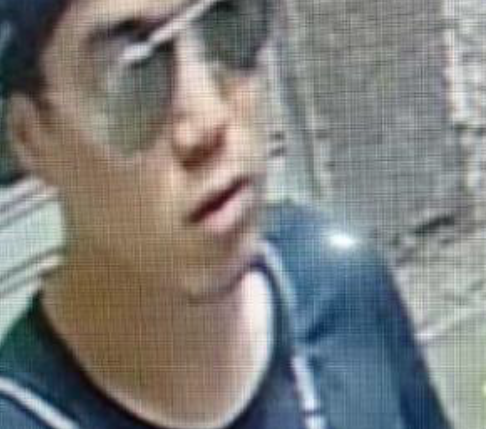
Pang as seen on security cameras image courtesy KBC-TV

Police arrested Michael Aaron Pang on Saturday and allege the killed the Italian storekeeper by striking him with a stool. The body of Norveo Fedeli was found inside his store Friday, Lt. Col. Guglielmo Trombetta said.

Trombetta said Pang, who was born in South Korea, is a graphic designer from the Kansas City area who arrived in Italy about two months ago. Trombetta said it was unclear why Pang was in Italy. He said the suspect has not spoken yet with detectives.

Pang’s lawyer, Remigio Sicilia, said he came to Italy on a tourist’s visa and had a desire to learn Italian and work in Italy. He said Pang is from Overland Park, Kansas, a suburb of Kansas City. He said Pang appeared to have no criminal past.

“He’s 22, but he is like a child,” the lawyer said. “He’s a well-behaved boy from a good American family.”

Trombetta said Pang ordered designer clothes worth about 600 euros ($670) from Fedeli’s store. He said Pang had gone to the store twice before Friday to purchase the clothes, but his credit card was rejected.

Police allege Pang and Fedeli scuffled before Pang killed the storekeeper. Police say Pang changed his clothes and took the man’s wallet before fleeing the store with one of his shoes covered in a bag because it was stained in blood.

Police say they found Fedeli’s stolen wallet and other evidence linking Pang to the killing at a room he rented in Capodimonte, a lake town near Viterbo.

Pang, who faces murder and robbery charges, is expected to appear in court Monday, Trombetta said.

Woman arrested at KC bus station admits transporting fentanyl

KANSAS CITY– A woman carrying more than five pounds of fentanyl in her suitcase as she traveled through Kansas City pleaded guilty in federal court Thursday, according to the United State’s Attorney.

Sanchez -photo Clay Co.

Evelyn C. Sanchez, 33, pleaded guilty before U.S. Chief District Judge Beth Phillips to possessing fentanyl with the intent to distribute.

According to court documents, Sanchez was traveling from Los Angeles, Calif., en route to New York, N.Y. Her bus stopped briefly at a Kansas City bus station on Aug. 21, 2018. After Kansas City police detectives interviewed Sanchez at the bus station, they became suspicious that she was not being truthful about her trip and purpose for going to New York. A police service canine alerted to a grey, hard-sided suitcase under one of the seats near where Sanchez had been seated on the bus, and she eventually acknowledged that that suitcase belonged to her.

When detectives searched Sanchez’s suitcase, they found two bundles wrapped in several layers of plastic, which contained a total of 5.3 pounds of fentanyl. When officers searched Sanchez’s purse, they discovered a false bottom to the purse that contained five separate baggies of cocaine that weighed a total of 5.64 grams.

Under federal statutes, Sanchez is subject to a mandatory minimum sentence of 10 years in federal prison without parole, up to a sentence of life in federal prison without parole. The maximum statutory sentence is prescribed by Congress and is provided here for informational purposes, as the sentencing of the defendant will be determined by the court based on the advisory sentencing guidelines and other statutory factors. A sentencing hearing will be scheduled after the completion of a presentence investigation by the United States Probation Office.

Kansas man hospitalized, suspect jailed after shooting

SHAWNEE COUNTY — Law enforcement authorities are investigating an aggravated battery and have a suspect under arrest.

McClain -photo Shawnee Co.

Just after 12:30 a.m, Saturday, police were dispatched to the area of SE 10th and Liberty in Topeka on a report of a man who had been shot according to Lt. Manuel Munoz.

Upon arrival, police determined the incident had taken place at 730 SE Liberty and found a male victim in the home suffering from a non-life threating gunshot to the arm.

The victim was transported to a local hospital for treatment. Officers took several people into custody at the scene and transported them to the Law Enforcement Center for further questioning.

They also transported Wilbert McClain, 61 to Shawnee County Department of Corrections for Aggravated Battery, Aggravated Assault, Aggravated Robbery and Felony Obstruction, according to Munoz.

Kansas, other states work to avoid vast undercount in 2020 census

LOS ANGELES (AP) — In a squat office building not far from downtown, Esperanza Guevara is getting ready to look for people who might not want to be found. And her job could get a lot harder.

The immigrant-rights activist is leading a drive to reach tens of thousands of people who entered the United States illegally and persuade them to participate in the 2020 census, the government’s once-a-decade count of the population.

The Trump administration’s plan to use the census to inquire about each person’s citizenship has sent a chill through immigrant communities. Guevara and others fear the question could discourage participation and, by some estimates, leave millions of people uncounted across the country.

Such concerns are concentrated in Democratic-led states with large immigrant populations. An inaccurate count could have real-world consequences, since billions in federal dollars and seats in Congress are allocated according to population.

In immigrant communities often wary of government, a question about citizenship status will make people “less likely to fill out the census form or even answer the door when someone comes knocking,” said Guevara, who works for the Coalition for Humane Immigrant Rights of Los Angeles.

Those concerns have been heightened by Trump’s slashing rhetoric toward immigrants and by fears that census information could be used to find and deport people.

“Their first thought is, ‘Is this information going to be used against me?'” Guevara said, standing near rows of computers that will be staffed by volunteers trying to connect with prospective census participants.

Census Bureau chief Ron Jarmin said the agency is legally barred from sharing its information with law enforcement agencies, adding: “We are committed to ensuring that the data we collect are always protected.”

The U.S. Supreme Court is weighing a legal challenge seeking to strike the citizenship question from the census form. During oral arguments last week, the court’s conservative majority appeared ready to allow the question.

The Trump administration has argued that it has wide discretion in designing the questionnaire and that the citizenship question is clearly constitutional because it has been asked before — most recently, 1950 — and continues to be used on smaller, annual population surveys.

The Public Policy Institute of California has said that failure to accurately tally immigrants and other hard-to-reach groups could lead to an undercount of 1.6 million people, or roughly 4 percent of the state’s population. That would be enough to cost California one of its 53 House seats.

So California and other states are spending millions to persuade residents, legal and not, to fill out census forms, employing such means as public service messages, mailings, visits to people’s homes and informational gatherings.

“States are doing this because of the number of threats to a fair and accurate count,” said Vanita Gupta, president and CEO of the Leadership Conference on Civil and Human Rights.

Colorado’s House recently endorsed spending $12 million to encourage participation in the census. The governors of Kansas and Nevada have moved to create committees devoted to making sure everyone takes part.

In New Mexico, where the state has launched a multimillion-dollar effort to ensure an accurate tally, Gov. Michelle Lujan Grisham has warned that a 1% undercount could translate into more than $700 million in lost federal revenue over a decade.

Perhaps no state has more at risk than California, where no racial or ethnic group constitutes a majority and Hispanics outnumber whites. More than a quarter of its residents are foreign-born.

Nearly 3 in 4 Californians belong to groups the census has historically undercounted, including Hispanics, blacks, renters, immigrants, children and members of multiple families that share a single home. The state also has an above-average poverty rate, and the poor — especially the homeless — are difficult to count.

With online surveys being widely used next year, people with shaky access to the internet also could disappear from the count.

The state has budgeted about $100 million for education and media campaigns to reach people, a figure likely to jump to $150 million later this year. Most of the money is going to hire field workers and to advertise the importance of participating, a message that will be printed even on lottery tickets.

The Trump administration’s “citizenship question has one purpose: to undercount our diverse communities,” Democratic Gov. Gavin Newsom said. “Our state won’t be intimidated by the White House’s actions, and we aren’t going to back down from fighting for a fair count.”

The Census Bureau’s own plans call for hiring 450,000 to 475,000 temporary workers. Most of them will knock on the doors of people who do not fill out the questionnaires. That number is lower than it was 10 years ago because the bureau is counting on technological changes to make the job more efficient.

With a $400,000 contract from the state, Asian Americans Advancing Justice in Los Angeles is working to reach into immigrant communities where more than a dozen languages are spoken, including Korean, Vietnamese and Chinese. Southern California is home to the largest Asian population in the U.S.

An Le, the group’s statewide census manager, said census research has found that Asians who speak little or no English and were born outside the U.S. are fearful of repercussions from the government if they submit the information. The group is stressing the importance of the census to health and education funding.

Le said more money is needed to produce census materials in a greater range of languages. She worries, too, about the citizenship question.

Even for legal permanent residents, that would serve as “a deterrent and a barrier,” she said.
Man sentenced for vandalizing Kan. cemetery on Christmas

OLATHE, Kan. (AP) — A man who pleaded guilty to vandalizing an Olathe cemetery on Christmas was sentenced to 50 hours of community service and ordered to undergo a mental health evaluation.

Deason photo Johnson Co.

42-year-old Alex Deason was also ordered Friday to pay $7,781 in restitution for damages. Deason pleaded guilty in March to criminal desecration at the Olathe Memorial Cemetery.

Authorities said Deason knocked over and vandalized headstones, some of which dated back to the 1800s.

At his sentencing hearing, Deason apologized and said he would like to write a letter to each family whose gravestones he damaged.

Deason has been ordered to have no contact with the Olathe Memorial Cemetery.

Republicans push tax relief through Kansas Legislature

By JOHN HANNA

TOPEKA, Kan. (AP) — Republican legislators have pushed a tax relief proposal through the Kansas Legislature, ignoring predictions from Gov. Laura Kelly’s fellow Democrats that she will veto it, just as she did with a larger plan.

The House voted 83-41late Saturday night to approve a billdesigned to offer relief to individuals and businesses that have been paying more in state income taxes because of changes in federal tax laws at the end of 2017. The House’s vote came two days after the Senate approved it, so the measure is headed to Kelly’s desk. Republican leaders in the GOP-controlled Legislature appeared to have the two-thirds majorities necessary in both chambers to override a veto, something they couldn’t say with the first tax bill.

“Kansas should not take more of their money based on something the federal government did,” said House Speaker Ron Ryckman Jr., a conservative Kansas City-area Republican. “It’s the people’s money.”

The bill would save taxpayers roughly $90 million during the budget year beginning in July and about $240 million over three years. It’s less than half the size of a GOP tax relief plan that Kelly vetoed in late March, partly because it doesn’t attempt to make its changes apply retroactively.

Kelly issued a statement early Sunday calling for a comprehensive review of the state’s tax system. Her staff would say only that she will review the measure.

Kelly likewise refused to say beforehand that she would vetothe first tax bill. But she criticized that measure as a return to a tax-cutting experiment under former Republican Gov. Sam Brownback that made Kansas nationally notorious because of persistent budget woes that followed.

Bipartisan legislative majorities repealed mostof the Brownback tax cuts in 2017, and Kelly ran successfullylast year against Brownback’s political legacy. Democrats argued that enacting the GOP’s smaller tax relief bill also would lead to budget problems within a few years, and Senate Minority Leader Anthony Hensley, a Topeka Democrat, said it was “destined for a veto.”

“We can’t afford it,” said Sen. Tom Holland, a Democrat from northeast Kansas. “We need to buy ourselves some time and just see what’s going on with our economy right now.”

Republican leaders have argued that failing to act represents a tax increase.

“It’s very important to us that we make sure that businesses and individuals keep that money in their pockets, rather than having it go to the state of Kansas for bigger, bloated government,” said Senate President Susan Wagle, a conservative Wichita Republican.

Like other states, Kansas faced revising its income tax code because it is tied to the federal tax code. The federal tax changeschampioned by President Donald Trump lowered rates but also included provisions that raised money for Kansas, in part by discouraging individual filers from claiming itemized deductions.

The measure would allow individuals to itemize on their state tax returns even if they do not itemize on their federal returns. The bill also cuts taxes for corporations, particularly large firms with operations outside the U.S.

The measure also includes provisions aimed at helping the state collect more taxes from internet sales and start dropping the state’s 6.5% sales tax on groceries.

Kelly had promised during her campaign last year to lower the sales tax on groceries. Democrats scoffed at the incremental amount — less than 1 percentage point, or $1 on a $100 grocery bill, in 2021.

“I can hear the conversations at home: ‘Honey, the Kansas Legislature has given us a tax break. What are you going to spend your quarter on this week?'” said Rep. Boog Highberger, a Lawrence Democrat.

Copyright Eagle Radio | FCC Public Files | EEO Public File