KANSAS CITY (AP) — A 37-year-old Missouri man who was missing for a week after wrecking his car in a ravine has died.
Police in Lee’s Summit, Missouri, said Ryan Linneman died Saturday at a hospital. He was found Wednesday in his vehicle at the bottom of a wooded ravine along Interstate 470 by a dirt bike rider.
Police asked the public for help finding Linneman after he was last seen driving his car on Oct. 9.
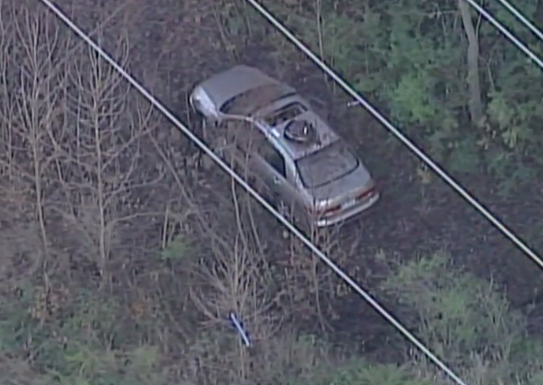
Crash investigators determined Linneman’s car ran off of Interstate 470 and went down a 50-foot incline. The vehicle landed in a gully that was obscured from the view of passing motorists.
KANSAS CITY(AP) — A 37-year-old man who had been missing for a week is hospitalized after being found in a wrecked car at the bottom of a ravine.
Lee’s Summit police say a dirt bike rider found Ryan Linneman, of Lee’s Summit, Wednesday evening in the wreckage along Interstate 470 in Kansas City.
Linneman was taken to a hospital with critical injuries. Lee’s Summit police spokesman Sgt. Chris Depue says he did not have an updated condition report Thursday.
Police asked the public for help finding Linneman after he was last seen driving his car on Oct. 9.
The crash investigators determined Linneman’s car ran off of Interstate 470 and went down a 50-foot incline. The vehicle landed in a gully that was obscured from the view of passing motorists.
ADA, Okla. (AP) — Oklahoma’s history is so deeply intertwined with the 39 Native American tribes located there that the state’s creation in 1907 was celebrated with a symbolic wedding ceremony between the Indian and Oklahoma territories.
Photo courtesy First Council Casino
The relationship between Oklahoma and the tribes has sometimes been contentious, but one of its undisputed successes has been a 15-year-old agreement to expand gambling in the state.
Since the tribes got the exclusive right to open casinos, Native American gambling has become a bigger economic factor in Oklahoma than in any other state except California. Dozens of casinos, including several glittering Las Vegas-scale complexes, generate more than $2 billion a year, with $139 million going to the state’s coffers last year.
But gambling money has changed more than the tribes’ bank accounts. It has greatly increased their political muscle, as the state’s new Republican governor recently discovered. After a clash with tribal leaders, Gov. Kevin Stitt and political supporters are facing a test of tribal power that now extends well beyond the state’s Native American population into the economy of many Oklahoma towns.
The dispute flared up suddenly when Stitt, a businessman who won election last year, announced in an op-ed piece plans to renegotiate the state’s share of casino revenue, which now ranges from 4% to 10% and funds mostly schools. Stunned, the tribes unleashed a multimillion-dollar advertising and political offensive to kill the idea.
The campaign, which took many political leaders by surprise, underscored a new reality in a place once ruled primarily by the oil and gas industry, but where tribal money now buys firetrucks, pays for school trips, floats rural economies and supports nearly 100,000 jobs statewide.
“The tribes are the best friend the state of Oklahoma has right now,” said Rep. Matt Meredith, whose district in eastern Oklahoma is home to the Cherokee Nation, the largest tribe in the U.S. “The last thing you want to do with your best friend is get in a legal battle with them.”
How the dispute will be resolved is unclear. The governor insists the current revenue agreement expires Jan. 1, while the tribes say it automatically renews. The state has hired a national law firm to negotiate with Native American leaders, who are calling on support from their wide network of local allies.
The governor and Attorney General Mike Hunter both declined to discuss the talks because of the “dynamic and delicate nature” of the matter, said Alex Gerszewski, spokesman for the state attorney general’s office.
For years Native American tribes have struggled to improve their economic position in what was once Indian Territory. The federal government resettled dozens of tribes in this part of the nation’s midsection after expelling them from other regions in the 19th century, but then gradually whittled away at the tribes’ communal property here to make way for white settlement and eventual statehood. In the last century, the tribes in Oklahoma used their remaining assets to operate businesses and provide clinics, housing and other services for their members.
But the financial picture, both for the tribes and the state, changed dramatically after Oklahoma voters approved casino gambling in 2004 and the tribes received an exclusive concession. The overall economic impact on Oklahoma has amounted to $9.2 billion annually, according to a 2019 study.
Massive resort-style hotel casinos that feature a parade of major entertainment acts have popped up in large cities — the Tulsa area alone has a half dozen — and along the state’s border with Texas, which only has limited gambling and provides a wealthy flow of customers.
At the first exit north of the Red River lies the Winstar World Casino and Resort, with the largest gambling floor in the nation, surpassing those on the Las Vegas strip. Owned by the Chicakasaw Nation, the resort has 1,400 rooms in three hotel towers, two 18-hole championship golf courses, shops and more than a dozen restaurants.
On the state’s northeastern border with Kansas and Missouri lies the Downstream Casino Resort, owned by the 3,240-member Quapaw Nation. Tribal leaders started a cattle operation to supply food for the casino, along with a brewery and other businesses.
“Before gaming we had less than 40 employees, and today we employ close to 2,000 people all in,” said the tribe’s chairman, John Berrey.
Even small towns in rural areas have their own mini-casinos, and the money filters through counties that had been declining economically.
In downtown Sulphur, 90 minutes south of Oklahoma City, the Chickasaw Nation built a four-story hotel and spa that hosts prom night for half a dozen area high schools. A new state-of-the art, 72-bed medical facility in Ada employs 1,600 people.
The benefits have come with social ills, including cases of problem gambling, embezzlement and family disruption that have prompted continued opposition from some community groups and social conservatives.
But the economic boost has lifted spirits where there long had been hardship, said Bob Blackburn, the Oklahoma Historical Society director and author of a book on the Cherokee Nation. He cited a growing sense of “self-determination, self-reliance.”
Stitt has said the state’s share of tribes’ casino revenue was “fair to help introduce the gaming industry” years ago but that today, “Oklahoma’s fees are the lowest in the nation.”
But available data from the 24 states with Native American gambling shows a wide variance. A 2015 federal analysis of 276 tribal compacts shows Oklahoma’s 6% average revenue share close to the national median. More than 100 tribes pay no fees while about 120 pay more than 10%. About a dozen pay between 20% and 25%. Oklahoma’s 4% to 10% revenue share varies depending on the type of game.
In addition to the blast of television and social media ads emphasizing the casinos’ economic importance, the tribes have spent to influence policy makers. Tribes doled out more than $1.1 million during the last two election cycles to state candidates from both parties.
The annual legislative retreats for both House Republicans and House Democrats were held this year at tribal resorts.
Since Stitt’s election last year with 54% of the vote, the majority Republican legislature has been supportive of his initiatives, including giving him expanded powers to appoint heads of state agencies. But many wonder whether even a popular Republican governor now has the clout to challenge the tribes in Oklahoma.
“The tribes are so influential now, and they’ve ramped it up a lot,” said Rep. Lewis Moore, a Republican from the Oklahoma City area. “And the way they’re going to do that is through their lobbyists. And if you personally have a business or live in these tribal areas, you’re going to get even more pressure.”
LAWRENCE, Kan. (AP) — A judge has pushed back the trial date for a University of Kansas student who is charged with making a false rape report.
The start of the trial was moved to Jan. 6 after the prosecution argued that the defense provided information about expert witnesses too close to the initial trial date of Oct. 28. Judge Amy Hanley found that the timing wasn’t an appropriate reason to exclude the witnesses.
The prosecution says the woman fabricated being raped by the friend of her ex-boyfriend in September 2018 out of regret and to get revenge. Police say her text messages showed that the sex was consensual.
But the woman attorneys say she is innocent and was making light of what happened in the texts.
A private insurer’s 2018 premiums in Kansas ran too high — at least compared to the medical bills it had to pay for customers that year.
CELIA LLOPIS-JEPSEN / KANSAS NEWS SERVICE
That means thousands of Kansans get money back this fall because they got overcharged last year.
Sunflower, a subsidiary of Centene, ran afoul of rules in the Affordable Care Act, or Obamacare. That forced rebates of more than $25 million dollars to nearly 19,000 customers who bought Ambetter individual health plans.
Sunflower is looking to cut premiums for 2020 by more than 8%.
In past years, total Kansas rebates under the ACA never topped $5.5 million. But this year Kansas leads the nation. Sunflower’s hefty refund puts the average rebate in the state at more than $1,000, or seven times the national average.
Sunflower and Centene didn’t respond to requests for an interview this week.
Federal law requires insurers to spend a certain proportion of what they collect in premiums — normally at least 80 percent — on their customers’ health care. The rest can go toward the company’s own costs and profits.
When companies miss the mark, they have to give money back, either as direct payments to their customers or reductions to their upcoming premiums. (In the case of employer plans, the rebates can go to the employer to be used in certain ways, such as discounting employee premiums.)
This fall saw massive rebates.
Companies across the country broke the ACA rule, triggering a national record of $1.37 billion in rebates.
In Kansas, they owed more than $27 million back to customers, almost all of which relates to Sunflower’s individual plans. Smaller amounts involved insurers on the small- and large-employer markets.
What caused this year’s high premiums in Kansas and nationally?
Health care economist David Slusky said insurance companies have gradually adjusted to how the Affordable Care Act changed their markets since it became law in 2010. At the same time, corporate taxes are down and the for-profit world is thriving.
“Profit has increased as the market has stabilized,” the University of Kansas economics professor said. “I think that increasing profit has resulted in more rebates. But I wouldn’t read too much into an individual company, especially in an insurance market where there’s so many things out of their control.”
“You’re watching to see what happens to your policyholders,” Slusky said, “but you’re not the patient and you’re not the (health care) provider.”
The Kansas Insurance Department regulates premiums and has asked Sunflower for information about how it landed so far afield of the ACA threshold.
“We’re in discussions … to determine what happened,” said assistant director of health and life Craig Van Aalst. “We’re not the only state that (Centene is) issuing refunds in.”
Sunflower has asked the department for permission to lower its premiums starting in January. Van Aalst said conversations with the company indicate it is trying to correct its rates based on its early experience in Kansas.
A few confounding factors may have made it difficult for Sunflower to get premiums right in 2018, Van Aalst said. It was the company’s first year on the individual market in Kansas, where it focused on the Kansas City area. It joined just as another major insurer, Blue Cross Blue Shield of Kansas City, pulled out.
“It certainly complicates membership prediction,” Van Aalst said.
Additionally, rebates normally reflect a three-year rolling average of premiums and health care spending, but Sunflower’s recent arrival means its Kansas rebates reflect just one year.
The state insurance department signs off on premiums and can only reject them with a legal basis and based on actuarial evidence — the numbers that underpin or contradict a company’s prediction of medical costs. State officials said they haven’t had reason to reject Sunflower’s rate requests.
The federal government posts each company’s actuarial memorandum on a website meant to help hold insurers accountable, but the documents are heavily redacted.
The Affordable Care Act’s 80-20 ratio aims to protect against excessive premium charges. Experts note, however, that the rule isn’t perfect and can come with unintended consequences. Among them, they say, it can create an incentive for higher health care spending. So if an insurance company’s fees are tied to overall medical costs, higher expenses allow bigger premiums and profits.
“That’s the one thing that doesn’t get talked about a lot here,” said Christopher Garmon, a professor of health administration at the University of Missouri-Kansas City. “It may be one reason why costs have not been down as much as we would hope in the last 10 years.”
Celia Llopis-Jepsen reports on consumer health and education for the Kansas News Service. You can follow her on Twitter @Celia_LJ or email her at celia (at) kcur (dot) org.
KANSAS CITY AP) — Two people are charged in the deaths of three people who police say were shot during a drug deal at a Kansas City home.
Jackson County prosecutors on Friday charged 35-year-old Lynnsey Jones and 43-year-old Victor Sykes each with three counts of first-degree murder and armed criminal action in Thursday night’s shooting.
Kansas City police have identified the victims as 40-year-old Larry Barnes, 38-year-old Brandy Jones, and 42-year-old Larona Jones.
Court records say Lynnsey Jones told police she killed all three “because I’m a bad person,” Sykes denied any involvement in the shootings.
According to court records, Sykes was on parole for a Kansas slaying.
The suspects are jailed on $500,000 cash bond. Online court records don’t list attorneys for them.
SEDGWICK COUNTY —Law enforcement authorities are investigating a fatal shooting that left a man dead and have made an arrest.
Patterson photo Sedgwick Co.
Just after 4 a.m. Friday, police responded to a shooting call at a residence in the 4400 block of east Bayley in Wichita, according to officer Charley Davidson. Upon arrival, officers located shell casings and two handguns.
A short time later, 40-year-old Charles Cunningham of Wichita arrived at an area hospital with a gunshot wound. He was pronounced deceased.
The investigation revealed that Cunningham and his 42-year-old brother went to the home on East Bayley in reference to an ongoing dispute. At the residence, Cunningham physically attacked 26-year-old Dalton Patterson and Patterson fired a shot that struck Cunningham, killing him.
This was not a random incident. The individuals involved knew each other, according to Davidson and investigators have recovered multiple guns and drugs during their investigation.
KANSAS CITY (AP) — Kansas schools rely too heavily on test scores and ignore input from teachers when weighing whether changes are needed for a student to achieve classroom success, according to a study by researchers at the state’s flagship university.
Kansas began launching the data-heavy Multi-Tiered System of Supports approach in 2007, which has been used to administer plans for student improvement. But the University of Kansas study released earlier this year calls for a balanced system that includes teacher recommendations, test scores and other metrics, KCUR-FM radio reported .
“We are losing teachers’ ability to use far more information about what they know makes for a good education for different types of kids because we’re just reducing the kids down to a number,” said Rebecca Jacobsen, an associate professor of education policy at Michigan State University.
In 2013, the Garden City Public Schools district received training for MTSS. Some teachers didn’t agree with the results from the test, but when they tried to protest, state consultants told them their input wasn’t needed.
“Good teachers are rightly saying those standardized tests are part of the story, but not all of the story,” said Don Stull, one of the study’s authors and a professor emeritus at the university. “And if we don’t try to bring all that we know . then we’re not doing the best we can for those children.”
Shortly after, the state shifted its approach to social and emotional growth. High school graduation rates were also considered alongside test scores.
“The assessment is just a tool to say do we need to look at a certain area,” said Linda Wilkerson, the co-director of MTSS for the Kansas Department of Education. “It isn’t the answer. It’s the question.”
Schools across the country are now recognizing that teachers’ judgments should not be dismissed in favor of test scores. Kansas is trying to find that balance.
“We’re coming back to a kind of middle ground,” Patricia Burch, an associate professor of education at the University of Southern California, said, “where we agree it’s important but it’s not as heavy handed.”
RENO COUNTY— Animals on a highway led to an accident just before 4a.m. Saturday in Reno County.
The sheriff’s department reported there were 8 sheep, 2 donkeys, 2 horses and a cow in the area of Kansas 96 Highway and Mills Road.
While a deputy was attempting to get the animals off the road, they ran south on K96 where a northbound vehicle driven by 55-year-old Treaza Sovine struck a horse.
Sovine complained that her left arm hurt, she had several cuts and was covered with glass, according to the sheriff’s department. EMS treated her at the scene of the crash.
She was wearing a seat belt, according to the sheriff’s department.
KANSAS CITY (AP) — A 39-year-old Kansas City man was sentenced to 91 years in prison for shooting a Missouri State Highway Patrol trooper in the leg during a confrontation at a casino.
Morris photo Clay County
Ronald Morris was sentenced Wednesday for shooting at Harrah’s Casino in North Kansas City. He pleaded guilty to assault on a law enforcement officer, armed criminal action and attempted assault on a law enforcement officer.
Clay County Prosecutor Daniel White said in May 2016, casino security reported a man with a handsaw on the roof of a car. During a confrontation with a highway patrol corporal and another trooper, Morris became combative. At some point, Morris grabbed a pistol and shot the corporal in the leg. When Morris broke away, he was shot by the other trooper.
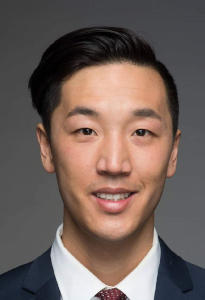
Even though it’s the offseason, Kansas Rep. Rui Xu says being a legislator is a full-time job.
A study says Kansas state lawmakers typically make $21,900 each legislative session.
Over the course of a week, on top of his part-time gig as a freelance marketer, the Democrat spends 20 to 30 hours meeting with constituents in Johnson County, going to events, working on legislation or helping city council candidates run for office.
Xu isn’t paid for that work. Like every other member of the Kansas Legislature, he only draws a salary from the state during the legislative session, from about January to May. This year, his first in office, he got $19,300.
The typical Kansas legislator makes about $21,900 during session, according to a report from the legislature’s audit division. That’s less than what lawmakers make in many other states. Oklahoma and Missouri pay more than $35,000 a year, plus living expenses.
It’s not easy to convince voters that legislators need a pay raise. But some legislators and citizens argue Kansas lawmakers’ pay isn’t enough to compensate for what they do year-round, and it could impact who runs for office and what he or she does after winning a seat.
Kansas Rep. Rui Xu.
CREDIT KANSAS HOUSE OF REPRESENTATIVES
“The makeup of our legislature … does not reflect where Kansas is as a whole,” Xu said. “A House of Representatives should be fairly representative of the population.”
How the pay breaks down
Kansas bases lawmaker pay on a daily rate while the legislature is in session: $88.66 a day, plus a per-diem allowance of $149 to cover food and housing. The state report added those numbers and multiplied them by 92 days, the average length of a session since 2000.
In reality, many lawmakers make more or less than the estimated $21,900. Some lawmakers get reimbursed for mileage, some are taxed on their per diems and some pay into their pensions — which are tied to what legislators would make if they worked for the state year-round. Plus, representatives and senators who lead their party or chair committees are paid thousands of dollars extra.
All of those factors affect the baseline salary. Data from the state employee salary website shows that some representatives made less than $10,000, while some senators made more than $40,000 in fiscal year 2018.
Age, wealth gap
Some legislators and observers say low pay discourages middle- and low-income people from running for office and instead favors wealthier, older people who are retired or have jobs that allow them to take off for several months of the year.
According to the National Conference of State Legislatures, 66% of Kansas legislators were baby boomers in 2016, compared to 29% of the state population. Only 22% of Kansas lawmakers were millennials or Gen X, even though those age groups made up 58% of the state.
In 2015, according to NCSL data, 21% of Kansas lawmakers were business owners, 11% were retired, 10% were attorneys and 7% worked in agriculture. Eighty-nine percent of lawmakers that year were white, compared to 85% of all Kansans.
At 30 years old, Xu is one of the younger lawmakers in Topeka. He and his wife are expecting their first child later this month. He’s said been planning around his extra family responsibilities, but the instability of his salary has made that harder.
“I don’t want to get rich doing this, but I don’t want to have to think about, what’s the next couple of years going to look like?” Xu said. “I don’t know what to budget for next year, I honestly don’t.”
He also doesn’t want to complain too much about a job he loves.
“There’s a lot of people out there,” he said, “who work much harder for less.”
A former Republican state representative believes voters would benefit from a wider variety of candidates to choose from.
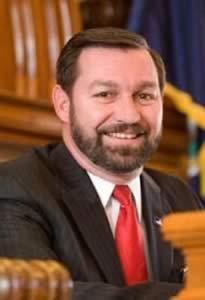
Former Kansas Rep. Virgil Peck.
CREDIT KANSAS HOUSE OF REPRESENTATIVES
“When you get more people, you increase the pool of ability and fresh ideas that are coming into the legislature,” said Virgil Peck, who lives in rural southeast Kansas. “I believe that some legislators would feel a greater responsibility to invest more time.”
In 2014, Peck introduced a bill to increase lawmakers’ pay by about $10,000 a year and reduce the amount that they could put into their pensions. It wasn’t met with much support from his peers.
“Almost nobody was willing to publicly take a stand and say, ‘Yep, increase my pay,’” Peck said.
The bill wasn’t popular with the public, either.
“I had people call me a liar,” Peck said, “when I told them that I only earned $15,000 a year.”
Making a difference
A raise doesn’t necessarily equate to changing the legislature’s economic diversity, according to Duke University political scientist Nicholas Carnes.
In a 2016 study, Carnes and co-author Eric Hansen looked at data about state legislator salaries and the economic class of people in those offices. They found that raising the salary of those politicians didn’t make a significant impact on middle- and lower-income people joining their ranks. Instead, it encouraged more career politicians to run and win.
The biggest obstacle to running, Carnes said, is not the eventual salary, but the cost and time required for a campaign. Wealthier people tend to seek office. Others avoid it because they don’t have the time or money, he said.
“When people run, they make huge personal sacrifices,” Carnes said. “No matter what we pay our legislators, we don’t pay our candidates anything.”
To encourage more economic diversity among political candidates, Carnes suggested that organizations should conduct trainings tailored for working-class people who want to run for office.
“It’s a model that actually has a lot of potential,” he said, “and a lot of groups have used successfully.”
Ultimately, he supports raising legislators’ salaries, but for a different reason: getting paid more would encourage more dedication to the job.
“Research has generally supported the idea that if you pay a politician a higher salary, they’re more likely to behave,” he said. “They show up, they don’t miss votes, they represent their constituents’ interests.”
The national landscape
Increasing pay is a perennial proposal — and an unpopular one — in statehouses, said John Mahoney, a policy specialist at the NCSL.
“It’s always been an issue,” Mahoney said. “I don’t think it’s going to go away anytime soon.”
In 2008, then-Louisiana Gov. Bobby Jindal vetoed a bill that would have doubled the salary of the state’s lawmakers after a public outcry. Last year, New York passed the first raise for its statehouse in 20 years, also drawing criticism.
Other states determine compensation differently than Kansas, Mahoney said. Some, like Maine and Maryland, have compensation commissions that study pay on a regular basis. Others, like Alabama and South Dakota, tie legislative pay to median household income.
“It’s always around,” Mahoney said. “The question is, how do we address it in a healthy way that allows legislators and citizens to have some input?”
Editor’s note: A previous version of this story incorrectly stated the name of the Duke University political scientist. His name is Nicholas Carnes, not John.
Nomin Ujiyediin reports on criminal justice and social welfare for the Kansas News Service. Follow her on Twitter @NominUJ or email nomin (at) kcur (dot) org.
MANHATTAN — A public hearing will be conducted at 10:00 a.m. on Monday, October 21, 2019, to consider the adoption of proposed changes to pet animal health regulations. The hearing will be held in room 124 on the first floor of the Kansas Department of Agriculture, 1320 Research Park Dr. in Manhattan.
One proposed new regulation, K.A.R. 9-18-23, would allow, under specified conditions, the transfer and adoption of feline immunodeficiency virus-positive (“FIV”) cats.
The other proposal would repeal several regulations (K.A.R. 9-12-1, 9-23-2, and 9-23-3) which had previously regulated hobby kennel operators; those operators are now subject to general requirements, so specific regulations are no longer necessary.
A copy of the proposed new regulation, as well as an expanded notice of public hearing, may be accessed on the KDA website at agriculture.ks.gov/PublicComment.. All interested persons may attend the hearing and may present comments either orally or in writing, or both. Written comments can be submitted on the public comment website prior to the hearing or sent to the Kansas Department of Agriculture, 1320 Research Park Drive, Manhattan, KS, 66502.
Any individual with a disability may request accommodation in order to participate in the public hearing and may request a copy of the regulations in an accessible format. Persons who require special accommodations must make their needs known at least five days prior to the hearing. For more information, including special accommodations or a copy of the regulations, please contact Ronda Hutton at 785-564-6715.
SEDGWICK COUNTY —Law enforcement authorities are investigating an armed robbery and have made an arrest.
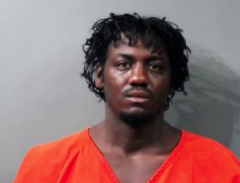
Robinson photo Sedgwick County
Just after 9p.m. Thursday police responded to an armed robbery call at Dollar General, in the 2000 Block of east 21st Street in Wichita, according to officer Charley Davidson.
Two employees at the scene told officers two suspects entered the business, put bandanas over their faces. One suspect later identified as 26-year-old Donald Robinson, Jr. pulled out a knife and grabbed the female employee around the neck and demanded money.
Robinson took the women’s cell phone and cash. The second suspect also took cash. Both fled the business on foot.
Officers were able to locate suspect in the area and made an arrest. They also recovered additional evidence from the robbery, cash and the employee’s cell phone. Police are working to locate and arrest the second suspect, according to Davidson.
TOPEKA, Kan. (AP) — A Kansas trial-court judge opposed by an influential anti-abortion group is among three finalists to fill a vacancy on the state’s highest court.
A state nominating commission on Friday named Shawnee County District Judge Evelyn Wilson as a potential appointee for Democratic Gov. Laura Kelly to consider. Kelly’s appointee will go on the court without any review by the Republican-controlled Legislature.
Kansans for Life announced its opposition this week to her candidacy, citing her husband’s political contributions to Kelly and other abortion-rights supporters. She has declined to comment, but he said she steers clear of politics.
Commission members said they were unaware of the group’s opposition.
The commission also selected Deputy Kansas Attorney General Dennis Depew and Assistant Kansas Solicitor General Steven Obermeier as finalists for Kelly to consider.


 Police asked the public for help finding Linneman after he was last seen driving his car on Oct. 9.