We have a brand new updated website! Click here to check it out!

Kan. foster care instability led to surge in runaways, left children vulnerable to sex traffickers

At first, they wanted to save her.

Karen Countryman-Roswurm, director of the Center for Combating Human Trafficking at Wichita State University, says 13 girls who ran away from state custody and were later incarcerated for sex crimes should be viewed as children controlled by traffickers.

Then, after she fled the Kansas foster care system at age 16 and fell victim to the commercial sex trade, social workers told her she was going to prison forever.

“When I went into foster care and they wanted to take me away from my family, I ran,” she said. “I ran away, and that’s how I really started to get into all of this trouble. After I ran away, that’s when they started treating me like, ‘Oh, you’re a suspect and you’re not innocent.’

“They never asked me why. It was just, ‘You’re a bad girl.’ ”

Now 18, she spent 14 months in prison for her involvement in a human trafficking ring. Other girls who passed through the care of the Kansas Department for Children and Families also were exploited and locked up.

Kansas added thousands of children to the state foster care system as former Republican Gov. Sam Brownback and his appointed DCF secretary, Phyllis Gilmore, imposed policies that reduced aid to struggling families. The number of children who went missing nearly doubled in a three-year period as the scarcity of long-term homes created severe instability that plagued the foster care system.

Social workers and researchers say those who run away from foster care are vulnerable to sex traffickers who want to exploit them — especially teenage girls who crave a connection as they struggle to process trauma.

Karen Countryman-Roswurm, director of the Center for Combating Human Trafficking at Wichita State University, is advocating within the legal system for 13 girls who ran away from DCF or state custody in recent years and ended up incarcerated for crimes related to human trafficking. The girls never should have been charged, Countryman-Roswurm said, because they were victims who were under the control of a sex trafficker.

“We’re seeing an increase in the criminalization of the very populations that we intended to serve, largely because people only know enough about trafficking to be dangerous,” Countryman-Roswurm said.

Related: Kansas Made This Sex-Survivor A Criminal — She Wants Another Chance

Personal accounts from three of those 13 girls affirm the failings of the Kansas foster care system and the lasting effects on their well-being. The Topeka Capital-Journal and KCUR generally don’t identify victims of sexual abuse, and survivors of sex trafficking who were interviewed for this story asked not to be named because they fear retaliation from law enforcement, probation officers and other state officials.

“A lot of victims, they don’t say anything and they just burn inside because no one cares to even ask,” said one of the survivors, a 17-year-old girl. “When someone asks you about what really happened and they really empathize and they really show you that they care, then that’s when people speak up about the issue. All it takes is for one person that asks you, ‘Are you OK?’ or, ‘What’s wrong?’ ”

Child advocates are cautious about whether changes taking place under the administration of Gov. Laura Kelly, a Democrat who took office in January, can help repair a broken system. DCF in May, responding to outrage over the number of kids lost by the foster care system during the Brownback years, launched a 10-member special response team tasked with preventing, recovering and engaging runaway children.

Gov. Laura Kelly, left, and Department for Children and Families Secretary Laura Howard photo Kansas News Service

Kelly said the child protection system under former leadership at DCF was broken. The governor selected Laura Howard, a veteran of social welfare work who received bipartisan support from the Legislature, to oversee restoration of a system in crisis.

“Time and time again, children fell through the cracks,” Kelly said. “Over the past eight years, we saw countless children who fell victim to their circumstances who were subsequently victimized again by a failed system and incompetent leadership. I have charged secretary Howard with putting in place safeguards so that this does not happen again. We owe that to these kids.”

‘Moral foundation’

Child advocates and legislators, including then-Sen. Kelly, were disturbed to learn during an October 2017 hearing about escalating numbers of youths who had run away from the child welfare system.

They were stunned by the revelation Gilmore didn’t know some of the children were missing. Gilmore, who would announce her retirement three weeks later, explained the overall rate of runaways was in line with the national average of 1% of the total population of foster kids.

Benet Magnuson, executive director of the Kansas Appleseed Center for Law and Justice, was troubled by Gilmore’s leadership and damage inflicted across the child welfare system. Last year, his organization filed a class action lawsuit alleging DCF is putting kids in danger.

Magnuson said problems in foster care are linked to steep cuts to social welfare programs because those cuts hurt struggling families. Data tracked by Kansas Appleseed show the state during Brownback’s administration lowered annual expenses for the Supplemental Nutrition Assistance Program by $142.9 million. The state cut $38.9 million in annual costs from Temporary Assistance for Needy Families and $32.6 million from the Child Care Assistance Program.

Changes to the budget in 2016 reduced annual funding for community health centers by $30 million and lowered Medicaid reimbursement rates by 4%.

“After pushing those families over the edge,” Magnuson said, “the state takes custody of those kids, and after taking custody of the kids subjects them to a dangerously extreme placement instability, denies them mental health services, and then when those traumatized kids fairly predictably run away, Kansas criminalizes them.

“To say it shocks the conscience would be an understatement. This really strikes at the moral foundation of who we are as a state.”

The volume of children in the Kansas foster care system swelled from 5,214 in fiscal year 2011, when Brownback took office, to 7,484 in the most recent fiscal year, which ended July 1 — a 43.5% increase.

An investigation by The Capital-Journal and KCUR found the rate of runaways surged as the addition of more children in foster care overwhelmed child placement contractors.

DCF tracks the number of children who can’t be accounted for each day and produces monthly and yearly averages. The average number of runaways at any point in time for fiscal year 2015 was 46, or 0.74% of the 6,257 children within the system. By fiscal year 2018, the average number of runaways was 81, or 1.1% of the 7,371 kids in foster care.

One of the runaways, now 21, already was being exploited for sex when she entered DCF custody at age 13. For her, the foster care system felt endless.

“It was really hard for me to stop running away or follow what they say,” she said, “because it wasn’t like these are your goals and then when you complete these goals you’re good and you’re going to go home. It wasn’t like that. It was like … you’re never going to go home, and we’re going to keep you forever.”

She was charged with sex trafficking at age 17 and incarcerated for two years.

DCF in fiscal year 2016 introduced a new metric for the placement stability of children within the foster care system. Monthly reports track the number of times a child changes location from one home to the next. The rate is reflected as the number of moves per 1,000 days in foster care.

The nationwide performance standard for placement stability is 4.12 moves per 1,000 days. In 2016, the statewide rate in Kansas was 6.6. By 2019, the rate had climbed to 9.7. All of the children within the system, on average, are changing homes every three and a half months.

Vickie McArthur, clinical director for reintegration, foster care and adoption at Saint Francis Ministries, which provides child placement services in Kansas, said the rapid influx of children who needed a place to stay created instability because organizations like hers struggled to recruit and sustain long-term homes.

“There’s some bouncing that happens,” McArthur said. “What that means, by what we term ‘bouncing,’ is that they’re going from emergency home to emergency home night after night. You do that for a little while, and the youths say: ‘We’re done. We’re not doing this. We could take better care of ourselves on the street.'”

Life is risky for a runaway. McArthur said some of the children have street survival skills by the time they arrive in foster care, but these children know how to cope because they can disassociate with what they have to do to survive.

“I can’t even put a number on the youths that have been involved in what has traditionally been known as survival sex, when you are trading yourself for a bed in a house so that I’m not sleeping outside in the cold or the rain,” McArthur said. “That oftentimes can lead to, ‘OK, for you to continue to stay here, now you need to exchange sex with my friends and they’ll pay me.’ ”

Tanya Keys, deputy DCF secretary tasked with addressing the runaway issue, has a point of view different from the one Gilmore expressed at the 2017 hearing. For Keys, one missing child is too many.

“We know that for youths who have instability, if they are not able to stay somewhere more than one night, that can create a greater likelihood of a run behavior because they’re not feeling — perhaps, as they define it — they’re not feeling that connection,” Keys said. “They’re not getting their needs met, or maybe they don’t feel safe by staying someplace different every night. So they are more likely to run.”

‘Fighting by myself’

The 17-year-old survivor of sex exploitation, who was taken away from her alcoholic mother at age 10, was offered a series of plea deals for aggravated human trafficking when she was 15 years old. The first offer from prosecutors was 15 years in prison.

The girl struggled to navigate her legal options within the confines of juvenile detention, where she couldn’t contact her mentors. She was discouraged from calling her mother, who was hospitalized with illness.

“My mom ended up passing away while I was in jail,” she said. “So afterward, I just was fighting by myself and I just said that, you know, I’m tired and I have nobody else to advocate for me. I don’t know the legal system. I don’t know what to do anymore, and I couldn’t talk to anybody.”

She eventually agreed to a deal that would keep her in jail for two years, then require her to register as a sex offender.

McArthur said many children end up in foster care because they experienced trauma at home. Just being taken away from a parent is traumatic, McArthur said, but most of the children in foster care have enough protective factors surrounding them to help absorb trauma without impacting their day-to-day functions.

Others, perhaps 20%, McArthur said, “do not have a clue how to absorb the trauma that they have walked through.”

Human traffickers know what to look for.

“Movies have portrayed that a child is taken off of the street or kidnapped in a white van by a gorilla pimp and beaten into submission,” McArthur said. “That happens. Don’t get me wrong, that does happen. But sometimes for our youths that’s not what’s happening. They get themselves into these very vulnerable situations without even realizing it until they’re in too late — and then can move into the exploiter having the youth find other youths that are similar to them that need a place to stay.

“It can be very subtle and very seductive to a youth who is just trying to survive on the street. So our runaway population, we are very aware, are much more vulnerable to being caught or invited into human trafficking.”

Keys said 10 children who entered the Kansas foster care system last year were victims of human trafficking.

Other cases of human trafficking within the foster care system were investigated through tips placed at the Kansas child protection call center. Keys said 45,000 reports are assigned based on calls to the center each year, with 0.4%, or fewer than 200, relating to commercial sex exploitation.

When a child runs away, the state is required to notify law enforcement within two hours. The state sends a photo and contact information for parents and friends to the National Center for Missing and Exploited Children within 24 hours.

Social workers also notify the school and family. Members of the special response team ensure rigorous, daily outreach, including the use of social media tools.

Children who are located are placed in a safe location, which could be with a friend or family member, a street outreach program or an emergency shelter. Under federal guidelines, the child is given a health assessment, as well as a human trafficking assessment.

McArthur said social workers will want to know what the recovered children were doing and where they stayed when on the run. Who were they connected with? What happened to them? Were they running from something or to someone, like a boyfriend, friend or parent?

“A lot of kiddos do not tell us upfront what’s gone on and if they are under the control of someone else who is trafficking them,” McArthur said. “Their exterior can become very crusty and suspicious, so they don’t share. And there are some loyalty binds that they get themselves into as the trafficker begins to demand more and more loyalty of them.”

‘It’s not surprising’

McArthur said the impulse to rebel is inherent in teenagers and a part of adolescent development.

Children in foster care may struggle to follow or learn the rules of a new home. Restrictions could include when they can watch TV, how long they stay out at night, what they wear to school, acceptable hairstyles, or what they eat.

“We bring them out of the home, put them into child welfare, and we then begin to control everything,” McArthur said. “So the child response to that is much like a 2-year-old when you tell them no. They want to explore. They want to have some freedom, which is totally appropriate.”

Keys, the DCF official, said foster kids — “like all of us” — have a desire to connect. They may feel unsafe. The children who run away, she said, are trying to solve a problem, such as a conflict at school or with a caregiver. Those who enter the system at ages 16 and 17 are more at risk.

“The older the age that you enter foster care,” Keys said, “the more likely you are to have placement instability.”

Amy Dworsky, a research fellow with the University of Chicago whose work is focused on child welfare services and strategies to improve outcomes, said the instability foster kids experience in Kansas is concerning.

“That’s a lot of change in a young person’s life,” Dworsky said. “And I mean, just thinking about it developmentally, it’s not surprising that young people would be running from that type of circumstance.”

Dworksy has identified warning signs for youths who may be inclined to run away from foster care. States that perform a flight risk assessment as children enter the foster care system have lower rates of runaways, she said.

In addition to the age of a child, race and gender matter. Dworsky’s research has found that African American and Hispanic youths are more likely to run away than youths who are white, and girls are more likely to run away than boys.

The odds of running away are higher for children placed in group homes, where they may become easy targets for human traffickers. Group homes tend to have constant changes in staff, Dworsky said, and there is no single person who is always there for a child, like there would be with a foster parent.

The staff at group homes also tend to be underpaid and overworked, Dworsky said.

“If there’s going to be a lot of cuts in services, then, yeah, people’s needs are not going to be met,” Dworsky said. “So I’m thinking of needs like mental health, substance abuse — those kinds of service needs. And if those needs are not being met, young people are going to run because, ‘Why am I going to stay here? No one’s taking care of me.’ ”

Keys believes Kansas’ new special response team, which includes two full-time employees at DCF and eight grant-based positions with partners across the state, can make a difference. The team was conceived last year when Gina Meier-Hummel served as DCF secretary under former Gov. Jeff Colyer, a Republican who took over in February 2018 when Brownback left to become the U.S. ambassador for international religious freedom.

The response team’s work includes finding out what is important to children in state care. The children might be motivated by a class in school or a job they like, for example.

Children who are motivated, Keys said, feel safe, connected, “and maybe not as lonely.”

In April, the number of runaways was in the 90s. Now, the number of children in state care who can’t be accounted for is below 60.

“Certainly, we do feel the gravity and want all children and youths, young persons, to feel safe and that they have access to the support they need,” Keys said. “So we look forward to continued improvement. We do feel the responsibility and understand the responsibility.”

‘I’m a human’

John Wilson -photo courtesy Kansas Action for Children

John Wilson, of the nonprofit Kansas Action for Children, said the Brownback administration didn’t take the time to look at the data and enlist research experts who could help make the best policy decisions.

“Kids are being taken away, for all intents and purposes, for being poor,” Wilson said. “They don’t have enough to split among the household. It gets so stressful that they make terrible choices, but some of them are impossible choices they have to make.

“The state does not make a great parent, and we need to do all that we can to keep kids with their families while also keeping them safe. One of the best ways to do that is to make sure basic needs are met for those families.”

Wilson said the best steps the state could take moving forward would include increased access to family support programs that help people pay for food, pay their bills, and put their kids in child care.

Magnuson, of Kansas Appleseed, said he hasn’t seen enough progress under the new administration.

“This is not an exaggeration: Every day, I get at least one email from a foster parent, a foster kid, a social worker, wanting to talk about the terrible thing that they are experiencing, that they’re seeing right now in the foster care system,” Magnuson said.

Kimberly Bender, a professor at the University of Denver Graduate School of Social Work whose research is focused on homeless youths, said there is no quick fix.

Children who are removed from parents need to enter a system where caretakers will get to know them and help them feel safe, Bender said. The children instead enter systems constrained by time and resources. They are disconnected from social networks and meet strangers who take advantage of them.

“Those with power, including funders and administrators, need to structure systems so that young people are truly known for who they are and engaged as partners in setting and reaching their own goals,” Bender said. “Providers need the time and flexibility to do the work in the way they know they need to, in a way that sees young people as individuals with aspirations and potential rather than problems to be fixed.”

Howard, the DCF secretary, said efforts to keep children safe will require dedicated and steadfast resources across local and state agencies.

“Engaging youth and creating safe networks of adequate support systems and resources around a child and their family is essential,” Howard said. “At DCF, our workforce is determined to learn more, with help from community and national experts of youth engagement, to better understand approaches that best serve young people in these circumstances.”

McArthur said social workers in Kansas are trying to equip foster children with the ability to recognize and value a healthy relationship.

“You have to remember,” McArthur said, “a lot of these youths do not have the experience that, ‘Adults will take care of me. So then I go out on the street. I’ve got somebody who may be buying me some pretty nice clothes that I’ve always wanted and never got to have. I’ve got food in my belly. I get to get high or on drugs whenever I want to.’

“So some of it is breaking through that whole cognitive scheme that, ‘This is how I am taken care of,’ or, ‘This is all that I deserve because of the experiences I’ve had in my life.’ We really have to work hard with lots of cognitive behavioral processes that then begin to start allowing that child to see themselves in a different light.”

One of the survivors of sex trafficking, the 17-year-old who spent two years in juvenile lockup, wants to be seen in a different light, but most people view her as a perpetrator.

“Be open minded and have a heart,” she said. “See this through as if I was one of your own kids. Treat me like I’m a human. Don’t treat me like I’m just an ‘it.’ ”

This story is part of a partnership between KCUR and the Topeka Capital-Journal, with support from the Corporation for Public Broadcasting in collaboration with APM Reports, the investigative reporting unit of American Public Media.

Sherman Smith is a reporter for the Topeka Capital-Journal. He’s on Twitter at @sherman_news.

Peggy Lowe is a reporter at KCUR. She’s on Twitter @peggyllowe.

Geoff Hing of APM Reports contributed to this story. He’s on Twitter at @geoffhing.

PREVIEW: Fall Radio Auction Oct. 17 & 18

The Eagle Radio Auction kicks off Thursday morning at 8 a.m. on radio stations 101.9 KKQY and 94.3 FM and 1400 AM KAYS.

There are thousands of items to bid on and buy, including a Troy Bilt Snow Blower from Carmicheal True Value.

Retail Price $960

Troy Bilt 26 inch Two stage snow Thrower. Features six forward and two reverse speeds. 26 inch clearing path is built to handle the snow, season after season. Just one hand operation offers single hand guidance. In dash halogen headlight. Powered by a reliable 243 cc OHV 4 cycle engine with push button electric start. Serrated auger helps break up ice and snow for easier removal. Carmicheal True Value, Plainville, KS. 785-434-2927.


250′ Seamless Gutter Guards Installed from BuiltWell Construction
Retail Price $1200

We’re all tired of that debris in our gutters, right? This purchase of up to 250 linear feet of gutter guards can help fix that problem. BuiltWell Construction owner Wade McCarty of Hays will travel up to 45 miles from Hays and install these gutter guards. Made of powder coated steel screen, these gutter guards are still the most versatile to trap debris…they snap into the front and the back of the gutter without disturbing the shingles. And comes in 5”, 6” or 7” widths…start keeping that debris out of your gutters today with these EZ Lock gutter guards for your home…available from BuiltWell Construction, call to schedule today at 650-2299.

Richard Marx to perform at Salina’s Stiefel Theatre

Richard Marx. Photo courtesy Stiefel Theatre for the Performing Arts

SALINA — Richard Marx is coming to the Stiefel Theatre for the Performing Arts.

An Acoustic Evening of Love Songs is scheduled for 8 p.m. Jan. 31, 2020, according to information from Jane Gates, executive director of the Stiefel.

Tickets start at $39 and go on sale at 10 a.m. Friday. See the Stiefel Theatre website for ticket information.

Following is artist information provided by the Stiefel Theatre

Marx has announced his new album Limitless, out Feb. 7, 2020, on BMG. Limitless is Marx’s first album of original songs in six years, as well as his first new release for BMG. Produced in part by Marx and featuring co-writes with Sara Bareilles, Marx’s son, Lucas Marx, and his wife, Daisy Fuentes, Limitless represents a new beginning for the celebrated singer-songwriter. While his last album Beautiful Goodbye closed the book on one chapter of Marx’s life, Limitless opens a new one. After falling back in love, remarrying and settling into a new home in Los Angeles, “I’ve never felt so intrinsically strong and optimistic about my future,” Marx said, and the bright, heartfelt pop of Limitless reflects that feeling.

As a performer, songwriter, and producer, Marx’s nearly three-decade-long career has had innumerable highlights. The Chicago native has sold more than 30 million albums worldwide, starting with his self-titled debut which went to No. 8 and spawned four Top 5 singles, including the chart-topping Hold on to the Nights, with Don’t Mean Nothing earning him a Grammy nomination for Best Male Rock Vocal Performance. The follow-up, 1989’s Repeat Offender, was even more successful, hitting No. 1 and going quadruple-platinum with two No. 1 singles in Satisfied and Right Here Waiting. When both Rush Street (with two No. 1 AC hits in Keep Coming Back and Hazard) and Paid Vacation (with its No. 1 AC hit, Now and Forever) went platinum, Marx achieved a seven-year string of triumphs that rivaled any in pop-rock music history. To this day, he is the only male artist in history to have his first seven singles reach the Top 5 on the Billboard charts.

For most artists, that would be impressive enough, but Marx didn’t stop there, launching a second, very successful, incarnation as a songwriter and producer, with songs like To Where You Are, the first hit single from Josh Groban’s debut album, as well as the NSYNC smash, This I Promise You. He went on to earn a 2004 Song of the Year Grammy for co-authoring Luther Vandross’ Dance with My Father. Across all formats, Marx has scored an amazing total of 14 No. 1 singles (including Keith Urban’s No. 1 smash Long Hot Summer) both as a performer and songwriter/producer, making him a true multi-talented threat who continues to challenge himself and his fans. He has also written with Jennifer Nettles, Sara Bareilles, and Vince Gill. He holds the honor of being one of a handful of artists who have had a number one hit in each of the past four decades.

Marx’s album of all-new material, My Own Best Enemy, was released in 2004 featuring hits When You’re Gone and Ready to Fly. In 2010, he released Stories To Tell, a greatest hits album which produced a Top 20 AC hit in When You Loved Me. In 2012 he released his first-ever Christmas album, Christmas Spirit.

On July 8, 2014, he released his eighth album, Beautiful Goodbye, featuring all-new material such as its first single and video, Whatever We Started. Fans may find Marx’s eighth studio album, a bit of a departure from his previous albums. According to the Grammy Award-winning singer/songwriter, he set out to make a deliberately sexy album.

“The songs on this record were influenced greatly by everyone from Sade to Bebel Gilberto to various EDM artists to even Chopin. I’m known for romantic music in the past, but this music I wrote is all more sensual and ethereal, and the lyrics are more adventurous than I’ve been willing to go in the past,” he said.

Every track on the new album also incorporates an orchestral element, and the recording of the tracks was, according to Marx, “a thrill beyond anything I’ve done in the studio. And singing these songs brought out what I believe are the most effortless vocals of my recording career, so far.”

All the tracks on Beautiful Goodbye are written and produced by Marx except Getaway, co-written and produced with Walter Afanasieff; Forgot To Remember co-written with Vertical Horizon frontman and frequent Marx collaborator, Matt Scannell; Turn Off The Night co-written with multi-hit songwriter David Hodges, and the title track, co-written with Daisy Fuentes. A special edition of Beautiful Goodbye will also be available exclusively at Target and features two additional songs: Moscow Calling, a collaboration between Marx and well known EDM artist and DJ Morgan Page, and Just Go.

Marx has made a commitment to several different causes, from donating the royalties from his hit single, Should’ve Known Better, to build a room at the NYU Medical Center for pediatric cancer patients, to his recording of Children of the Night, which brought attention to the plight of homeless children on the streets, raising more than $500k for the Children of the Night Foundation. Marx has also performed benefit concerts over the years for the TJ Martell Foundation, Toys for Tots, Make a Wish Foundation, the American Cancer Society, Best Buddies, and the Special Olympics. Marx and his band entertained the U.S. troops stationed in Germany and, since 2008, he has hosted an annual event in Chicago for the Ronald McDonald House Charities, the first of which featured a concert by Marx and Kenny Rogers. Marx has also organized an annual all-star benefit concert for the Cystic Fibrosis Foundation, raising more than $4 million for research to cure the disease.

Police: Speed a possible factor in crash that killed Kan. teen

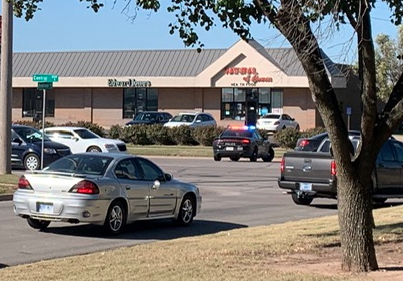
SEDGWICK COUNTY — Law enforcement authorities are investigating a fatal accident that occurred just before 1p.m. Monday and have identified the teenage victim.

First responders near the crash scene photo courtesy Wichita Police

A 2007 Mercury Mountaineer driven by an 83-year-old man was eastbound on Central Avenue and turning north on Socora Street in Wichita, according to officer Charley Davidson.

A Honda passenger vehicle driven by a 16-year-old boy was westbound on Central Avenue.  The vehicles collided at the intersection, according to Davidson.

A front seat passenger identified as Dominick Sublett, 17, a student at Wichita Northwest High School died at the scene, according to Davidson.

EMS transported the 83-year-old, the driver of the Honda and a 16-year-old female passenger in the Honda to a local hospital for treatment, according to Davidson.  Police did not release details on seat belt usage.

Speed is being considered as a possible factor in the crash, according to Davidson.  The case will be presented to the Sedgwick County District Attorney for possible charges.

Kan. woman hospitalized after car hits cow in Reno County

RENO COUNTY — One person was injured in an accident just after 10p.m. Monday in Reno County.

The sheriff’s department reported a 2008 Pontiac G6 driven by Joshua Harbert, 31, Pretty Prairie, was eastbound on Parallel Road at Valley Pride road and struck a cow in the road.

When deputies arrived Harbert and a passenger Kaitlyn Albers 28, Pretty Prairie, were standing in the road behind the vehicle attempting to locate their dog which had run off following the crash.

Pretty Prairie ambulance transported Albers to Hutchinson Regional Medical Center. Harbert was not injured.

The cow’s owner Michael Hoyt removed the cow from the scene. Deputies cited Harbert and Albers for not wearing seat belts, according to the sheriff’s department.

Police capture man accused of selling heroin to KC woman who died

JACKSON COUNTY— Law enforcement authorities are investigating a man for allegedly selling heroin to a suburban Kansas City woman who drowned in a bathtub while high.

Daniels photo Lee’s Summit Police

The Lee’s Summit Police Department reported that a search for 28-year-old Jared Daniels ended late Monday and he is in custody.

Over the weekend, prosecutors charged Daniels with second-degree felony murder and delivery of a controlled substance in the death of 23-year-old Taylor Stephens.

Court documents say Stephen’s boyfriend found her unresponsive in a bathtub in March. She was pronounced dead at a hospital.

Police found a syringe and rubber tourniquet in the bathroom. An autopsy said the cause of death was drowning with “other significant condition to be acute heroin and Fentanyl intoxication.”

Records say Daniels also supplied heroin to a man who died of an overdose.

Great Bend schools examine failed bond issue, prepare for another try

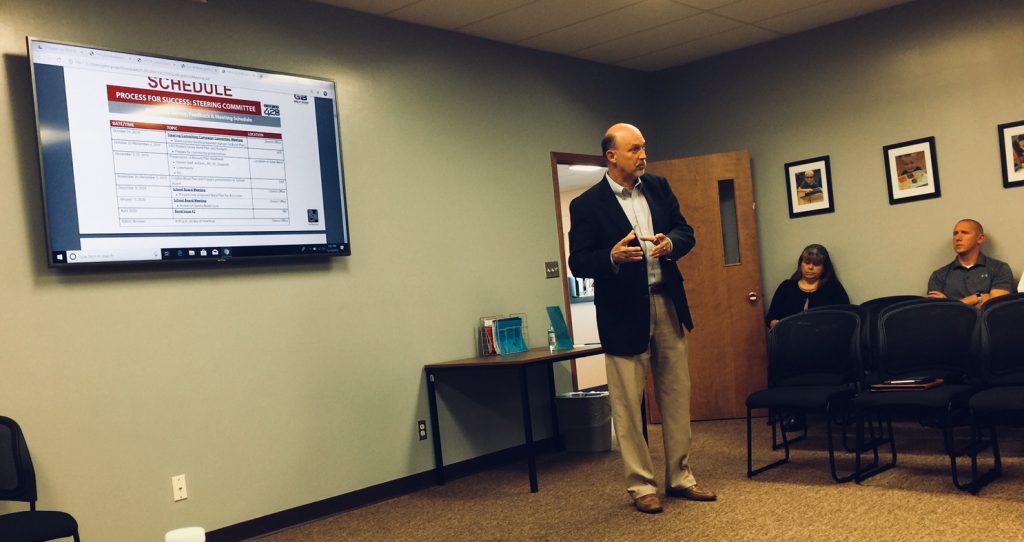
Terry Wiggers, SJCF Architecture, presents survey results to the USD 428 Board of Education at the Oct. 14, 2019 meeting. Wiggers outlined the plan moving forward for another possible school bond issue vote in April 2020.

By COLE REIF
Great Bend Post

GREAT BEND — USD 428 and SJCF Architecture found out what they believed might have been the problem with a failed bond issue this fall. Based on a survey, that is still open until Oct. 21, participants stated the dollar amount was too high, athletic needs should be eliminated, figure out priorities over needs, and it was a bad election timing due to the economy and city tax increase.

The survey was designed to seek feedback from voters as to why the $44.87 million school bond issue did not pass and what aspects they did support.

Terry Wiggers with SJCF told the USD 428 Board of Education Monday night there were also comments on the survey that there was too much information and that people did not know what was going on.

“There were a number of voters that were concerned with how much information was out there by non-participants that did not have all the facts,” said Wiggers. “If we do another election, we are going to try to really make sure the information is out there, even to the ones that do not have social media.”

As of Oct. 9, there were 409 responses to the survey that is available at greatbendschools.net.

The majority of the responses answered they supported improvements to storm shelters, controlled entrances, expansion to preschool to all elementary schools, and moving 6th grade to the middle school. The survey responses were less favorable for adding another gym to the middle school, building a new transportation and maintenance shop, and turf field at the middle school.

Wiggers was asked by the school board if they should itemize each improvement to give voters exact price tags on specific plans.

“If you are an anti-tax person, you are going to grab every little item,” said Wiggers. “Too much detail can be a killer too. I do not have a problem with being transparent, but you can also kill the bond if you let every person nitpick every line item.”

SJCF plans on working with school administration and the steering committee to revise the bond plan. The new proposed bond will be presented to the school board at the Dec. 9 meeting. The board is expected to take action on the bond at the Jan. 13, 2020 meeting and the revised bond is anticipated to go back to the voters in April 2020.

Wiggers also suggested a walk-in vote format might help rather than the mail-in ballot method the Great Bend school district used this past summer.

Another Kansas school district to sue e-cigarette maker

OLATHE, Kan. (AP) — Another suburban Kansas City school district plans to sue a leading e-cigarette maker as the number of vaping-related illnesses in the U.S. climbs to about 1,300 cases.

KMBC-TV reports that the school board for the Shawnee Mission School District voted Monday to join a national lawsuit against Juul. The district is the third-largest in Kansas with more than 27,000 students

The district says its students are being targeted with faulty advertising that puts their health at risk. It says that vaping increased by 48% among middle-schoolers and 78% among high-schoolers in the district from 2017 to 2018.

Several other school districts also are suing, including the nearby Olathe school district. Juul has said it doesn’t market to youth and its products are meant to be an alternative to smoking.

Kansas man dies after crash in construction zone

SEDGWICK COUNTY— One person died in an accident just after 7:30p.m. Monday in Sedgwick County.

First responders at the scene of Monday’s fatal crash-photo courtesy KWCH

The Kansas Highway Patrol reported a Cadillac Deville driven by Lashon Harding, 49, Wichita, was northbound on Interstate 135 just south of 21st Street North and passing traffic in the left lane.

There was an active construction zone that was moving traffic to the right 2 lanes. The driver lost control of the vehicle, skidded, left the right side of the roadway and struck a light pole.

Harding was pronounced dead at the scene. He was properly restrained at the time of the accident, according to the KHP.

Man who fatally shot Kansas City woman waited for police to arrive

KANSAS CITY (AP) — Kansas City police say a man is in custody after fatally shooting a woman and then waiting for officers to arrive at the scene.

Police at the scene of the investigation on Monday -photo by Photo by: Mark Kachelmeier courtesy KSHB TV

Police Capt. Tim Hernandez said the woman was shot Monday morning in eastern Kansas City and died by the time officers arrived.

He says the alleged shooter remained at the scene and police are not looking for more suspects.

Investigators are working to determine a motive for the shooting.

The woman’s death was the fourth fatal shooting in the Kansas City area since Saturday. The city has recorded 119 homicides this year.

Kansas man dies after pickup strikes motorcycle

WOODSON COUNTY — Two people were injured in an accident just before 1p.m. Monday in Woodson County.

The Kansas Highway Patrol reported a 2015 Ford pickup driven by Derrick R. Shannon, 45, Humbolt, was traveling slowly northbound on U.S. 75 at 60th Road.

The truck turned right to pull into a field entrance and struck a 2015 Harley Davidson motorcycle driven by Charles Splechter, 61, Buffalo, Kansas, who was northbound in the passing lane.

Splechter was pronounced dead at the scene. EMS transported a passenger on the motorcycle Amy Corban-Morris, 50, Buffalo, Kansas, to a hospital in Topeka. They were not wearing helmets, according to the KHP.

Shannon and a passenger in the truck were not injured.

10 and counting: Your guide to candidates competing for Kan. Senate seat

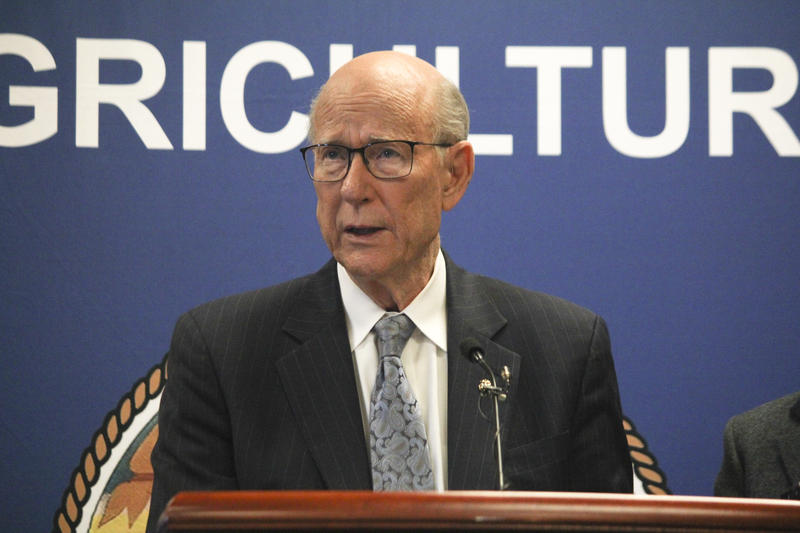
U.S. Sen. Pat Roberts is not looking for another term in Washington. Plenty of people are lining up in hopes they’ll take over. Nomin Ujiyediin / Kansas News Service

By STEPHEN KORANDA
Kansas News Service

Republican U.S. Sen. Pat Roberts says he will not run for re-election in 2020, opening the door to a parade of candidates announcing a run or considering jumping into the race to replace him. Multiple Republicans are eyeing the seat, and it could be the first time Democrats have a competitive U.S. Senate primary since the 1990s.

Here’s the rundown of who’s seeking the seat in Washington:

Kris Kobach 

Residence: Near Lecompton

Nationally, Kobach is known as a hardliner against illegal immigration. But in Kansas, he’s coming off a 2018 loss for the governor’s office. When he was secretary of state from 2011 to 2019, he pushed for strict voter registration changes, arguing they would help prevent voter fraud. Critics said the rules made it too difficult for eligible voters to register and the requirements were blocked by a federal court. Kobach is a long-time ally of President Donald Trump, and he says he’ll push Trump’s policies and fight what he calls the establishment in Washington. He’s currently working with a private organization attempting to build a wall along the U.S. border with Mexico.

Dave Lindstrom

Residence: Overland Park

Lindstrom is a former Kansas City Chief turned businessman who’s chairman of the board for the Kansas Turnpike Authority. After his NFL career, Lindstrom owned four Burger King restaurants in the Kansas City area and worked in real estate. Like other Republicans in the race, Lindstrom is voicing his support for Trump and says he’ll bring free-market ideas and a conservative perspective to the Senate.

Roger Marshall

Residence: Great Bend

Roger Marshall was reelected last year to represent Kansas 1st District in Congress, a seat he first won in 2016. In Congress, Marshall has been a reliable supporter of President Trump and his agenda. He worked as an obstetrician and gynecologist before joining Congress. Marshall says if elected he will continue to push for a border wall with Mexico and will confirm strict constitutionalists to the United States Supreme Court. He says what differentiates him from other conservatives in the race is a concern for the national debt, which he argues can be addressed by strengthening the economy, lowering health care costs and having fewer Americans on welfare.

Bryan Pruitt

Residence: Manhattan

Pruitt is a Wichita native who worked as a conservative political commentator and political consultant based in Washington, D.C. He has now returned to Kansas for the campaign. If elected, he would be the first openly gay senator from Kansas. Pruitt agrees with other conservatives in the race on major issues, but says the party needs to talk differently about abortion and should nominate more diverse candidates.

Susan Wagle

Residence: Wichita

Wagle is the first woman to become president of the Kansas Senate (2013-current). A conservative who has been a vocal critic of Democratic Gov. Laura Kelly, Wagle and Kelly have clashed on issues like Medicaid expansion and tax policy. Wagle touts her years of work in support of abortion restrictions approved by Kansas lawmakers. She’ll continue serving as Senate president while campaigning for the U.S. Senate. Wagle is a cancer survivor, and counts health care issues among her top priorities, saying government health care isn’t the answer to challenges in the industry.

Filed paperwork to run or explore the race:

  • Gabriel Mark Robles, from Topeka

DEMOCRATS

Barry Grissom

Residence: Leawood

In 2010, President Barack Obama picked Grissom to serve as U.S. attorney for Kansas. Grissom highlights his experience, as well as prosecutions of people who plotted to bomb the Wichita airport and Fort Riley. As an attorney, Grissom says he has fought against racism and unfair wages. He’s also campaigned for loosening laws on marijuana, saying it’s not a good use of taxpayer resources.

Usha Reddi

Residence: Manhattan

Reddi serves on the Manhattan city council and was an elementary-school teacher before taking a leave to campaign for the Senate. Reddi says she’ll push for economic policies that benefit working Kansas families. She’s a sexual abuse survivor who went public with her account because she says she’s met many women with similar experiences. If elected, Reddi would be the first Hindu person to serve in the U.S. Senate.

Other Democrats who have filed paperwork to run or explore the race:

Editor’s note: This story will be updated as new people enter the race or, as in the case of Democrat Nancy Boyda on Oct. 10, drop out of the race.

Stephen Koranda is Statehouse reporter for Kansas Public Radio and the Kansas News Service, a collaboration of KCUR, Kansas Public Radio, KMUW and High Plains Public Radio covering health, education and politics. Follow him on Twitter @kprkoranda or email [email protected].

Kansas home robbery suspect shot victim, took jacket and ran

SEDGWICK COUNTY — Law enforcement authorities are investigating an armed robbery and have made an arrest.

Billingsley photo Sedgwick Co.

Just before 2a.m. Monday, police were dispatched to a shooting at a residence in the 1500 Block of North Gentry in Wichita, according to Captain Brett Allred.

Investigators learned that a suspect identified as Shaeland Billingsley, 25, Wichita, pointed a handgun at a 49-year-old man inside the home and demanded money.
Billingsley then allegedly shot the victim in the leg, took his jacket and fled on foot, according to Allred.

A short time later, officers located Billingsley a couple of blocks away. He was wearing a ballistic vest. Police arrested him without incident. They also recovered a handgun, the victim’s property and drug paraphernalia.
Inside the home at the time of the robbery were a 70-year-old woman, a 60-year-old man and another woman, according to Allred.

Billingsley is being held on requested charges of aggravated robbery, aggravated battery, possession of drug paraphernalia and criminal possession of a firearm.

Copyright Eagle Radio | FCC Public Files | EEO Public File