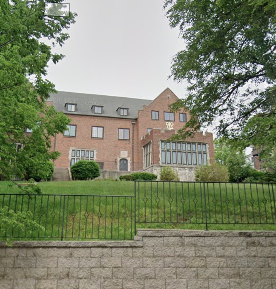
LAWRENCE, Kan. (AP) — Newly released documents say that members of a now-suspended University of Kansas fraternity struck, urinated and spat on some new members who were suspected of cooperating with an investigation into hazing.
The media has obtained the heavily redacted documents about Delta Upsilon after filing a records request.
In July 2018, the university found the fraternity guilty of endangering new members during the fall 2017 semester. The documents show that the chapter’s counsel didn’t fight the hazing allegations during a hearing but argued that it wasn’t as big of a deal as the university was making it out to be.
The hearing ended with the university suspending the fraternity from campus through the fall semester of 2023. At the time, the Delta Upsilon International Fraternity had been planning to close the chapter and restart it later.
Leighlan Fleming was found fatally shot Saturday afternoon in the driveway of a home.
Police spokesman Capt. Tim Hernandez says the gunbattle spanned several blocks. Officers found shell casings at multiple locations within a two-block radius.
Hernandez says Fleming may have been chased. No suspect information has been released.
Fleming is among 25 teenagers who have been killed by gunfire this year in the Kansas City area. Dozens of others have been shot and survived.
SALINE COUNTY— Law enforcement authorities are investigating alleged forgery in Salina.
The owner of the UPS Store, 1648 South Ohio in Salina, reported at least six checks had been written on the store’s account at Bank VI using an old, unused bank routing number, according to Salina Police Captain Paul Forrester.
The checks, totaled over $17,000 and were written to people in Florida, Idaho, Virginia, New York, South Carolina, and Alabama.
The suspected forger is believed to be someone who is familiar with the store’s actual checks, as these computer generated checks look similar to current UPS design, according to Forrester.
Hope Joy Zeferjohn was missing from the Kansas Capitol on the day her family was posing for pictures with the governor.
It was May 22, 2015, and then-Gov. Sam Brownback was signing a proclamation for Family Reunification Month.
Zeferjohn’s parents and siblings stood behind him, literal poster children for Brownback’s efforts to return children to their homes from foster care.
But Zeferjohn, 16, was in state custody in Salina, already under the violent control of a man who trafficked her for sex.
Then-Kansas Gov. Sam Brownback signs a proclamation with the Zeferjohn family on May 22, 2015, to kick off Family Reunification Month. Hope’s father is on the left in the back row, and four Zeferjohn children are in the front row. Missing from the photo is Hope Zeferjohn, who was under the violent control of a sex trafficker. CREDIT KANSAS DEPARTMENT OF CHILDREN AND FAMILIES
A year after the photograph was taken, Zeferjohn was charged in June 2016 with 10 felonies, including aggravated human trafficking. She was 17. Despite federal and state laws that bar prosecuting children for prostitution, Zeferjohn is serving a nearly six-year sentence in the Topeka Correctional Facility and will spend a lifetime on the state sex offender registry.
“I deserve another chance,” said Zeferjohn, now 21, who is seeking a pardon from Gov. Laura Kelly. “As long as I get hope, I can give hope to people.”
The Kansas Sentencing Commission says human trafficking charges, whether for men or women at any age, are rare and are often pleaded down to other lesser crimes.
But advocates for trafficking survivors say misguided criminal charging, and the resulting plea bargains reached in cases like Zeferjohn’s, are more common than state records indicate.
Along with Zeferjohn, a dozen other young women are facing criminal prosecutions after being placed in state custody, running away, and falling prey to sex traffickers while they were minors, said Karen Countryman-Roswurm, director of the Center for Combating Human Trafficking at Wichita State University.
“We’ve waged war on the very population that we said we were going to serve,” she said.
Prosecutors defend their case against Zeferjohn, saying she victimized other girls.
“How do you deal with somebody like Hope Zeferjohn?” said Shawnee County District Attorney Mike Kagay. “If you give a pass to everyone who does the sort of things Miss Zeferjohn did? I don’t know that society actually wants that to happen.”
A freckle-faced tomboy
Hope Joy Mae Zeferjohn was the second child born to Terry and Melody Zeferjohn. It was Terry’s third marriage, and he had two other children from previous relationships. He would eventually have six with Melody.
A family friend remembers Hope Zeferjohn at 11 years old as a sweet, freckle-faced tomboy who liked to be outside.
A Topeka cab driver for 20 years, Terry Zeferjohn died in September 2018. Obese and on disability, his home was violent and poor, and he was always looking for income, said Stacey Kelly, one of his ex-girlfriends and the mother of one of his children.
Kelly remained close to the family and is Hope Zeferjohn’s godmother. She remembers Terry telling his daughters: “You bleed, you breed,” meaning when they came of age they should start having children.
“The only reason that they had children was so they could get more help, any sort of assistance,” Kelly said.
Still, Hope Zeferjohn remains devoted to her parents.
“It could be good sometimes,” Zeferjohn said of the family home. “Sometimes it can be hectic because of all of us kids. I feel like they raised us as best they can and they did a pretty good job of it.”
As a child, Hope Joy lived up to her name, Kelly said, describing her as a sweet, freckle-faced tomboy who liked to be outside.
In April 2017, Anthony ‘Angel’ Long was sentenced to 35 years in prison for sexual exploitation of children and other crimes related to human trafficking. CREDIT SHAWNEE COUNTY DEPARTMENT OF CORRECTIONS
Zeferjohn was just 14 when her older sister brought 24-year-old Anthony “Angel” Long to the home. Long had a record, having been charged in 2013 with domestic battery, assault and criminal threat against an ex-girlfriend.
Terry Zeferjohn welcomed him as a friend, Kelly said, adding that Long often stayed overnight.
In January 2014, police arrived at the home in response to a call about a fight between Hope and another one of the children. Officers discovered neglect and a failure to send the kids to school.
“When the police came into the home, it was full of feces, full of trash and clothes everywhere. Roaches were out in the daytime because they were so infested,” Kelly said. “And they had horrible, horrible, horrible bedbugs.”
The Kansas Department for Children and Families arranged for Kelly to take three of the girls. Zeferjohn, then 15, was sent to an “out-of-home placement” in Salina, her sentence for a misdemeanor battery charge. She was sentenced in August 2014 to 16 months in the custody of the Department of Corrections, in the juvenile offender program.
“It looks a lot like foster care,” said Randy Bowman, a DOC spokesman.
Hope Zeferjohn, 16, gave birth to her son, Tye, while in foster care in March 2015. CREDIT COURTESY STACEY KELLY
Zeferjohn graduated from high school and bought her first car while in state custody. She also got pregnant and gave birth to her son, Tye, in March 2015.
Hope Zeferjohn, 16, gave birth to her son, Tye, while in foster care in March 2015.
The system ‘failed me’
Then Long showed up in Salina. He found Zeferjohn in early 2015 by tricking authorities into giving him her location.
“For me, it failed me, that’s how I feel,” Zeferjohn said of the state system. “It allowed Anthony to find out my address, where I was staying, by pretending like he was my father.”
Zeferjohn and Long had a relationship that soon turned abusive. She uses his two different names to describe his two sides.
“I loved Angel, OK, when he treated me good and everything,” she said. “And then when he became all rude I was like, ‘Where is the one I love?’ That’s a different Anthony. Some people put up a different side for you to fall in love with, but it’s not the real them.”
In April 2017, Anthony ‘Angel’ Long was sentenced to 35 years in prison for sexual exploitation of children and other crimes related to human trafficking.
He began to take videos of them having sex, which he sold, Zeferjohn said. He controlled every detail in her life.
“I was like the prisoner and he was like a warden,” she said. “Coming to prison, it’s not no big adjustment to me, which is pretty bad. I had no choice but to obey him.”
Long brought Zeferjohn back to Topeka, where, according to court documents, he forced her to recruit other girls for his prostitution business, sometimes through Facebook. Long ran the operation from a family member’s home, Zeferjohn said.
Kelly remembers Zeferjohn saying she was the “house mother,” cleaning, cooking and keeping the other girls in line.
“(Hope) started prostituting and bringing home money,” Kelly said, “and if she didn’t give her money to him, it was going to be hell to pay.”
The hell included beatings – Zeferjohn said they were so severe that she miscarried twice. Long threatened to hurt her son and anyone close to her if she disobeyed, she said.
“He destroyed my life,” Zeferjohn said. “He tried to kill me twice and I tried to think about it like ‘I need to go, I need to get out,’ but I’m stuck in this whole situation.”
Ultimately, Zeferjohn and Long traveled to New York, where Long had family. There, she said, she was arrested for shoplifting at a Walmart. When police discovered that she was a runaway from Kansas, she was returned to the state.
Faced with the possibility of 15 years in prison, Hope Zeferjohn agreed to a plea bargain for aggravated human trafficking. She was sentenced to nearly six years in prison and a lifetime on the sex offender registry.
In June 2016, Zeferjohn was charged as an adult with 10 felonies: aggravated human trafficking; conspiracy to commit rape; conspiracy to commit aggravated criminal sodomy; indecent solicitation of a child; electronic solicitation of a child; aggravated intimidation and criminal threat. She was also charged with two misdemeanors: endangering a child and contributing to a child’s misconduct or deprivation.
The charges stem from when Zeferjohn recruited a 14-year-old girl she met while in living in a foster home, court documents show. Hope introduced Long to the girl through Facebook, where Long was using a false identity. Long offered to let the girl live with them in exchange for sex, and threatened to kill her if she told police, court records say. The girl reached out to Zeferjohn, who “ordered” her to submit to Long, court documents say.
In another instance, Zeferjohn recruited a 15-year-old girl by offering her drugs, which Long then supplied, requiring both girls to have sex with him as payment, court documents show. Long took photos of the girl and told her they were for “johns,” according to court documents.
The 15-year-old girl reported this to police, said Shawnee County District Attorney Mike Kagay, and Long was arrested. Later, Zeferjohn reached out to the girl and connected her back to Long, who was out of jail. Court documents say Long and Zeferjohn retaliated several times, including once forcing the girl to go to Junction City, where she was sold to a man and made to stay in a motel room for a weekend where she earned $6,000 for Long.
Victim or predator?
In April 2017, Long was sentenced to 35 years in prison after pleading guilty to attempted aggravated human trafficking, indecent solicitation of a child, electronic solicitation of a child and four counts of sexual exploitation of a child.
As “the right hand of the organization,” Kagay said, Zeferjohn was responsible for “recruiting, identifying targets, locating and trying to earn their trust” for Long’s sex business.
Hope Zeferjohn met Anthony ‘Angel’ Long when she was 14. Long exploited Zeferjohn for sex and forced her to recruit other girls into his prostitution enterprise.
“She had to be held accountable,” Kagay said. “She actively recruited and allowed minor children to be sexually abused, to be prostituted.”
That sort of role is not uncommon, said Yazmin Vafa, co-founder and executive director of Rights4Girls, a human rights group that focuses on gender-based violence.
Vafa said Zeferjohn served as what’s called a “bottom girl,” a term used to describe “young women who ascend to a position of power and are at the top of the exploitation hierarchy, where they are often relied upon by the trafficker to assert order and authority among the other young women who are being victimized.”
Kagay said the Shawnee County District Attorney’s office was fair to Zeferjohn given that she victimized at least two other girls, minors who were not charged with crimes.
Prosecutors dropped nine of the 10 felonies and two misdemeanors she originally faced and Zeferjohn assisted in Long’s prosecution. She ultimately pleaded guilty to one charge of aggravated human trafficking. That helped reduce her sentence from a possible 15 years in prison to nearly six years, Kagay said.
Zeferjohn also was sentenced to prison time because one of the victims asked that she be incarcerated, Kagay said.
“I have no doubt that between the two of them, Anthony Long is much more culpable and he also paid a much higher price,” Kagay said.
If he’s ever released from prison, Long must register as a sex offender for 25 years. As part of her sentence, Zeferjohn will spend a lifetime on the registry.
“I think you started out as a victim in this case,” District Judge David Debenham told Zeferjohn when he sentenced her in August 2017, just a few days after she turned 19.
“You crossed the line,” Debenham said, “at some point in time.”
’You deserve what you get’
Since 2000, federal and some state laws have specified that anyone under 18 who performs a commercial sex act is considered a victim of sex trafficking. But advocates for sexually abused girls still face a “cultural battle,” Vafa said. Advocates’ rallying cry is: “There’s no such thing as a child prostitute.”
“So many of the young girls that we deal with on a day-to-day basis are really seen as bad girls, or complicit in the exploitation they’re experiencing,” Vafa said. “There’s still a great amount of victim-blaming going on.”
That’s the bias at play in Zeferjohn’s case and 12 other cases in Kansas, said Karen Countryman-Roswurm, director of the Center for Combating Human Trafficking, which offers education, training and technical assistance to survivors. The girls were runaways from the Kansas Department for Children and Families or the juvenile justice system, wound up under the control of sex traffickers, then were charged as criminals when they were actually victims, she said.
In interviews with KCUR, three of those young women said their experiences were similar to Zeferjohn’s. At some point during their progression through the foster care and criminal systems, social workers and law enforcement officers turned on them, they said, speaking on the condition that they would not be identified.
“I’m still looked at as a perpetrator,” said one, a 17-year-old girl who has been in and out of the juvenile justice system since she was 10. “I’m still looked at as my (criminal) charge. And it’s hard to put yourself in that victim setting when everybody’s pushing you to ‘You’re a perpetrator and you deserve what you get.’”
An analysis of the Kansas Public Offender Registry by APM Reports shows that convictions of girls in cases like Zeferjohn’s are extremely rare. A review of Shawnee County District Attorney data ranging from 2015 to March 2019 shows that Zeferjohn was the only person prosecuted and convicted for trafficking in that county.
But not all juvenile offenders appear on the sex offender registration website, because Kansas law allows a judge, in some instances, to keep a minor’s case from being made public. The Kansas Sentencing Commission says human trafficking charges, whether for men or women, whether minors or adults, are in the single digits and are often pleaded down to other crimes.
Countryman-Roswurm said girls like Zeferjohn struggle in the legal system because of stereotypes about victims of sex crimes. Rather than being beaten-down little girls who welcome rescue from law enforcement, she explained, the reality is that some girls grow up in tough environments and don’t attach to anyone because of so much mistreatment. So these girls – she prefers “survivors” – take control of their situations and appear hardened. They have a “streetness,” she said, that makes them look to first-responders as if they are perpetrators.
“In trafficking, part of that lifestyle as a whole, you don’t just stay in the role of the misbranded perfect-worthy victim,” Countryman-Roswurm said.
When those girls get processed through the criminal justice system, advocates said, prosecutors frequently offer plea bargains because they don’t want to invest the time and expense of taking their cases to trial. Lawyers, family members or others convince survivors to plead guilty to lesser charges to avoid the risk of prison time if their cases do go to trial, Countryman-Roswurm said.
“The greatest injustice in America is (being) poor, lower-class,” she says. “You’ve been in custody and you take a plea.”
Second shot at a pardon
In May 2015, then-Gov. Brownback, a Republican, was using his photo op with Hope Zeferjohn’s family to tout a 7% increase in reunification of families to “a safe and loving home,” as a DCF news release said.
The request for a family for the event came from Brownback’s office, said Jenny Kutz, a spokeswoman for KVC Kansas, and KVC chose the Zeferjohn family.
“We chose the family because they met the criteria of recently reunified and they were able to participate in the photo within the short notice given,” she said.
But things quickly returned to the way they always had been at the Zeferjohn home, and within six months the children were back in foster care, Kelly said. Kutz would not comment, citing a federal privacy law.
Brownback resigned in 2018 to take a job in the Trump administration, serving as ambassador for religious freedom. He declined comment for this story. His successor, former Gov. Jeff Colyer, turned down Zeferjohn’s first request for clemency last year, Kansas Department of Corrections records show. Colyer also declined to comment.
Gov. Laura Kelly, a Democrat, said she is considering Zeferjohn’s new request for a pardon.
By the time Hope Zeferjohn was 16, she was living in an out-of-home placement in Salina under the Department of Corrections and being trafficked for sex by Anthony Angel Long.
“The story of Hope Zeferjohn is a sad one,” Kelly said in a statement to KCUR and The Topeka Capital-Journal. “I will consider every clemency request I receive after a full process of developing facts and with input from those affected, but more importantly our state has a structural criminal justice problem that needs to be addressed.”
Zeferjohn deserves a pardon because she was forced “to do things that would otherwise be unimaginable to you and I,” said her attorney, Vicki Smith. “She was a child. She was a victim. This is just a matter of human justice.”
Countryman-Roswurm, pro bono attorneys and other advocates are also trying to work within the legal system to resolve the legal problems for the 12 other women who have cases similar to Zeferjohn’s.
Efforts to change state laws are also underway at the Kansas Legislature. Last year, two bills were introduced that call for setting aside convictions and records in hopes of helping young survivors of the sex trade. The bills got stuck in committee, said Benet Magnuson of Kansas Appleseed, a nonprofit social justice group, but advocates hope to bring them up again this year.
Asked if the agency did enough to help girls like Hope, DCF Secretary Laura Howard said in a statement that continuous and improved efforts are needed to prevent and reduce human trafficking, recover runaway kids, connect families and keep children safe.
“Clearly, there were significant breakdowns in the system under the prior administration, and we know more needs to be done to protect children like Hope,” Howard said. “The agency is currently ramping up its ability to learn and institute more effective strategies and partnerships needed to prevent and address human trafficking.”
Kelly said she is ready to work with the Legislature to “revise our approach to incarceration so that we can be smarter about who we send to prison and for how long.”
“My administration is determined to do more to change the focus from punitive to rehabilitative programs as a way to ease the pressure on our prisons,” she said.
The earliest Zeferjohn could get out of prison is Aug. 26, 2021, when she will be 23. She’s lost custody of her son, Tye, who was adopted.
She says she feels the need to apologize for what Long did to all the families affected, including hers. She hopes speaking up and showing strength will help other victims in similar situations.
When she gets out of prison, Zeferjohn said, she wants to try to get her son back and she wants to open her own restaurant, a bakery, that she would dedicate to her mom and dad.
“I really would like to see people have hope in doing something with their life and getting their life back in order,” she said. “When I got locked up, after that adjustment, I just started getting my life back together. It feels great that I can say that.”
Peggy Lowe is a reporter at KCUR. She’s on Twitter@peggyllowe.
Sherman Smith is a reporter for the Topeka Capital-Journal. He’s on Twitter at@sherman_news.
Geoff Hing of APM Reports contributed to this story. He’s on Twitter at@geoffhing.
SEDGWICK COUNTY — Law enforcement authorities are investigating a shooting and have a suspect in custody.
Solomon photo Sedgwick County
Just after 8a.m. Sunday, police responded to a shooting near Broadway and Lewis in Wichita, according to Captain Brett Allred.
At the scene, police located a 50-year-old man and a 33-year-old woman who had been shot multiple times.
EMS transported the woman to a local hospital where she remains for treatment of critical injuries.
The man was transported to a hospital for treatment of non-life-threatening injuries, according to Allred.
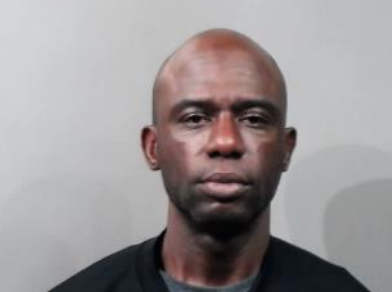
Investigators have learned that a 42-year-old man was riding his bicycle near Broadway and Lewis and observed the two victims on the sidewalk with gunshot wounds. As officers began their investigation, the suspect later identified as Dexter Solomon, 45, Wichita, began calling 911, family and Wichita media indicating his involvement in a shooting and that the victims were working for “the cartel,” according to Allred.
Officers located Solomon in the 900 Block of South Market and arrested him incident. They also recovered a handgun. Investigators believe Solomon was experiencing a mental health crisis possibly induced by meth at the time of the shooting, according to Allred. Police based their assessment on conversations Solomon had with 911 dispatchers and with his daughter earlier in the day, according to Allred.
Solomon is being held on requested charges that include two counts of attempted first degree murder and possession of a firearm by a felon. Police are working to determine how Solomon was able to obtain the gun.
SEDGWICK COUNTY — Law enforcement authorities are investigating a fatal crash and have identified the victim.
Just before 4 a.m. Sunday, A Mazda 6 driven by a 22-year-old man was northbound on Market at 26th Street North in Wichita, according to officer Charley Davidson.
The vehicle left the road, struck a utility pole, overturned and a passenger identified as Natalie Ibarra, 21, Wichita, was ejected.
She was pronounced dead at the scene. EMS transported the driver to a local hospital where he was treated and released.
Alcohol and speed are possible factors in the crash, according to Davidson.
Amadou Oury Bah -photo Omaha policeSurveillance images courtesy Lawrence Police
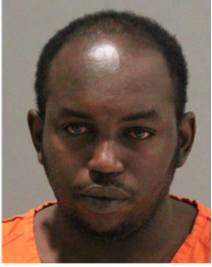
LAWRENCE, Kan. (AP) — Court records say a man charged with breaking into the Islamic Center of Lawrence and stealing donations boxes was in possession of almost $1,200 in cash when he was arrested in a Kansas City suburb several days later.
Affidavit in the case against 32-year-old Amadou Oury Bah says the Aug. 13 burglary happened shortly after the holiday Eid al-Adha. One leader estimated that between $1,000 and $2,000 was stolen.
Police in Overland Park, Kansas, arrested Oury Bah on an unrelated incident on Aug. 25. He was released from jail the next day and then arrested again Aug. 27 in Omaha, Nebraska.
Bah is scheduled Wednesday for a plea hearing in the Lawrence case. He is charged with burglary, theft and criminal damage to property.
KANSAS CITY (AP) — Authorities have arrested a Kansas City area homicide suspect after an hours-long standoff.
The shooting was reported around 1:15 p.m. Sunday at a home in Raytown. Police say the victim was found dead outside the home near a truck.
Police say the suspect ran to his nearby home and barricaded himself inside. He was taken into custody around 7 p.m. The victim hasn’t been identified, and the shooter wasn’t immediately charged.
No details were released about what led up to the shooting.
RENO COUNTY —One person died in an accident just after 8:30p.m. Sunday in Reno County.
The Sheriff’s department reported a truck driven by Van Dean, 61, Buhler, was eastbound on 4th Avenue at Buhler Road. When he entered the intersection, a northbound SUV driven by Tyler Obrecht, 26, Buhler, collided with the truck.
Dean was ejected from the truck when it rolled into the ditch northeast of the intersection, according to the sheriff’s department.
EMS transported Dean, Obrecht and a passenger in the SUV Jaxson Obrect, 2, to Hutchison Regional Medical Center where Dean was pronounced dead.
Dean was not wearing a seat belt, according to the Reno County Sheriff’s Department. Obrecht and the toddler were properly restrained. The child was not injured.
The accident remains under investigation.
WICHITA, Kan. (AP) — Donaldo Morales caught a break when federal prosecutors declined to charge him after he was arrested for using a fake Social Security card so he could work at a Kansas restaurant. But the break was short-lived. Kansas authorities stepped in and obtained a state conviction that could lead to Morales’s deportation.
A state appellate court overturned the conviction, but Kansas appealed. On Wednesday, the U.S. Supreme Court will hear arguments about whether states can prosecute immigrants like Morales who use other people’s Social Security numbers to get a job.
Morales, who plans to attend the arguments with his wife and a son, said he has been having nightmares about being deported. His greatest fear is leaving behind his wife and children if the Supreme Court reinstates his state convictions — felonies that could trigger deportation proceedings.
“What I did was to earn money honestly in a job to support my family,” the 51-year-old Guatemalan immigrant told The Associated Press in Spanish.
The case before the nation’s highest court arises from three prosecutions in Johnson County, a largely suburban area outside Kansas City, Missouri, where the district attorney has aggressively pursued immigrants under the Kansas identity theft and false-information statutes.
The Kansas Supreme Court overturned the convictions of Morales as well as Mexican immigrants Ramiro Garcia and Guadalupe Ochoa-Lara after concluding the state was seeking to punish immigrants who used fake IDs to obtain jobs. It ruled that the federal government has exclusive authority to determine whether an immigrant is authorized to work in the United States. Kansas then appealed.
The Trump administration has filed a brief supporting Kansas, arguing that federal law does not prohibit the prosecution of immigrants for violating identity theft laws and contending that protection against fraud is among the oldest state powers.
“In the modern era, those crimes increasingly involve identity theft — a serious and ‘growing problem’ throughout the United States,” Solicitor General Noel J. Francisco said in a brief.
That approach marks a shift from that of the Obama administration. When Arizona tried to use identity theft laws to prosecute noncitizens for working illegally, the Justice Department under President Barack Obama argued that only the federal government has such authority.
Rekha Sharma-Crawford, an attorney representing the immigrants, said in an email that immigration officials are having the state to do its bidding by using routine encounters with noncitizens to “strong arm businesses” to turn over personnel files.
“This has a chilling effect for local businesses, spreads deep mistrust for law enforcement in immigrant communities and also destroys families who are an integral part of the societal fabric,” Sharma-Crawford said.
Morales, who has been living in the United States since 1989, was found guilty of state charges for identity theft and putting false information on employment forms related to his work at a Jose Pepper’s restaurant.
The other two prosecutions in the appeal also involve immigrants who unlawfully worked in the United States.
After Garcia got a speeding ticket on his way to his restaurant job, a local detective and a federal agent checked his employment paperwork at the Bonefish Grill. His attorneys told the court the federal government didn’t charge Garcia because he was cooperating with an investigation into a previous employer suspected of directing employees to change Social Security numbers. The local district attorney nonetheless charged him with identity theft, and pursued the state case even after Garcia obtained lawful immigration status.
Ochoa-Lara came to the attention of authorities after using a false Social Security number to lease an apartment and was later prosecuted in state court for using someone else’s number on a tax withholding employment form.
The case wound up before the nation’s highest court after the Kansas Supreme Court held that the Immigration Reform and Control Act of 1986 preempts those state prosecutions for working unlawfully in the country.
Kansas contends the state’s Supreme Court ruling would frustrate its own efforts to combat identity theft. The state law generally criminalizes the use of any personal identifying information belonging to another person to obtain any “benefit” fraudulently, regardless of immigration status or work authorization.
Twelve states — Indiana, Alabama, Alaska, Georgia, Maine, Mississippi, Ohio, Oklahoma, South Carolina, Tennessee, Texas and West Virginia — have filed a brief backing Kansas, arguing a ruling against the state would hamper their interest in protecting their citizens.
Brent Anderson, a former federal prosecutor who handled immigration-related criminal cases in Kansas, said it takes local, state and federal law enforcement working together to address identity theft.
“There is no point in prosecuting people who are misusing Social Security numbers to be employed if you can’t remove them from the United States because they will keep doing it because they have to, otherwise they can’t work,” said Anderson, who teaches homeland security law at Wichita State University.
Judge Kevin Moriarty, who presided over Morales’ and Garcia’s trials, had expressed concerns about both cases, according to transcripts in the Supreme Court record.
“I’m just saying we’re destroying families,” he said in a pre-trial hearing for Garcia.
In Morales’ trial, Moriarty found the defendant guilty, but noted he wasn’t stealing from the government. “He’s putting money into Social Security that he’ll never be able to draw out,” said the judge, who has since retired.
The judge also noted that three of Morales’ four children were born in this country.
Morales, an Overland Park resident who has since gotten legal work authorization, is now employed by a landscaping company. He has also started his own landscaping firm as a side business.
His U.S.-born wife, Isleen Gimenez Morales, is a lawyer who works as a disability rights advocate. She said being part of a Supreme Court case like this is not the kind of excitement anybody wants.
“Knowing that the outcome of this case will shape the immigration and criminal law in this country, I think it compounds the stress and distraction that our family has because we know the weight that it carries,” she said.
KANSAS CITY (AP) — A 21-year-old Kansas City man has been sentenced to 25 years in prison for the 2017 fatal shooting of a woman stopped at a traffic signal.
Anton Hunter received the sentence Friday after pleading guilty in August to second-degree murder and weapons counts in the April 30, 2017, shooting of 18-year-old Isabell Addison.
Prosecutors say Addison was driving a car and stopped at a red light when a passenger in a black car next to hers began shooting at Addison’s car. Police say the driver of the black car told investigators that she was Hunter’s girlfriend and didn’t know why he shot at the car next to hers. She said that shortly before the shooting, she and Hunter had an argument over french fries.
BARTON COUNTY — One person was injured in an accident just after 6:30p.m. Sunday in Barton County.
The Kansas Highway Patrol reported a 2017 Chrysler Pacifica driven by Meredith Anna Joiner, 39, Ellinwood, was westbound in the 400 Block East Santa Fe Boulevard in Ellinwood.
The vehicle struck Andrew Mark McGlynn, 8, Ellinwood, who was crossing the roadway northwest on a bicycle outside of the crosswalk.
EMS transported McGlynn to the hospital in Ellinwood. Joiner was not injured and was properly restrained at the time of the accident, according to the KHP.



















 The Kansas Highway Patrol reported a 2017 Chrysler Pacifica driven by Meredith Anna Joiner, 39, Ellinwood, was westbound in the 400 Block East Santa Fe Boulevard in Ellinwood.