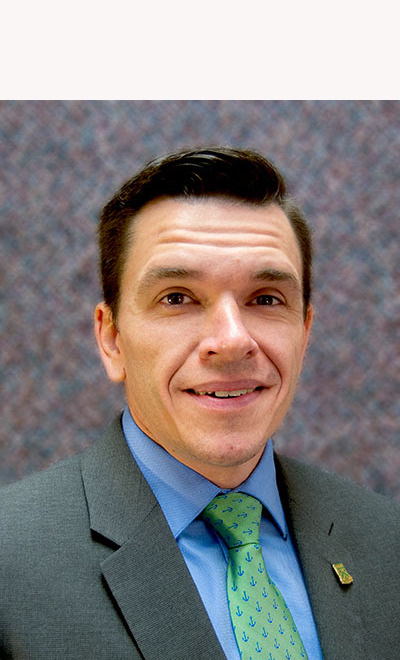
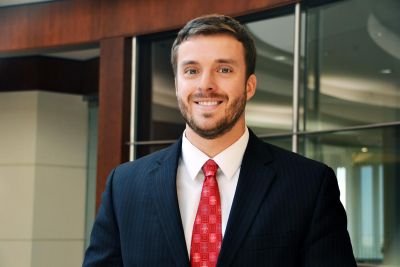
TOPEKA – The League of Kansas Municipalities, the statewide association representing Kansas’ cities, is pleased to announce the hiring of Doug M. Taylor as the League’s new Legal Counsel. Taylor most recently served as an Assistant Attorney General for the Kansas Department of Revenue, Alcoholic Beverage Control Division.
“We are very excited to bring Doug on board,” said Amanda Stanley, General Counsel for the League. “His prior experience in the Office of the Revisor of Statutes and his most recent tenure as an Assistant Attorney General with the Alcoholic Beverage Control will be a valuable addition to our legal department.”
Taylor joins the League’s legal staff and will counsel elected city officials and municipal employees on legal issues. He will also create and present trainings for League members to assist in their professional development and serve as a member of the League’s legislative staff.
“I am extremely excited to be joining the League,” said Taylor. “I have always been drawn to the legislative process and the policy side of law, so I look forward to using my skills and background for the benefit of our member cities.”
Taylor is well-suited for this position and brings a great deal of experience to the League. In addition to his work as an Assistant Attorney General, he worked as an Assistant Revisor of Statutes for the Office of the Revisor of Statutes from 2009 to 2012, served as Compliance Counsel for the Kansas State Board of Pharmacy, and was a Legislative Lobbyist for Hein Law Firm.
Taylor graduated in 2008 from the Washburn University School of Law and holds a Bachelor’s Degree from the University of Kansas in Communication Studies. He lives in Topeka with his wife and children.
LENEXA – As a result of staff working hard to implement Administrator Pruitt’s initiatives to make strides in cleaning up the nation’s most contaminated toxic land sites, the U.S. Environmental Protection Agency (EPA) is announcing significant improvement in 2017 – through the deletion of all or parts of seven Superfund sites from the National Priorities List (NPL), including the Omaha Lead Superfund Site in Nebraska. This is more than triple the number of sites removed from the list in 2016.
“We have made it a priority to get these sites cleaned up faster and in the right way, said EPA Administrator Scott Pruitt. “By creating a streamlined task force and making major remedy decisions that hold potentially responsible parties accountable for clean up, the Superfund program is carrying out the Agency’s mission of protecting human health and the environment more every day.”
The Omaha Lead Superfund Site includes contaminated surface soils from historic lead smelting and refining operations. The site extends from the Douglas-Sarpy County line north to Read Street, and from the Missouri River west to 56th Street. The site is centered near downtown Omaha, Neb., where two former lead-processing facilities operated.
In April 2017, EPA announced the deletion of 294 residential parcels located in the eastern portion of the Omaha greater metropolitan area from the NPL. Cleanup efforts included soil replacement and/or interior dust removal, and educating residents on mitigating other household lead hazards.
The EPA and the Nebraska Department of Environmental Quality concluded that lead abatement activities at these properties were complete and protective of public health.
In 2016, EPA had deletion activities at two NPL sites, one full site and portions of another. But in 2017, under the leadership of Administrator Pruitt, EPA has deleted three entire sites and portions of four others. This increase in deletions reflects Administrator Pruitt’s commitment to accelerating progress, reducing risks at Superfund sites and returning sites to productive use.
These deletions come on the heels of Administrator Pruitt’s list of 21 sites that have been targeted for immediate and intense attention – a direct response to the Superfund Task Force Recommendations issued this summer.
NPL deletion occurs when all the remedies are successfully implemented and no further cleanup is required to protect human health or the environment. The agency deletes portions of NPL sites when work at those portions is complete and other parts of the site still have ongoing actions.
The three completely deleted sites are:
Nutting Truck & Caster Co. in Minnesota, originally contaminated with trichloroethylene (TCE) in groundwater;
Shpack Landfill in Massachusetts, which had contaminated soil, sediment and groundwater; and,
Perdido Ground Water Contamination in Alabama, which was originally contaminated with benzene.
EPA completed partial deletions for:
Mystery Bridge Rd/U.S. Highway 20 in Wyoming, which had a groundwater plume and soils that contained benzene, toluene, ethylbenzene, and total xylenes;
Ellisville Site in Missouri, which contained drums full of hazardous materials;
Omaha Lead in Nebraska, where surface soil was contaminated by deposition of air emissions from historic lead smelting and refining operations; and,
North Penn – Area 6 in Pennsylvania, where soils and groundwater were contaminated with volatile organic compounds.
Deleting a site or portions of a site from the NPL may facilitate future redevelopment, one of EPA’s goals for the Superfund program.
The NPL is one focus area of the Superfund Task Force Recommendations to improve and revitalize the Superfund program. Work to prioritize and reinvigorate the Superfund program is underway and will continue into 2018.
TOPEKA — Up-to-the-minute information on the 2018 Kansas Legislature is only a phone call away. Kansas residents can access information on legislation, bill status, legislative procedure, contact information, and more by calling 1-800-432-3924 Monday through Friday, weekdays 8 a.m. to 5 p.m.
Calls are answered by experienced reference/research librarians at the State Library of Kansas and kept confidential.
Callers can also leave brief messages to be delivered to legislators as well as request copies of bills, journals, and other legislative documents. The 2018 legislative session starts Mon., Jan. 8, in Topeka.
In addition to calling the hotline, residents can also text questions to 785-256-0733, email, or instant message at kslib.info/ask, or visit the State Library.
The State Library is located on the third floor, north wing of the Kansas Capitol Building. The library’s hours are Monday through Friday, 8 a.m. to 5 p.m.
PRATT – As Kansas endures another dry winter, the Kansas Department of Wildlife, Parks and Tourism (KDWPT) cautions anyone spending time outdoors to be aware of fire danger. One only has to look at the past two springs to be reminded of the threat posed by wild fires.
In March of 2016, an enormous wildfire burned more than 400,000 acres in Oklahoma and Kansas. Dubbed the Anderson Creek Fire, it burned nearly 300,000 acres of Barber County alone, killing more than 600 cattle and destroying 16 homes and structures. Rough terrain and thick grass, combined with dry conditions and high winds, created a frightening fire that was almost impossible to control. It was billed as the largest wildfire in Kansas’ history.
However, just a year later, it would lose top billing. The Starbuck Fire burned through northern Oklahoma and into Clark County on March 5, 2017 – a monster, even compared to the Anderson Creek Fire. Pushed by 50-60 mph winds and fed by 6 percent humidity and heavy fuel, the fire was a living nightmare for Kansans living in the ranching and farming communities of Clark and Comanche counties. The Starbuck Fire burned 500,000 acres in Clark County and 200,000 acres of Comanche County. The speed and ferocity of the fire made it deadly. One person was killed and more than 6,000 cattle burned to death. Dozens of homes and buildings were reduced to ashes. It also killed wildlife, including pronghorns, deer and coyotes.
While the Starbuck Fire roared, dozens of others burned around the state, including those in Reno, Ellis, Rice and Rooks counties, stretching rural firefighting resources thin. It will take years to recover and rebuild.
While many followed the news last spring and are familiar with these stories, they are worth repeating to keep fire danger fresh in Kansans minds. KDWPT staff remind anyone spending time outdoors this winter to be especially careful. Never throw burning cigarettes from moving cars. Never drive through tall grass; hot mufflers or catalytic converters can ignite dry grasses. And avoid campfires and burning trash until measurable precipitation falls.
TOPEKA – Over the past decades, the racial and ethnic composition of the population in Kansas has changed. There has been an increase in the number of minorities and a decrease in the number of White, non-Hispanic Kansans, as well as a population shift from rural areas into urban and semi-urban communities.
Changes in the composition of the population could affect health care needs and require the health care system to evolve in order to address social determinants of health that are often distributed differently across population groups.
To describe these changes, the Kansas Health Institute (KHI) has released a new publication, Chartbook: Racial and Ethnic Health Disparities in a Changing Kansas. This update to the 2005 KHI publication, Racial and Ethnic Minority Health Disparities in Kansas, describes the population of Kansas in order to identify disparities that may exist and provides data that will spark conversations about the needs of communities across the state.
The Kansas Health Institute delivers credible information and research enabling policy leaders to make informed health policy decisions that enhance their effectiveness as champions for a healthier Kansas. The Kansas Health Institute is a nonprofit, nonpartisan health policy and research organization based in Topeka, established in 1995 with a multiyear grant from the Kansas Health Foundation.
PRATT – Starting January 1, all unfilled 2017 deer permits convert to firearm whitetail antlerless-only permits, providing deer hunters one last opportunity to hunt white-tailed deer before the close of the season. Unit restrictions still apply.
Hunters who possess permits valid in Units 6, 8, 9, 10, 16, and 17 may hunt antlerless white-tailed deer on Jan. 1, 2018; permits valid in Units 1, 2, 3, 4, 5, 7, 11, 12, 13, and 14 may be used Jan. 1-7, 2018; permits valid in Units 10A, 15 and 19 may be used Jan. 1-14, 2018; and, permits valid in Unit 19 may be used Jan. 15-31, 2018.
If a hunter is not already in possession of a whitetail antlerless-only deer permit, they may purchase up to five permits, available over-the-counter Dec. 30, 2017 – Jan. 31, 2018.
A hunter’s first whitetail antlerless-only deer permit is valid statewide (except DMU 18), including all public lands and WIHA. All additional such permits are valid only in units 1, 2, 3, 4, 5, 7, 10A, 11, 12, 13, 14, 15, and 19; on private land with landowner permission; on Walk-In Hunting Areas; and on Glen Elder, Kanopolis, Kirwin, Lovewell, Norton, Webster and Wilson wildlife areas.
For more information on hunting the antlerless-only whitetail season, consult the 2017 Kansas Hunting and Furharvesting Regulations Summary or visit ksoutdoors.com/Hunting/Big-Game-Information/Deer.
TOPEKA, Kan. (AP) — The Latest on proposed changes in the Kansas Legislature’s policy on sexual harassment (all times local):
11:05 a.m.
Kansas Senate President Susan Wagle says training for lawmakers, employees and interns is the first step for the Legislature in addressing sexual harassment.
Annual training for legislators, employees, interns and lobbyists was among the recommendations released Friday by the Women’s Foundation. The Kansas City, Missouri-based foundation promotes gender equity and reviewed the Legislature’s policy against sexual harassment.
The current policy hasn’t changed since 1994 and does not require regular training.
Wagle said such training is a good place to start because education about sexual harassment is important.
Wagle’s and fellow legislative leaders were scheduled to review the proposals Friday afternoon.
The Women’s Foundation says the existing policy has “significant gaps.” The foundation also is calling on the Legislature to have an independent, outside attorney review sexual harassment complaints.
___
9:25 a.m.
A Missouri-based foundation is proposing that the Kansas Legislature have an independent, outside attorney review sexual harassment complaints and bar secret settlements.
The Women’s Foundation also said Friday that the Legislature needs to create what the group calls a “non-fraternization” policy covering interns, legislative staff, lawmakers and lobbyists and ban gifts to interns.
The foundation released its proposals ahead of a Statehouse news conference Friday with Senate President Susan Wagle. The foundation promotes gender equity.
The Legislature’s sexual harassment policy has not been updated since 1994. It says that legislative employees’ complaints about harassment can be brought to supervisors or Legislative Administrative Services.
The foundation also proposes that elected officials, legislative staff, interns and lobbyists receive annual training.
The recommendations also call for more female legislative leaders.
9:25 a.m.
A Missouri-based foundation is proposing that the Kansas Legislature have an independent, outside attorney review sexual harassment complaints and bar secret settlements.
The Women’s Foundation also said Friday that the Legislature needs to create what the group calls a “non-fraternization” policy covering interns, legislative staff, lawmakers and lobbyists and ban gifts to interns.
The foundation released its proposals ahead of a Statehouse news conference Friday with Senate President Susan Wagle. The foundation promotes gender equity.
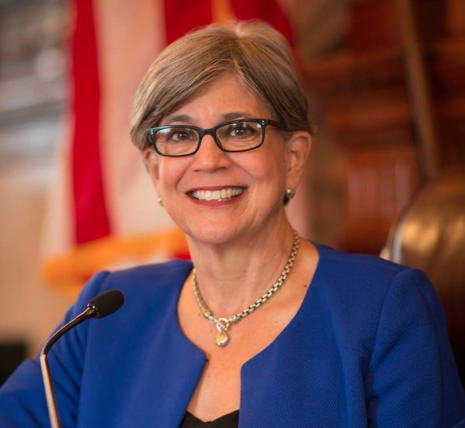
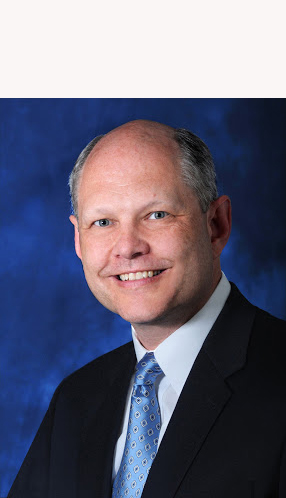
Wagle-courtesy photo
The Legislature’s sexual harassment policy has not been updated since 1994. It says that legislative employees’ complaints about harassment can be brought to supervisors or Legislative Administrative Services.
The foundation also proposes that elected officials, legislative staff, interns and lobbyists receive annual training.
The recommendations also call for more female legislative leaders.
———-
WF
TOPEKA – Today the Women’s Foundation announced recommendations for preventing and combating sexual harassment in the Kansas Legislature. The recommendations were developed with input from legal experts, advocates and community stakeholders following reports of widespread sexual harassment and inappropriate behavior by Kansas state legislators.
“Every instance of sexual harassment, especially when it is perpetrated by elected officials entrusted with political leadership, is a setback for gender equity and opportunity,” said Women’s Foundation President and CEO, Wendy Doyle. “Our review found that the Kansas Legislature lacks the policies, procedures and coordinated approach necessary to prevent sexual harassment from happening, and to respond effectively when it does. We look forward to helping the Kansas Legislature adopt these recommendations and working with leaders across state government to combat sexual harassment and promote equity and opportunity for all women.”
After reports of sexual harassment and inappropriate behavior by Kansas state legislators, Senator Susan Wagle asked the Women’s Foundation to conduct a review of the legislature’s current policies regarding sexual harassment. The recommendations will be formally submitted to the Kansas Legislative Coordinating Council during a public hearing today.
The recommendations are grouped four categories: ethics and workplace culture, accountability and monitoring, education and awareness, and victim resources. They include: requiring elected officials, legislative staff, interns and lobbyists to actively participate in an annual training on civil discourse, cultural competence, and sexual harassment; providing for independent, outside legal counsel to conduct sexual harassment investigations; allowing victims to report their allegations anonymously; establishing a non-fraternization policy for elected officials, legislative staff, interns and lobbyists; and banning arbitration and limiting mediation, which can serve to silence victims and shield sexual predators from accountability.
“Sexual harassment cannot be tolerated – not in our workplaces, not in our communities, and certainly not here in the Capitol,” said State Sen. Susan Wagle. “I thank the Women’s Foundation for their dedication to addressing this issue and their work to develop these thoughtful recommendations. These recommendations give us a roadmap that will guide us in the weeks, months and years ahead as we work to eliminate sexual harassment, improve the culture of the capitol, and ensure the safety of everyone who works here.”
The full list of the recommendations is available here.
The Women’s Foundation promotes equity and opportunity for women of all ages, using research, philanthropy and policy solutions to make meaningful change. More information about the organization can be found at www.Womens-Foundation.org.
LENEXA – The U.S. Environmental Protection Agency (EPA) is taking the next steps in the Clean Air Act process to determine which areas of the country meet national air quality standards for ground-level ozone and sulfur dioxide. In November 2017, the agency designated the vast majority of U.S. counties as meeting the air quality standards set by EPA’s 2015 National Ambient Air Quality Standards (NAAQS) for ozone. EPA is responding to state and tribal recommendations for ozone designations for the remaining areas and providing additional opportunities for state, tribal, and public input on those areas’ designations. The agency is also finalizing designations for certain areas for the 2010 sulfur dioxide NAAQS.
“Cooperative federalism is key to maintaining clean air,” said EPA Administrator Scott Pruitt. “Largely due to work by the states and new technological advances by the private sector, monitored levels of SO2 have dropped 85 percent and levels of ozone have decreased 22 percent nationwide since 1990. I am encouraged by the progress we’ve made and will continue working alongside states, tribes, and localities to determine the best methods to meet air quality standards.”
This action on sulfur dioxide is the third of four rounds of final designations. These designations reflect progress for sulfur dioxide, as only six areas have been designated “nonattainment” with the 2010 standard. Only 50 areas remain to be designated for sulfur dioxide in the fourth and final round. For these areas, EPA is supporting the decision by states to install and operate new monitors, so they can gather three full calendar years of data to inform a designation by the end of 2020. Additional information on this action is available at: https://www.epa.gov/sulfur-dioxide-designations.
With respect to ozone standards last updated in 2015, EPA today, in accordance with the Clean Air Act, sent letters to states to start a 120-day period for states and tribes to provide more information with regard to their suggested designations of certain areas where further analysis and dialogue may be needed. While not required to seek public comment during the 120-day period, EPA will also be opening a 30-day comment period for the public to provide input on these designations before they are finalized.
The agency acknowledges the importance of background ozone outside the control of state and tribal air agencies. These designations employ the limited tools for regulatory relief for state and tribal air agencies to address background ozone, including: the exclusion of data that result from ‘exceptional events,’ the use of rural transport areas, and appropriately tailored nonattainment area boundaries for sites minimally impacted by nearby sources. EPA looks forward to working with its state, local, and tribal government partners to fulfill the congressional design of protecting public health through cooperative federalism. Additional information on this action is available at: https://www.epa.gov/ozone-designations.
TOPEKA–Governor Sam Brownback announced Thursday that Andrew Wiens will serve as his policy director.
Andrew has worked in multiple capacities in the administration since 2011, including as policy director for Lt. Governor Jeff Colyer, Senior Advisor to the Department for Children and Families, and Policy Analyst for Governor Brownback.
“Andrew is a solid conservative who is passionate about building relationships and developing policy that advances free enterprise and expands opportunity for Kansans.” Governor Brownback said. “He’s been in the trenches fighting for conservative policies and brings a wealth of experience to the role of policy director.”
Having been born and raised in Topeka, Andrew attended Tabor College in Hillsboro, Kan., studying philosophy, history, religious studies and business management. Subsequently, he earned a Master’s in Business Administration from Washburn University.
“Andrew’s work as policy director for my office made him an invaluable asset to our team,” said Lt. Governor Jeff Colyer. “His years of experience and passion for crafting sound public policy make him the perfect candidate to serve as the policy director for the governor’s office. I look forward to seeing the incredible impact he will have in his new position.”
Andrew and his wife Kelsey have been married four years and live in Topeka.
TOPEKA – Robert Brock has been selected to assume the role of Interim Director of Aviation at the Kansas Department of Transportation.
Brock has been serving KDOT and the State of Kansas while spearheading national aviation efforts as the first state Director for Unmanned Aircraft Systems (UAS) and Chairman of the Kansas UAS Joint Task Force. Under Brock’s direction, the division introduced the first statewide Unmanned Traffic Management to integrate UAS into the National Airspace System.
Prior to joining KDOT, Brock served over 22 years in the Air Force and retired as a Lieutenant Colonel. As a military officer, he led both manned and unmanned flight operations. Brock is also an instrument-rated commercial fixed-wing and helicopter instructor pilot.
“We are so fortunate at KDOT to have such a talented and passionate person like Bob Brock to take over aviation,” said Secretary of Transportation Richard Carlson. “After already serving the state and the agency in opening new doors for UAS, Brock is in the best possible position to make great strides for aviation in Kansas.”
Representing Kansas as a national aviation leader on the Transportation Research Board (TRB) and the Federal Aviation Administration (FAA) Drone Advisory Committee-Task Group Three, Brock will continue to work closely with the FAA and aviation stakeholders across the nation to support Kansas aviation. He will also oversee the Kansas Airport Improvement Program, Unmanned Systems Program, and Science, Technology, and Aviation Resource (STAR) program.
“I look forward to my continued service to KDOT and the State of Kansas,” said Brock. “We will continue to work with legislators, stakeholders, and communities to increase aviation safety and promote the growth of the aviation industry in Kansas.”
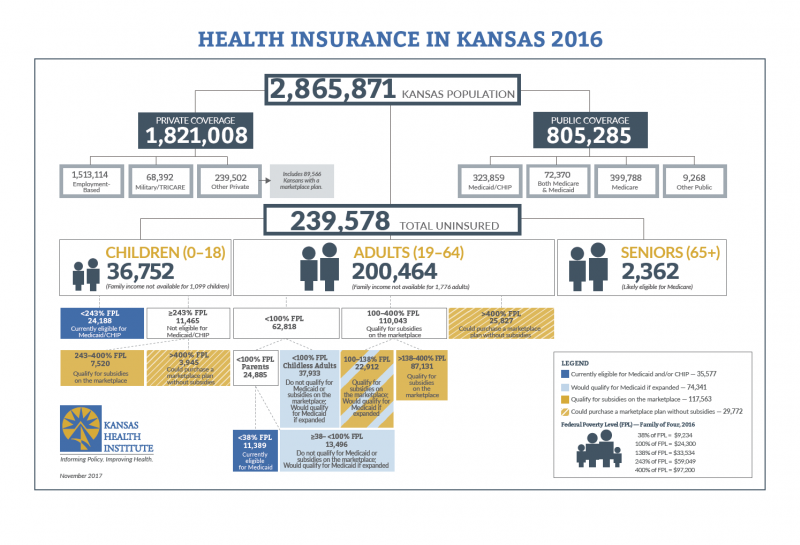
TOPEKA – In 2016, there were 239,578 uninsured Kansans. Of them, 35,577 were already eligible for Medicaid or the Children’s Health Insurance Program (CHIP), but were not enrolled. Another 117,563 could have qualified for subsidies to purchase health insurance on the marketplace created by the Affordable Care Act (ACA). If the state had expanded its Medicaid program, 74,341 uninsured Kansans would have been newly eligible for coverage.
This is just some of the information shown in KHI’s latest infographic, Health Insurance in Kansas 2016, (click here) which breaks down the population of Kansas into those with different types of private and public insurance, and those without insurance. The infographic further divides the uninsured population into income categories and describes how many were potentially eligible for various coverage options in 2016.
The infographic uses the latest-available data, which come from the U.S. Census Bureau’s 2016 American Community Survey Public Use Microdata Sample and the Centers for Medicare and Medicaid Services. Stay tuned for additional analysis of these data in early 2018.
The Kansas Health Institute delivers credible information and research enabling policy leaders to make informed health policy decisions that enhance their effectiveness as champions for a healthier Kansas. The Kansas Health Institute is a nonprofit, nonpartisan health policy and research organization based in Topeka, established in 1995 with a multiyear grant from the Kansas Health Foundation.
Is your furry friend like a family member? If so, where you live may impact the quality of your pet’s life.
SafeWise analysts created a report on the most pet-friendly states in America and Kansas ranked # 8 best state for pets in 2017.
To determine the best and worst states for pets, SafeWise looked at multiple factors including which states have harsh anti-cruelty laws, number of shelters, veterinarians, and registered breeders, along with the number of pet-friendly restaurants, hotels, and parks.
Here are some other key findings:
Kansas has 87 shelters and 30 percent are no-kill shelters
Kansas has 370 pet-friendly hotels
Kansas has 38 trails that allow pets to frolic freely
TOPEKA — The Kansas Supreme Court announced today that it will require attorneys to begin electronically filing documents in all state courts effective June 25, 2018, and that it is taking public comment on rule amendments that advance the efiling requirement.
The requirement applies to all Kansas-licensed attorneys who are permitted to practice law under Rule 208(a), and it applies to all case types processed by Kansas courts. Self-represented parties will continue to file paper documents.
“Electronic filing has been required in the appellate courts since November 2015, and many judicial districts have mandated efiling as well,” said Chief Justice Lawton Nuss. “This statewide mandate is an important step in our move toward centralized case management, which is part of our Kansas eCourt initiative, and the standardization that will come with it.”
Proposed amended rules open for comment
To advance the efiling requirement, the Supreme Court is proposing amendments to two rules for district courts:
Supreme Court Rule 119: Fax Filing and Service. Proposed amendments would no longer allow document filing by fax from Kansas-licensed attorneys who are subject to the efiling requirement in Rule 122.
Supreme Court Rule 122: Electronic Filing and Transmission of District Court Documents. Proposed amendments include the requirement for electronic filing by Kansas-licensed attorneys who are permitted to practice law under Rule 208(a). Other amendments address electronic service, certificates of service, and filings made untimely if an efiling system is unavailable.
Proposed amended rules are available on the Kansas judicial branch website at www.kscourts.org under What’s New.
The court is accepting comment on the rule amendments until 5 p.m. Monday, January 22, 2018. Comments will be accepted by email to [email protected] with either Rule 119 or Rule 122 in the subject line. Commenters must address each proposed amended rule individually rather than combine comments for both rules in a single email.
Attorneys who have yet to start filing electronically are encouraged to visit the Kansas Courts Electronic Filing web page on the judicial branch website to register to efile, access training videos and enroll in webinars.
Since electronic filing’s inception in Kansas courts in 2013, more than 4.4 million documents have been efiled in district and appellate courts. Currently, 24 judicial districts representing 79 counties require attorneys to efile in some or all case types. The remaining seven judicial districts representing 26 counties accept documents filed electronically but do not require it.
Of the 11,700 Kansas-licensed attorneys who are registered as active, more than 6,000 have registered to efile. Some attorneys may never efile if the positions they hold do not involve litigation in state courts.
Mandatory efiling important step toward centralized case management
Mandatory electronic filing is an important step toward centralized case management, which will allow all district and appellate case data to reside on a single web-based platform and transform the way the state court system serves the people of Kansas.
The primary goals of centralized case management are to:
Improve case processing in the district and appellate courts.
Increase the efficiency of information delivery to district and appellate court judges.
Increase operational efficiency and effectiveness through automating certain activities and streamlining other operations.
Improve data quality and integrity.
Improve performance measurement, analysis, and reporting through enhanced information collection, storage, retrieval, and analysis.
Enable work sharing between district courts, primarily among clerks and court services
Maintain and improve data sharing between various governmental and public entities.
Maintain and improve the ability to process electronic payments.
Enable web-based sharing of public information.
The 2014 Legislature established the Electronic Filing and Case Management Fund with deposits from docket fees dedicated to finalizing the efiling project and implementing centralized case management under the Supreme Court’s eCourt plan.
The conversion to the centralized case management system is expected to take three to four years. Once the system is designed and completed, it will be launched in pilot courts before a statewide rollout.