We have a brand new updated website! Click here to check it out!

1st Amendment: Hannity hassle — let’s apply ‘the five W’s and how’

Gene Policinski
If the burning national question of the moment is whether Fox News Channel star Sean Hannity is a “journalist” or not, let’s use the long-held set of journalistic questions to investigate: The proverbial who, what, when, where, why and how?

First, the “who”: Sean Patrick Hannity is a cable TV conservative talk show host and best-selling author. Most recently he is said to serve as an unpaid advisor to President Trump — some say that relationship is so close that he “has a desk” at the White House. Hannity was born in New York City, and has spent much of his broadcast career there.

Next, let’s go to “when” and “where”: Hannity’s TV show anchors Fox prime-time lineup with an audience of about 3 million nightly. His syndicated radio show goes out via the web as well as on a host of radio stations. He spent a few early years at TV stations in Alabama and Georgia, before returning to that self-proclaimed urban liberal bastion of New York City to find conservative fame and fortune.

“How” and “why” generally are outside the realm of First Amendment consideration. The nation’s founders didn’t include any specific definition of a free press practitioner, and why Hannity — or any of us — speaks or writes about politics is none of the government’s business.

So, what about the “what”? Hannity said that he is a journalist in a 2016 interview with The New York Times — and said that he is not a journalist (“I’m just a talk show host”) in a 2016 interview with The Boston Globe. The Washington Post’s Paul Farhi just wrote that in an interview with the Times earlier this year, Hannity said, “I’m a journalist. But I’m an advocacy journalist, or an opinion journalist.”

As it happens, the First Amendment’s protection of a free press covers any and all of those roles in terms of free expression. Objective or biased, nonpartisan or politically motivated: All protected.

But it’s trickier when it comes to the professional definitions and codes of journalism, where ethical standards come into play. And yes, journalism does have ethics — and most journalists follow them, despite some people’s claims to the contrary. Transparency about business relationships is a basic rule, along with the admonishment to avoid such complications if at all possible.

Did Hannity have an obligation to let viewers know of his connection to President Trump’s lawyer Michael Cohen — which for some as-yet unknown reason he and Cohen reportedly sought to keep secret? Yes, but not because of politics. In plain terms, we should just know “where he’s coming from.”

No one has been shocked that Hannity is highly critical of federal authorities who served search warrants at Cohen’s office, home and hotel room and confiscated records and computers, and that he defends Trump’s privacy and attorney-client privilege. But was that defense rooted in a personal matter? There were audible gasps in the courtroom, reports say, when Hannity was revealed during a recent hearing in New York to be a client of Cohen.

Was the non-disclosure in any way connected to the fact that Cohen’s two other clients (Trump and a high-ranking GOP official) apparently used the lawyer to broker financial deals with women who claim a sexual relationship with them? Or could it be just a simple defense of a friend, rather than one related to legal standards or constitutional concerns?

To some degree, the “Hannity Hassle” afflicts much of the cable talk show world, where the motivation seems focused more on generating chatter (i.e., ratings) than doing actual journalism. And then there’s the larger problem that reporters from news organizations so often now appear on such shows as pundits, while the networks’ hosts — often former politicians — claim at times to be reporting “breaking news.”

It’s not just on TV that the crossover duties have impact: In some large part, a push for a national shield law protecting journalists and their confidential sources has failed because of the difficulty of defining who is a journalist.

Making it harder for all of us to determine if the “what” we see and hear is fact or opinion, which damages the very foundations of self-governance.

When the nation’s founders protected a free press, they presumed it would be part of an independent system that would keep an eye on government and society on behalf of the rest of us — not just generate ratings or circulation.

We cannot make the required decisions of a self-governing society if the facts on which we base those decisions come to us via blurry “news” sources whose role and motivations are suspect — or worse, kept secret.

And that admonition does not just apply to Sean Hannity.

Gene Policinski is president and chief operating officer of the Newseum Institute. He can be reached at [email protected], or follow him on Twitter at @genefac.
In Case You Missed It: Eagle Morning Show 4/16-4/20

It was another busy week on the KAYS Eagle Morning Show. Here’s what you missed!

Monday

Jerry Ubert – Kiwanis Club Hays

Jerry was on the show to let us know about the Kiwanis Club American Flag project:

  • The American Flag project began in 2000 as a fundraiser for the Kiwanis Club
  • If you are a current member and haven’t received a renewal card in the mail, give Jerry a call at 785-625-3592
  • The cost for getting flags put up is just $35 for the whole year. Here’s Jerry on where that money goes and what it’s used for:


Catholic Schools Report: Holy Family Elementary: 2B Teacher Mrs. Kayla North

Mrs. North talked about preparing the 2nd graders at Holy Family Elementary for their First Communion and the 2nd/3rd grade church tours field trip this week. Here’s Mrs. North about what it’s like being a Catholic school teacher:


Sternberg Museum: Education & Outreach Manager Ian Trevethan

Ian joined C.D. & Mike on the Eagle Morning Show to talk about upcoming educational programs at the Sternberg Museum:


Tuesday

Ellis County Commission Recap: County Administrator Phillip Smith-Hanes, County Commissioner Marcy McClelland, and Eagle news director Jonathan Zweygardt


Wednesday

FHSU Rodeo Queens: Monica Towns, Carolyn Parsons, & Tiffany McCaffrey

We were joined on the Eagle Morning Show by the FHSU Rodeo queens who told us a little about themselves. The 52nd annual rodeo is this weekend:


Protect & Serve: Lt. Cliff Denny – FHSU Police Department

Lt. Denny was on the show to talk about commencement ceremony traffic on May 11th & 12th:


Hays Arts Council – Brenda Meder

Brenda was on the show to talk about the Spring Art Walk and other upcoming events:

To see a full list of events, dates and times, you can visit the Hays Arts Council website or their Facebook page


Thursday

USD 489 Report: Hays Middle School Principal Craig Pallister

Mr. Pallister joined us for the last time as the Hays Middle School principal as he prepares for retirement:


Dietician and FHSU associate professor Glen McNeil

Mr. McNeil talked with us about grilling season:


Friday

Downtown Hays Development Executive Director Sara Bloom

Sara made her monthly visit on the show to talk about the upcoming events in downtown Hays

For more information about the events and businesses in downtown Hays, visit the DHDC website

Bob Schwarz Financial: Bob Schwarz and Cortney Dale

Here’s Bob with what Bob Schwarz financial can do for you and your retirement:

Here’s Cortney with more information on a free medicare educational event coming up on May 15th at 2pm and 6pm at the Center for Health Improvement. If you have any questions, call the office at 785-301-2716.


Coming up next week on the Eagle Morning Show:

  • Cortney Dale – Bob Schwarz Financial
  • Stacy Campbell – Cottonwood Extension District Agriculture Agent
  • Linda Beech – Cottonwood Extension District Family & Consumer Sciences


Now That’s Rural: Dorothy DeLay, historic violin instructor

Ron Wilson is director of the Huck Boyd National Institute for Rural Development at Kansas State University.
By RON WILSON
Huck Boyd National Institute for Rural Development

She taught the masters. She became one of the most famous, sought-after teachers of professional violinists in the world. Her name was Dorothy DeLay, and she came from rural Kansas. Thanks to K-State violin professor Cora Cooper for her help with this article.

Dorothy DeLay was born in 1917 in Medicine Lodge. Her parents were musicians and educators. She later described her upbringing as strict and religious. The family moved to Neodesha where her father became school superintendent, and Miss DeLay grew up there.

Her musical talents surfaced early. She began studying the violin at age 4 and did a recital at her church at age 5. She was so advanced that she graduated from Neodesha High School at age 16 and enrolled at the Oberlin Conservatory in Ohio. Miss DeLay later transferred to Michigan State.

Dorothy DeLay was an outstanding violinist. After her graduation in 1937, she moved to New York to continue her violin studies at Juilliard. She also formed a musical group called the Stuyvestant Trio. This consisted of a pianist, Dorothy on the violin, and her sister Nellis on the cello.

Dorothy toured Latin America as a member of Leopold Stokowski’s All-American Youth Orchestra. After that tour, on the cross-country train trip back home, she met a young writer named Edward Newhouse. Apparently it was true love. Four months later they were married. The marriage lasted 61 years until her death in 2002, but she was always known professionally as Miss DeLay.

As do many students, Miss DeLay pieced together a handful of invitations for part-time teaching and assistantship positions to support herself during school. She taught part-time at the Henry Street Settlement, the Juilliard School and Sarah Lawrence College. In the process, she found that she enjoyed teaching more than she enjoyed performing. After graduation, she accepted a full-time teaching position at the prestigious Juilliard School where she spent the rest of her career.

By the 1970s, she became a highly sought-after violin instructor. According to the New York Times, she became the first woman – and for that matter, the first American-born violinist – to be regarded as a master violin teacher in the tradition of the great ones.

Eventually she would teach and mentor at least two generations of students. Her pupils included such prominent violinists as Itzhak Perlman, Sarah Chang, Midori, Nigel Kennedy, Albert Stern, Anne Akiko Meyers, Nadja Salerno-Sonnenberg, Gil Shaham, Shlomo Mintz, Cho Liang-Lin, and many others whose names I can’t even pronounce. Some of her pupils became founders of the world’s great chamber groups, such as the Juilliard, the Tokyo, the Cleveland, the Vermeer, the Takacs, and the Ying Quartets. Others became conductors or played in orchestras around the world.

In 1997, she was appointed the first person to hold the Dorothy Richard Starling Chair of Violin Studies at Juilliard. She also taught at Meadowmount, Aspen, Sarah Lawrence College, the University of Cincinnati, the Philadelphia College of the Performing Arts, the New England Conservatory, and the Royal College of Music in London.

A 2002 book about Miss DeLay was titled “Teaching Genius: Dorothy DeLay and the Making of a Musician.” In addition to many honorary degrees, Miss DeLay received the National Medal of Arts, the National Music Council’s American Eagle Award, the Sanford Medal from Yale University, the Artist Teacher Award from the American String Teachers Association, and the Order of the Sacred Treasure from the Japanese Government. She was later named one of the great women artists who shaped music.

Dorothy DeLay passed away in 2002 at age 84. At the time of her death, the Juilliard faculty included 14 of her former students.

It’s an impressive record for someone who grew up in the rural community of Neodesha, population 2,319 people. Now, that’s rural.

She taught the masters. She was known as one of the world’s most famous teachers of the violin. We salute Dorothy DeLay for making a difference with her creative talents and with her teaching of the world’s best violinists.

And there’s more. A current music teacher in her home town is carrying on her musical tradition today. We’ll learn about that next week.

HaysMed Sports Medicine announces Athletic Testing Combine

HAYSMED

HaysMed Sports Medicine is hosting their 17th Annual Athletic Testing Combine on Saturday, April 28 from 9:00 a.m. – 11:00 a.m. at The Center for Health Improvement, Hays, Kansas.  Registration fee is $20 per person.  This testing is for male or female, grades 6 through 12.  A makeup combine session will be held on Saturday, May 5 at 3:00 pm at The Center for Health Improvement.  During the 17 years the combine has performed over 5,000 tests on area athletes.

Every athlete strives to do his or her best in whatever sport they participate in.  In order to achieve that goal, it is important to know at what level you are performing and how that performance can be improved.  The Athletic Testing Combine is designed to assess athlete’s individual strengths and weaknesses in order to help them reach their highest athletic potential.

Tests performed during this event include: Height, Weight, Seated Shot Put, Pro Agility, Vertical Jump, Standing Long Jump, Bench Press and 10 Yard and 40 yard dashes which are electronically timed.  HaysMed Sports Medicine provides highly qualified staff and professional testing equipment including the use of electronic timing equipment accurate to the 1/100th of a second.  This ensures accurate and reliable results.

Each athlete in attendance will receive an individual athletic profile.  This includes test results, percentile rankings, and an overall athletic rating allowing athletes to identify specific strengths and weaknesses.  In addition coaches from each school will be provided similar reports.  The results are also sent to Midwest colleges for their review of athletes interested in playing college sports.  Participants also receive a T-shirt.

Registration can be mailed to Shawn Landers, PO BOX 8100, Hays, KS 67601, dropped off at The Center for Health Improvement, or participants can bring the registration the day of the event and pay the fee then.  For more information contact Shawn Landers, MS, LAT, ATC, CSCS at 785.623.6369, https://www.haysmed.com/the-center/athletic-testing-combine/  or email at [email protected].

Cities And Suburbs Snub Chicken Business, But Rural Kansas Sets Lower Bar For New Jobs

By Brian Grimmett

For about 10 years Laura Krier has lived in Concordia, Kansas, a small town that she’s seen get only smaller.

Without some kind of economic development, she fears things it will only get worse.

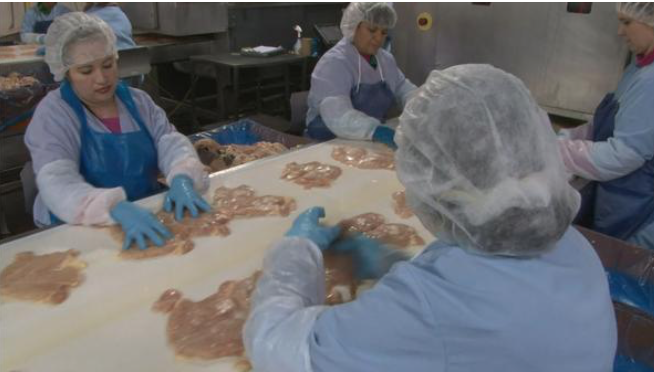
Inside a Tyson chicken processing plant
TYSON FOODS INC.

“I just want to see it grow,” said Krier, a real estate agent and part-time basketball coach. “I want my kids to want to come back home.”

That’s why, when a deal to build a Tyson Foods chicken processing plant in Tonganoxie, Kansas, collapsed, she fully supported her city’s efforts to lure them to Concordia.

Kreir grew up in Holcomb, Kansas, where her single mother worked for a Tyson beef processing plant. She says she fully understands both the good and the bad that large animal processing production brings, but that for her mother and family, the job was, well, a job.

“She knew she had job security,” she said. “She had good income. If she needed to take time off she had days where she could take time off and paid as well.”

Broadway Plaza in Concordia, KS
CREDIT BRIAN GRIMMETT

Many parts of rural Kansas would love to land a big company like Tyson, fully aware that it would bring foul smells and pose a potential threat to the local water supply. Even though the jobs are hard labor with modest pay, the wages would be better than what comes with the dwindling work available now. Enough, at least, to help save towns struggling to keep people.

Larger and more prosperous suburban areas, however, have already chased Tyson away. They’d rather see growth in the tech or aerospace manufacturing industries. Companies offering lower salaries aren’t as enticing when you can commute to a job that pays $60,000 a year. It’s an economic development luxury that many smaller communities don’t have.

In September, Tyson announced plans for a $320 million poultry complex on the outskirts of Tonganoxie that would employ about 1,600 people. Then-Gov. Sam Brownback applauded the plan as a boon for the Kansas economy. But local residents weren’t as excited. They were upset that the project was announced before receiving any input on how the plant would change their lives.

Protests followed by a group called Citizens Against Project Sunset, the code name city and state officials used to discuss the project. The group worried about what the plant, and the chicken farms that would come with it, would bring — water pollution, bad odors, and decreased property values.

Those opponents also said that Tonganoxie didn’t need those jobs. The average Tyson wage of $13 to $15 an hour, they said, was far worse than the average salary of most of the people already living in the area.

With so much backlash, it took less than a month before city officials voted to pull their support for the project.

Sedgwick County officials faced similar backlash when they began showing interest as a potential replacement destination for Tyson. And just like in Tonganoxie, county officials quickly turned their attention elsewhere.

By early December the commission had issued a statement that they would not offer Tyson any tax incentives. Instead, it entered into a partnership with Spirit Aerosystems to give $7 million to help expand the company’s production line.

“We just evaluated, ‘Where should our resources go?’,’’ Sedgwick County Commissioner Michael O’Donnell said. “And Spirit is where this commission went.”

But state officials remain confident. They still see poultry as an industry where Kansas could really grow.

The Kansas Legislature has also entered the debate. This year, it passed a bill that increases how many chickens can be housed inside of barns within a mile of other inhabited buildings. The bill is essentially an invite to the poultry industry.

“I’m confident that there are communities across our state that are interested and willing to see this as an economic development opportunity for their region,” Kerry Wefald, director of marketing, of the Kansas Department of Agriculture said.

The department received more than 40 letters of interest from Kansas communities in the state after Tyson backed off of the Tonganoxie plant.

Cloud County’s proposal, where Concordia is located, was among a few that stood out.

It has many of the things a company would look for — infrastructure and potential employees.

U.S. 81 runs right through the middle of Concordia and Cloud County. It eventually connects into Interstate 70 at Salina.

The county produces truckloads of grain, handy feed for chickens.

Ashley Hutchinson, the head of Cloud County’s economic development organization, said they also have people who would be excited to work there. The median salary in Cloud County is $11.86 an hour. That’s less than the average hourly wage Tyson says it would pay at a new facility.

“For us, these are incredible jobs,” she said. “They’re jobs that put food on people’s tables.”

None of that might matter.

Tyson said it is in no active discussions with any community in Kansas to build a new processing plant, the company said in an email. It’s focused on building a facility in Humboldt, Tennessee. It may still consider building additional plants in the future if there is enough demand, the email said.

The good news for Kansans wanting to draw in the poultry industry is that economists expect the demand for all types of meat to continue to grow.

Glynn Tonsor, professor of agricultural economics at Kansas State University, said that’s because nationally and internationally more people are eating meat. As income increases in countries like India and China, the ability to have more protein in the diet also increases. Low grain prices have also contributed to increased production.

But even if demand remained flat, Tonsor said, Kansas could still be a potential site of future growth. As older processing facilities elsewhere age, companies could shift production to Kansas. Companies don’t want to reinvest and put new buildings in a location if the advantages aren’t the same as when it was first constructed.

“The industry puts the building where they are the best fit for today,” Tonsor said.

Meanwhile, communities interested in the industry are waiting.

Hutchison said Cloud County is going to continue to be proactive in their efforts to lure someone to the area, whether that’s Tyson, or one of other producers such as Costco, Smart Chicken, or Perdue.

She just hopes that what happened in Tonganoxie, hasn’t already ruined their chances.

“We are a state that feeds the nation and feeds the world,” she said. “If you don’t particularly want that opportunity on your doorstep in a metro area, that doesn’t mean we don’t.”

Brian Grimmett reports on the environment and energy for the Kansas News Service. Follow him on Twitter @briangrimmett.

Area man wants to give back to veterans through passion of racing

By C.D. DeSALVO
Hays Post

For Brandon Pfanenstiel, drag racing has been something he has been familiar with since he was born. Pfanenstiel’s father got him into the scene at a young age and, by 14, he was racing for the first time. By 16, he took over his dad’s car.

The Pfanenstiel Dragster

Pfanenstiel, who is from the Hays area and currently lives in Plainville, recently discovered a way to combine his passion for drag racing with a way to give back to military veterans for their service after a virtual meeting with the founder of Armed Forces Racing.

“I met the founder, Jeff Lambert, through an online racing school that I’m a part of and wanted to do my part to help. I didn’t have a lot to donate but I felt like I could do more on the promoting side of things and help get more donations for them,” Pfanenstiel said.

Armed Forces Racing is a nonprofit organization started to provide recreational therapy to disabled veterans. Veterans who build and race cars through Armed Forces Racing find it is therapeutic and helps them recover from disabilities such as post-traumatic stress disorder by keeping them active and busy when they return home. The organization is based out of McConnells, S.C., and officially became a 501(c)3 nonprofit in December.

“It all started when we built a car for a restoration project as a tribute to veterans, but what happened was we started getting veterans volunteering and coming down to work on the car and we found that by doing that, it became a recreational therapy,” said Lambert, who served active duty in the Navy from 1992 to 1996. “They started telling us that this changed their lives and made them feel like they have a mission and purpose. They loved getting to hang out with other veterans. That’s kind of what started it and I said ‘instead of a tribute, we should do more.’ So that’s how Armed Forces Racing came to be.”

Pfanenstiel volunteered to be an ambassador for Armed Forces Racing by promoting and fundraising in the Hays area. He has started visiting local businesses to make them aware of the organization.

“Brandon actually became the first official ambassador for us. We actually started the ambassador program because of Brandon,” Lambert said. “We just got an ambassador in Pennsylvania and we got another ambassador in Virginia because of what Brandon did.”

While there is not currently an Armed Forces Racing program in the area, Pfanenstiel’s ultimate goal is to eventually set up a program in the area for local veterans to be able to take advantage of the therapeutical upsides of building cars, racing cars and being on a crew for a racing team.

“For myself, it is definitely a type of therapy. It’s my getaway … ..it’s what I do. Sometimes putting it into words isn’t easy I just think of it like any project. I get satisfaction out of working on my car, making it run, and racing it,” Pfanenstiel said. “I am simply a volunteer trying to do my part to give back. Drag racing has always been my thing, so this is my way to combine the two.”

Armed Forces Racing Decal on Dragster

Since Armed Forces Racing is a nonprofit, any and all donations go toward the cost of buying parts to build the dragsters and getting the veterans out to the track.

To donate, visit the Armed Forces Racing website at www.armedforcesracing.org.

You can also visit their Facebook page for photos and events at www.facebook.com/armedforcesracing.

Pilot program helps improve health of Salina Medicaid population

OFFICE OF GOV.

TOPEKA – Participants in a pilot project in Salina are living healthier and more active lives after KanCare (Kansas’ Medicaid program) and Cerner collaborated to improve their overall well-being. Starting in June 2015, the initiative used targeted data to focus on eligible Medicaid beneficiaries diagnosed with high blood pressure and diabetes, and those who were pregnant. Those beneficiaries then learned how they could improve their health through things like healthy eating and exercise.

“The pilot program identified effective ways to improve the health and engagement of those in the Kansas Medicaid program,” said Kansas Gov. Jeff Colyer, M.D.

When the program ended in July 2016, those who took part in all the program requirements reported a drop in triglycerides and total cholesterol, as well as an increase in physical activity. Total cholesterol fell an average of 9.8 mg/dL, while triglycerides fell an average of 27.5 mg/dL. The group also self-reported an increase in moderate or vigorous physical activity — from 82 percent to 93 percent.

“Cerner and the State of Kansas have a shared vision for improving the health of its residents. The pilot project allowed us to collaborate on innovative ways to engage KanCare beneficiaries and provide a tailored health care experience which led to improved health outcomes,” said Christa Roberts, director of population health client performance management, Cerner.

To encourage participation, Cerner looked at the geographic data on disease prevalence and set up physical locations close to where beneficiaries lived, worked and shopped, including the Salina Emergency Aid /Food Bank, Central Kansas Foundation and Walmart.

At those locations, Cerner’s health team administered labs and biometric screenings, provided health coaching services and offered education about food and transportation resources. Cerner health navigators also matched participants to physicians, monitored program engagement and shared information about the participants’ progress with those involved (managed care coordination). As an incentive, enrollees received water bottles, pedometers or Walmart gift cards for their participation in the program.

Cerner and the University of Kansas Business School created a survey to collect data on participants’ health beliefs, motivations and hopes. Survey results helped break the respondents into various groups. Health navigators then communicated with participants in each group with personalized messaging to encourage further participation.

“Through the program, we found a way to incentivize members to make healthy behavior changes,” said Colyer. “The incentive strategy, combined with collaborative relationships between beneficiaries and their health team, are helping Kansans achieve better outcomes.”

Now that the pilot project is complete, it could lead to similar future projects to improve the health of Medicaid beneficiaries.

Governor’s Exporter of the Year award to celebrate 30th anniversary

KDC

TOPEKA – Kansas International Trade Day will be held June 5, 2018 in Lawrence, Kansas, at the Lawrence DoubleTree Hotel.  The conference will feature speakers from business and government with sessions designed to help Kansas businesses start exporting or grow existing international sales.  The day-long event will be followed by the Team Kansas Award Banquet where the 2018 Governor’s Exporter of the Year will be announced.

The Governor’s Exporter of the Year award is presented annually to a single Kansas company in recognition of its excellent performance in international trade and its outstanding international marketing. This year marks the 30th anniversary of this prestigious award.   A list of previous winners can be found at: https://www.kansascommerce.gov/156/Governors-Exporter-of-the-Year

Kansas Commerce would like to extend a special thank you and acknowledge the demanding work by the members of the Kansas International Trade Coordinating Council in reviewing candidates for the Governor’s Exporter of the Year award and in selecting the winner. The Kansas International Trade Coordinating Council is comprised of representatives from companies that have previously won the award along with international trade specialists from business, government and academia.

The candidates being considered for this award have undergone a thorough evaluation process. Companies may self-nominate or can be nominated by regional economic development offices or local chambers of commerce. From several dozen candidates, five finalists are selected for additional review before a final selection is made. The rigorous selection process includes site visits to each finalist and interviews with the company’s management team.

This year’s Kansas International Trade Day conference will not only feature a panel of representatives from companies that are finalists for the 2018 Governor’s Exporter of the Year award, but the “Founding Father” of the award, Harland Priddle, will be on-hand to open the conference. Mr. Priddle served as the first Secretary of the Kansas Department of Commerce from 1987 to 1991 and helped establish the Kansas International Trade Coordinating Council. The Council seeks to facilitate access to the state’s international resources and established the award to recognize the significance of foreign trade for our state’s economy.

In 2017, Kansas exported more than $11 billion of merchandise, with Canada, Mexico, and Japan topping the list of export destinations.  More than 2,600 small and medium-sized firms in Kansas were involved in exporting.

The “early bird” rate to attend the conference is $50 for anyone registering prior to May 1. Those registering after May 1 will pay $75.  To register or learn more about the agenda, speakers and sponsorship opportunities, please visit KansasCommerce.gov/2018TradeDay. The registration fee includes lunch.

Wolf wins javelin at KU Relays; Roberts sets new school record in California

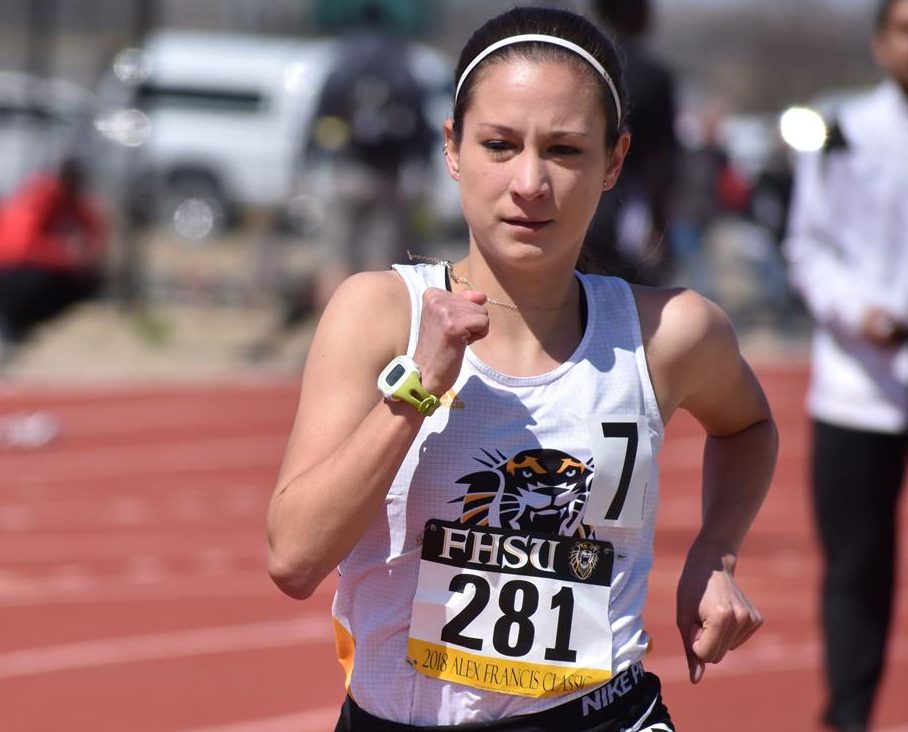
LAWRENCE, Kan. – The Fort Hays State women’s track and field team was stretched in two states over the weekend to compete. With some members traveling to compete in the Beach Invitational hosted by Long Beach State, and the others settling down at the 91st KU Relays in Lawrence, the Tigers were well represented.

Madison Wolf continued her streak of finishing first in every meet this season, as she won the javelin with a throw of 155 feet, 3 inches. Teammate Alexcia Deutscher came in at the runner-up position at 152 feet, 4 inches at the KU Relays. The notable performance in California was Lindsay Roberts’ new school record in the 1,500-meters with her time of 4:35.61. This time was also a new personal record for Roberts, a time good enough to lead her to the top place in her heat.

Also at the KU Relays were other notable finishes for the women. Yessenia Gonzales claimed a sixth place finish in the 3,000-meter steeplechase with a time of 11:29.03, while Summer Kragel placed fifth in the high jump with her height of 5 feet, 3 inches. Laurel Haley rounds out the top-ten finishes as she placed 10th in the hammer throw with a mark of 151 feet, 1 inch.

The Tigers will next compete at the Drake Relays in Des Moines, Iowa April 26-28 next week in their last meet before the MIAA Championships.

Meyer claims automatic qualifying mark in California; others Tigers compete strong at KU Relays

LAWRENCE, Kan. – With the Fort Hays State men’s track and field team being represented in both California and Kansas, the success of the program was wide-spread. The Tigers competed in both the Beach Invitational hosted by Long Beach State, while also competing in the 91st KU Relays by the University of Kansas.

Brett Meyer claimed an automatic qualifying mark in California as he finished as the second-best Division II runner in the 1,500-meters, earning a time of 3:43.6 to earn his qualification. Decano Cronin once again broke the school record with a time of 1:48.47 in the 800-meter. Meyer finished in third place in the same event as he earned a provisional with a time of 1:50.15.

Back at the KU relays, the Tigers dominated the field side of things. Kolt Newell took first in the high jump with his height of 6 feet, 8 ¾ inches. TJ Dozier also was named champion in his event of the hammer throw, completing a personal record of 189 feet to finish in the top spot. In pole vault, Jake Morrow finished in the runner-up position as he jumped for a mark of 16 feet, 4 3/4 inches. Sam Dreiling finished right behind his teammate at 15 feet, 11 inches. Layton Werth accounted for a 31:25.96 time in the men’s 10k in Lawrence, good enough for a personal record.

Other notable finishes for the Tigers over the weekend include a fourth place finish for Dozier in the discus at 162 feet, 3 inches. Alongside that finish was a seventh place mark for Christian Delaney in the shot put who threw for 51 feet, 1 3/4 inches. In the high jump, Lucas Broxterman earned a ninth place finish at KU with his height of 6 feet, 4 3/4 inches.

The Tigers will next travel to Des Moines, Iowa for the Drake Relays. The meet is scheduled for April 26-28 next week, their last chance to prepare for the MIA Championships.

Lindenwood rallies past Tiger baseball to win series

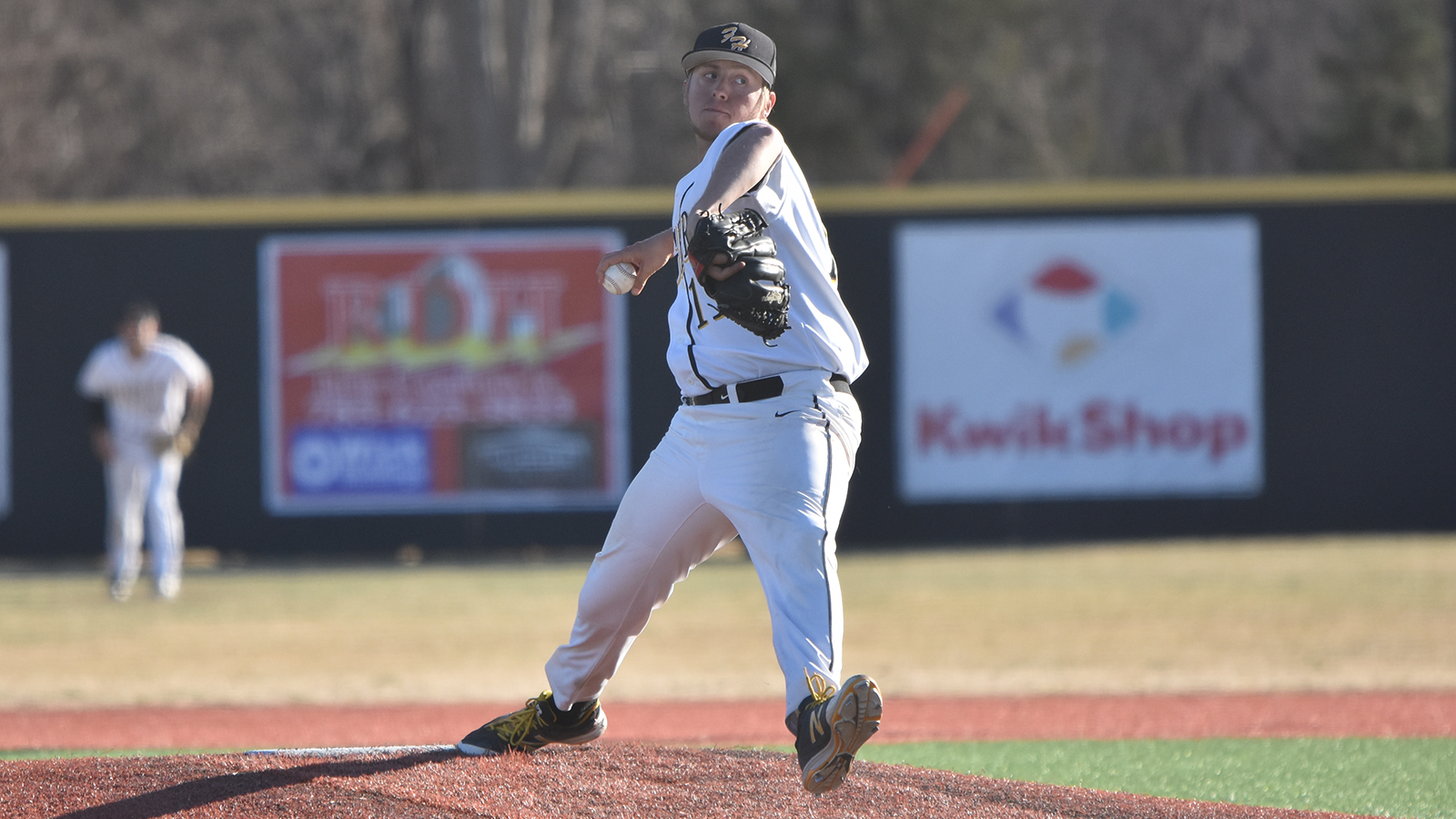
ST. CHARLES, Mo. – The Fort Hays State baseball team jumped out to an early lead thanks to three doubles in the first three innings Saturday afternoon (April 21), but Lindenwood came from behind to take game two of the series, 12-5. The Tigers are now 13-29 on the year and 5-23 in MIAA play while the Lions move to 21-20 overall and 13-16 in league action.

The Tigers collected their five runs on six hits and two Lion defensive miscues, while LU pushed across 12 runs on 18 hits and no FHSU errors.

Lindenwood grabbed an early 2-0 lead in the first, but the Tigers responded with a pair of runs in both the second and third innings to go in front 4-2. After the first five FHSU batters were retired, a pitch hit Cody Starkel to trigger a two-out rally in the second. Walks to Dayton Pomeroy and Bryce Whitchurch loaded the bases for the nine-spot in the order. Dawson Sramek came through with the first base hit of the game for the Tigers, roping a double to right that bounced over the fence, driving in a pair to tie things up at 2-2.

After starter Alex Ruxlow retired the side in order in the bottom of the second, Fort Hays State kept things rolling in the third frame. Ryan Grasser and Addison Kaasch clubbed back-to-back doubles to open the frame, the latter of which gave the Tigers the lead. Kaasch later came around to score on a double steal attempt, doubling the FHSU advantage.

The Lions scored four runs over the next two innings to retake the lead, but FHSU got one of the runs back in the fifth to close within one, 6-5. Clayton Basgall reached on an error to start the inning before coming around to score on Alex Weiss’ two-out base hit up the middle. Lindenwood pulled away down the stretch, pushing across six more runs over their final four at-bats.

Six different Tigers picked up a base hit Saturday, with Sramek serving as the only player to drive in multiple RBI. Alex Ruxlow (0-4) took the loss after allowing six runs on eight hits over 3.2 innings of work. Zach Rothert struck out five out in 2.2 innings out of the bullpen, allowing four runs.

The teams will face off once more on Sunday afternoon (April 22) with the series finale set to begin at 1 p.m.

Convicted Kan. jail guard now accused of child sex crimes

WICHITA, Kan. (AP) — A former Sedgwick County detention deputy convicted of sex crimes against inmates is now charged with sex crimes against a child.

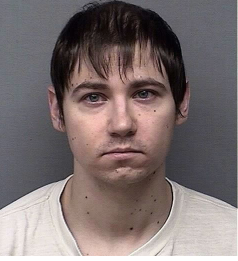
Kendall -photo KDOC

27-year-old David Kendall was charged Friday with two counts of criminal sodomy, three counts of sexual exploitation of a child and one count of violating offender registration requirements. Goddard police say someone accused Kendall on April 12 of sex crimes against a 15-year-old.

Kendall was convicted in 2014 of six counts of attempted unlawful sexual relations and sentenced to two years’ probation.

Prosecutors say several men imprisoned at the Sedgwick County Jail reported they’d been raped or sexually propositioned by Kendall while he worked at the jail in 2012 and 2013.

Kendall’s next court date in the latest case set for May 3.

DA wants Kansas car dealer to pay $100K in fines

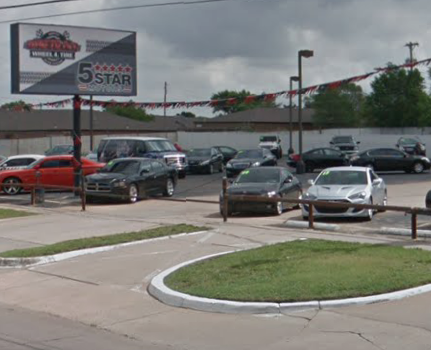
WICHITA, Kan. (AP) — The Sedgwick County District Attorney’s Office is asking a judge to order a Wichita used-car dealer to pay $100,000 in fines and penalties after customers complained that they didn’t receive titles to vehicles they bought.

Google image

District Attorney Marc Bennett says six customers of 5 Star Motors and its owner, Teresa Molinaro, have complained that they didn’t receive legal titles within 60 days of buying vehicles. State law says that if a dealer doesn’t provide title within 60 days, the sale is void and the buyer is entitled to a refund.

Molinaro on Friday told the Eagle that her financing company, NextGear Capital, has the titles and that she is suing NextGear for financing problems she says forced 5 Star Motors to close o

Copyright Eagle Radio | FCC Public Files | EEO Public File