Blue Cross and Blue Shield of Kansas has recognized HaysMed, part of The University of Kansas Health System, as a Blue Distinction Center+ for Cardiac Care as part of the Blue Distinction Specialty Care program. Blue Distinction Centers are nationally designated providers that show expertise in delivering improved patient safety and better health outcomes, based on objective measures that were developed with input from the medical community and leading accreditation and quality organizations.
According to the American Heart Association (AHA), cardiovascular disease is the leading cause of death globally and is expected to claim more than 23.6 million lives annually by 2030. Blue Distinction Centers+ for Cardiac Care seek to empower patients with the knowledge and tools to find quality cardiac care.
To receive a Blue Distinction Center+ designation, HaysMed demonstrated expertise in delivering safe and effective cardiac care, focusing on cardiac valve surgery, coronary artery bypass graft (CABG), and percutaneous coronary interventions (PCI) episodes of care. Additionally, HaysMed also demonstrated better cost-efficiency compared to their peers.
Only those hospitals that first meet nationally established quality measures for Blue Distinction Centers are considered for designation as a Blue Distinction Center+.
“HaysMed has always been committed to providing cardiology services to people in western Kansas.” said Jeff Curtis, Cardiology and Administrative Director of HaysMed Debakey Heart. “Twenty years ago we were the first and are still the only cardiology program in western Kansas to provide cardiology services including heart surgery. This Distinction is recognition for the commitment we have made to making cardiology services available to all patients.”
Hospitals recognized with this designation are assessed using a combination of quality information supplied by hospitals and third party data registries, and cost measures derived from Blue Cross and Blue Shield companies’ medical claims.
Since 2006, the Blue Distinction Specialty Care program has helped patients find quality specialty care in the areas of bariatric surgery, cancer care, cardiac care, cellular immunotherapy, fertility care, gene therapy, knee and hip replacements, maternity care, spine surgery, and transplants, while encouraging health care professionals to improve the care they deliver. Research shows that compared to other providers, those designated as Blue Distinction Centers demonstrate better quality and improved outcomes for patients. On average, Blue Distinction Centers+ are also 20 percent more cost-efficient than non-Blue Distinction Center+ designated providers.
For more information about the program and for a complete listing of the designated providers, visit www.bcbs.com/bluedistinction.
Partly sunny, then gradually becoming sunny, with a high near 58. West southwest wind 6 to 11 mph increasing to 12 to 17 mph in the afternoon.
Tonight
Mostly cloudy, then gradual clearing toward daybreak, with a low around 30. Blustery, with a southwest wind 13 to 21 mph becoming north northwest after midnight.
Monday
Sunny, with a temperature falling to around 28 by 5pm. Very windy, with a north northwest wind 22 to 32 mph, with gusts as high as 45 mph.
Monday Night
Mostly clear, with a low around 18. Wind chill values as low as 5. Blustery, with a west wind 16 to 21 mph decreasing to 6 to 11 mph in the evening.
Tuesday
Sunny, with a high near 38. Northwest wind 11 to 18 mph, with gusts as high as 30 mph.
LAWRENCE – It will take many weapons to fight the epidemic of opioid addiction, but one medication critical to fighting the worst drug crisis in U.S. history remains woefully underprescribed and underutilized, according to research from the University of Kansas Medical Center.
The number of Americans with an opioid addiction has more than doubled in the last 10 years. Meanwhile, drug overdoses have become the leading cause death in the United States for people under 50 years of age and the overall leading cause of death by injury (overdoses are categorized as unintentional injuries by the Centers for Disease Control and Prevention).
Yet there remains a huge gap in the number of prescriptions for buprenorphine, a medication effective in treating opioid addiction, and the skyrocketing number of people who have that addiction, according to research led by Andrew Roberts, Pharm.D., Ph.D., assistant professor in the Department of Preventive Medicine and Public Health at the University of Kansas School of Medicine.
First approved by the Food and Drug Administration in 2002 to treat opioid use disorder, buprenorphine is a partial opioid itself. Also known by its brand name, Suboxone, buprenorphine reduces cravings and relieves withdrawal symptoms but does not produce a high at typical doses. People in recovery from addiction can take buprenorphine to stay physically comfortable while stopping their abuse of riskier prescriptions such as oxycodone or street opioids such as heroin.
Watch the video below of Dr. Roberts and Roopa Sethi, M.D., of the KU addictions clinic discussing buprenorphine barriers and treatment.
Methadone, the better known, older opioid replacement therapy, does the same thing, but is often harder for people to access: in the United States, methadone must be administered to the patient at a clinic certified by the Substance Abuse and Mental Health Services Administration; the methadone clinic system was developed in the 1960s and then carved into law in the Narcotic Addict Treatment Act in 1974. But patients can take buprenorphine at home on a schedule, as they would for any other chronic condition. “It can be prescribed by any physician trained to prescribe it, and you just pick it up at the pharmacy,” said Roberts. “It’s much easier for people to obtain.”
There’s the irony. Of the more than 2 million Americans with opioid addiction, just one in five obtain any treatment. Studies show that the most effective therapy for opioid addiction is medication-assisted treatment: behavioral therapy combined with a medication such as buprenorphine or methadone. In 2016, the same year that more Americans-more than 40,000-died from opioid overdoses than from car accidents, Congress passed the Comprehensive Addiction and Recovery Act to increase treatment access. One provision of the law is an increase the number of people for whom a doctor can prescribe buprenorphine, from 100 to 275 patients per year. Expanding access to the drug has become a major federal priority.
Meanwhile, Roberts and his colleagues were thinking ahead. “Assuming that the provider supply issue could be addressed, we were wondering what other barriers there might be to getting and adhering to treatment.”
They immediately thought of cost, a known treatment barrier with other chronic conditions such as asthma and diabetes. When the price of a medication for those diseases goes up, the less likely people are to take it and the worse their clinical outcomes are.
Roberts also points to the risk of price gouging. The obvious headline-making example is the price of the EpiPen-the life-saving injection device used by millions of Americans to treat lethal allergic reactions-which rose 500 percent over a decade. There’s already some evidence of price gouging happening in the opioid treatment arena. The cost of a twin-pack of injector device to administer naloxone, a drug that can reverse an opioid overdose, has risen to $4,500 in 2018, from $690 in 2014. “We wanted to see if we needed to be worried about the cost of buprenorphine as we try to connect people with treatment,” Roberts said.
Working with researchers from Vanderbilt and Johns Hopkins, Roberts analyzed outpatient prescription claims data from 2003 to 2015, looking at buprenorphine utilization and expenditures for both health plans and insured patients. The database captured 20 million people annually during those years who were in a commercial health insurance plan provided by a large or medium-sized U.S. employer. They wanted to look at privately insured people in particular because these people are more likely to be affected by higher out-of-pocket prescription costs than are Medicare and Medicaid patients.
What they found, Roberts calls a “pleasant surprise”: the median amount paid by private payers (health plans) for a 30-day supply of buprenorphine has remained relatively stable since 2003, and the out-of-pocket median expenditure for privately insured adults has actually steadily decreased over time, from $67 to $32 for a 30-day prescription. Buprenorphine appears to be insulated from the large spending increases that have affected life-saving drugs for other chronic diseases.
But they also saw something worrisome in the data. The number of people taking buprenorphine for treatment increased until 2013, but then the number of people initiating treatment declined from 2013 through 2015. “This is in the face of a massive treatment gap,” said Roberts. “We would have hoped to have seen an exponential increase in the number of people starting treatment-we know they are out there.”
If cost isn’t the barrier to buprenorphine being more widely used, then the question becomes, what is?
One issue, Roberts said, is that although it’s less complicated than methadone, prescribing buprenorphine is more regulated than for other medications. Physicians must take a short training course to get permission to prescribe it. “So there’s that hoop to jump through, and sometimes physicians are leery into wading into that territory [of addiction] clinically. There’s a fear it might invite scrutiny from authorities,” he said. “And then there’s the whole stigma around addiction.”
Brendan Saloner, Ph.D., assistant professor in the Department of Health Policy and Management at the Johns Hopkins Bloomberg School of Public Health and a co-author on the study, also cites stigma as a barrier. “Many patients and doctors still harbor antiquated ideas about how addiction medication works, and there is a pervasive and untrue myth that medication substitutes one form of addiction for another,” he said.
Roberts notes that their data go only through 2015, and the jury is still out on how much of a difference the 2016 regulations, including increasing the number of people doctors can treat with buprenorphine, will make. “But according to our data, the uphill battle to close these treatment gaps is getting providers to participate in this fight,” said Roberts. “And one of the easiest ways to fight it is to get trained and treat patients with this drug.”
INDEPENDENCE, Mo. (AP) — A woman who was raped in front of her 2-year-old daughter several months before prosecutors say her two assailants abducted and sexually assaulted a Kansas sheriff’s deputy says police seemed to doubt her when she sought their help.
Luth and Newman-Caddell
During a hearing Thursday in which one of the men, 41-year-old William Luth, pleaded guilty to raping her, the Independence, Missouri, woman told the court that the officers who investigated the February 2016 attack in her home “made it abundantly clear that they were pretty sure I was just being dramatic.”
No suspects were identified in that attack until Luth and Brady Newman-Caddell were arrested for the October 2016 sexual assault of the Johnson County, Kansas, sheriff’s deputy and authorities say DNA evidence linked them to the earlier attack.
The Missouri woman said from the outset, the Independence police seemed to doubt her story that she was raped in the same bed as her toddler. She said they asked her about her past sexual partners and pored over her social media history and phone contacts.
“They made me feel insane,” she told the court.
She also said it made her sick when she found out that Luth had raped another woman. “I owed this woman so much gratitude for being strong enough to endure what they had done, and to have the courage to seek justice,” she said. “Without her, I wouldn’t be here facing William Luth today.”
She said her case was solved because she underwent a rape examination and “forensic scientists did their job,” and that she hasn’t received an apology or acknowledgement from the police department even though her account was proven true. She said at least with Luth, she gets an admission of guilt, which she described as proof that “I was telling the truth.”
Officer John Syme, an Independence police spokesman, didn’t immediately respond to an Associated Press phone message Friday seeking comment.
Both Luth and Newman-Caddell pleaded guilty to kidnapping and raping the deputy, with Luth getting sentenced to 41 years in prison in that case and 30 years for the Missouri attack, to be served at the same time.
Newman-Caddell was scheduled to be sentenced Wednesdayin attack on the deputy, but the hearing was called off when he told the judge he wanted to withdraw his guilty plea. The charges against him in the Missouri attack are still pending.
The Star and the AP don’t generally identify victims of sex crimes.
SALINE COUNTY — A pair of small earthquakes shook portions of central-Kansas Saturday.
The first quake just after midnight measured a magnitude 2.8 and was centered approximately four miles east of Salina, according to the U.S. Geological Survey. A 2.7 quake was also reported in the same area just before 10:30p.m.
These quakes follows a 3.8 magnitude quake Friday afternoon in Sumner County. And a series of five quakes ranging from a magnitude 2.5 – 4.5 in Sumner County since January 16 according to the USGS.
There are no reports of damage or injury from Saturday’s quakes. Saline County dispatch said they received no calls on the quake.
WICHITA, Kan. (AP) — The first new KC-46 air refueling tankers have arrived at McConnell Air Force Base in Wichita.
Two of the tankers landed at the base Friday afternoon.
The tanker uses the Boeing 767 passenger airplane as its airframe, and McConnell is the first base to receive the next-generation tanker. Boeing has said McConnell is slated to receive two more of the aircraft next week.
The long-awaited tankers replace KC-135 air refueling tankers used by McConnell’s two air refueling wings, the 22nd and 931st Air Refueling Wings. Eventually, McConnell will have 36 KC-46s to replace its aging fleet.
Jeremy Gill, a recent graduate of Fort Hays State University with master’s in history, will speak about aspects of his master’s thesis, “Cavalry to Campfires: The Politics of Preservation in Frontier Historical Park,” on Monday, Jan. 28, during the Ellis County Historical Society annual meeting. There will be a membership business meeting at 7 p.m. followed by Gill’s presentation at 7:45 p.m.
Doors open at 6:30 p.m. for membership and sponsorship renewals. Membership cards will be available during registration.
Both the meeting and presentation are free and open to the public.
Located at 100 W. Seventh, the Ellis County Historical Society, founded in 1972, collects, preserves, and exhibits items and documents that illustrate the history of Ellis County.
TOPEKA – The Kansas Department of Health and Environment (KDHE) held the 2019 Harmful Algal Bloom Meeting this week at Washburn University in Topeka. The meeting, which included all Kansas agencies which work on harmful algal blooms, discussed health, monitoring and responses due to harmful algal blooms in area water sources.
“At this year’s meeting we have expanded from our recreational stakeholders to include the public water supply operators and other agencies to find the best ways to address issues as they arise,” said Megan Maksimowicz, an environmental specialist at KDHE’s Bureau of Water.
“We want to make sure that we stay on top of all public health and safety issues connected to HABs. We have not had any toxins above the EPA’s health advisory level from HABs in a public water supply system, but we continue to come up with the best ways to prevent this and to monitor these situations.”
Presentation topics included recreation and reservoir research, animal health, testing and monitoring, nutrient reduction and practices, in-lake mitigation strategies, public water supply monitoring, and planning and response, among other discussions. The meeting, hosted by KDHE’s Bureau of Water, has been held annually every winter to engage stakeholders on this challenging issue affecting lakes in Kansas.
RILEY COUNTY —Law enforcement authorities are investigating an injury accident that occurred just before 7a.m. Saturday in Riley County.
A 2004 Dodge Nissan driven by Justin Pate, 22, Manhattan, struck a pedestrian identified as 47-year-old Curt Bilinger of Manhattan near the 1000 Block of Westloop Place, according to a media release.
Bilinger was transported to Via Christi for treatment of his injuries.
PRATT – Kansas Wildlife, Parks and Tourism Commissioners drew names for Commission Big Game permits at their Jan. 17, 2019 public meeting. The Commission Big Game Permit program allows conservation organizations a chance to draw one of seven big game permits, which can then be sold to raise funds for conservation projects. One-hundred-seventy-six applications were received for the 2019 permits.
Eligible applicants include local chapters of nonprofit organizations based or operating in Kansas that actively promote wildlife conservation and the hunting and fishing heritage. Organizations may receive just one Commission Big Game Permit in a three-year period.
One elk, one antelope or up to seven deer permits are issued each year, depending on applicant preference. The permits are either-species/either-sex and are valid statewide during any season with legal equipment for that season; they do not count against other big game permits the license holder is eligible for.
Once the permit is sold, the cost of the permit, plus 15 percent of the total sale price, is subtracted and kept by the organization, while the remainder is remitted to the Kansas Department of Wildlife, Parks and Tourism with a proposal for a conservation project. When the project is approved, the money is returned to the organization to complete the project.
All organizations drawn this year selected deer permits, so seven Commissioner Big Game Deer Permits are available from the following conservation groups:
National Wild Turkey Federation – Arkansas Valley Limbhangers Chapter, Jared McJunkin, Director of Conservation Operations, 5632 Legends View Dr., Wamego KS 66547, [email protected], 785-456-9735
Friends of NRA – Caldwell #KS-41 Chapter, Brad Dreier, Sr. Field Rep, 5856 S Lowell Blvd, Ste 32-313, Littleton CO 80123, [email protected], 720-232-7601
Pheasants Forever – Solomon Valley Chapter #450, Chris Blackledge, Regional Rep., 503 Ravine Dr., Council Grove KS 66846, [email protected], 620-767-2121
Pheasants Forever – Flint Hills Chapter #739, Chris Blackledge, Regional Rep., 503 Ravine Dr., Council Grove KS 66846, [email protected], 620-767-2121
Quail Forever – Neosho Valley Chapter #3165, Chris Blackledge, Regional Rep., 503 Ravine Dr., Council Grove KS 66846, [email protected], 620-767-2121
ST. LOUIS (AP) — A male police officer was charged Friday with involuntary manslaughter in the shooting death of a female officer during what was described as a deadly game with a revolver.
24-year-old Katlyn Alix -photo courtesy St. Louis PD
Circuit Attorney Kim Gardner announced the charge against Nathaniel Hendren, 29, in the death of 24-year-old Katlyn Alix, as they allegedly played a game in which a revolver’s cylinder was emptied, one bullet put back and the two colleagues took turns pointing at each other and pulling the trigger.
Alix was with two male officers at an apartment when she was killed just before 1 a.m. Thursday . A probable cause statement from police, provided by Gardner’s office, offered a chilling account of the dangerous game that led to her death.
The probable cause statement said Alix and Hendren were playing with guns when Hendren produced a revolver.
“The defendant emptied the cylinder of the revolver and then put one cartridge back into the cylinder,” the statement said. He allegedly spun the cylinder, pointed the gun away and pulled the trigger.
Click to enlarge
The gun did not fire. The statement said Alix took the gun, pointed it at Hendren and pulled the trigger. Again, it didn’t fire.
Hendren “took the gun back and pointed it at the victim (and) pulled the trigger causing the gun to discharge,” the statement said. “The victim was struck in the chest.”
The other male officer told investigators he warned Hendren and Alix not to play with guns and reminded them they were police officers. He was about to leave when he heard the fatal shot, the statement said.
The male officers drove Alix to a hospital where she died. Hendren also is charged with armed criminal action.
The two men were on-duty at the time of the shooting. Police Chief John Hayden has declined to answer questions about why the officers had gathered at the apartment, which was home to one of the men.
St. Louis police said the charges were the result of a promise Hayden made to Alix’s family to conduct a “thorough and competent investigation.”
Alix, a military veteran who was married, was not working but met the men at the apartment.
Police immediately launched an internal investigation and placed both officers on paid leave. Gardner also began her own investigation on Thursday and enlisted the Missouri State Highway Patrol to conduct it.
Alix was a patrol officer who had graduated from the St. Louis Police Academy in January 2017.
MANHATTAN — The Kansas Department of Agriculture is sponsoring a Livestock Mortality Workshop in Garden City on March 20 for cattle, swine and dairy owners to learn about options for managing large-scale mortality in their herds. The workshop will feature a keynote presentation by Gary Flory of G.A. Flory Consulting, a nationally recognized expert in agricultural and environmental challenges as part of animal disease and natural disaster response.
The Livestock Mortality Workshop will take place in the Grandstand Meeting Room at the Finney County Fairgrounds at 417 Lake Ave. in Garden City on Wednesday, March 20, from 9:00 a.m. to 3:00 p.m. The workshop is free of charge and lunch will be provided, but registration is requested.
In addition to the keynote speaker, participants will receive information related to biosecurity, secure food supply planning and Animal Health Commissioner Justin Smith will also provide an update on Kansas’ disease response planning efforts. Other presentations will cover a variety of topics related to options for managing catastrophic mortality, including above-ground burial, the evolution of composting as a viable disposal option, and managing daily mortality during an outbreak.
WICHITA, Kan. (AP) — Two officers who fatally shot a Wichita man after he shot and killed a police dog will not face criminal charges.
K9 Rooster -photo courtesy Wichita Police
Sedgwick County District Attorney Marc Bennett said Friday the officers shot 25-year-old Kevin Perry in March 2017 because they thought Perry was going to shoot them.
The officers and K-9 Rooster went to Perry’s home in south Wichita after a report that Perry was holding his girlfriend hostage.
Rooster’s handler sent the dog to stop Perry from going back into his home. Bennett says when Rooster grabbed Perry’s leg, Perry reached for a handgun and officers fired because they thought he was going to fire at them.
Instead, Perry shot Rooster, killing him almost instantly.
Bennett says Perry had mental health issues and drugs in his system when he was shot.

 Blue Cross and Blue Shield of Kansas has recognized HaysMed, part of The University of Kansas Health System, as a Blue Distinction Center+ for Cardiac Care as part of the Blue Distinction Specialty Care program. Blue Distinction Centers are nationally designated providers that show expertise in delivering improved patient safety and better health outcomes, based on objective measures that were developed with input from the medical community and leading accreditation and quality organizations.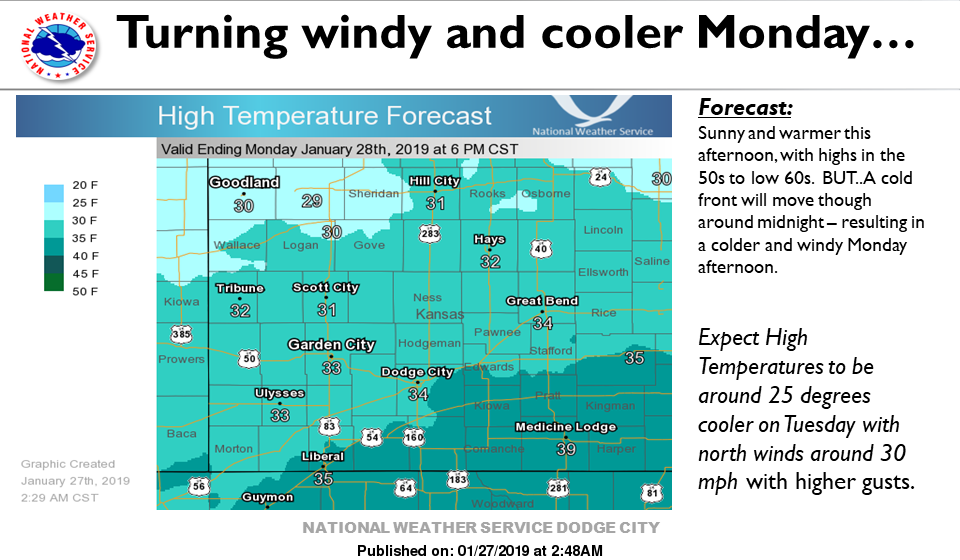
 Today
Today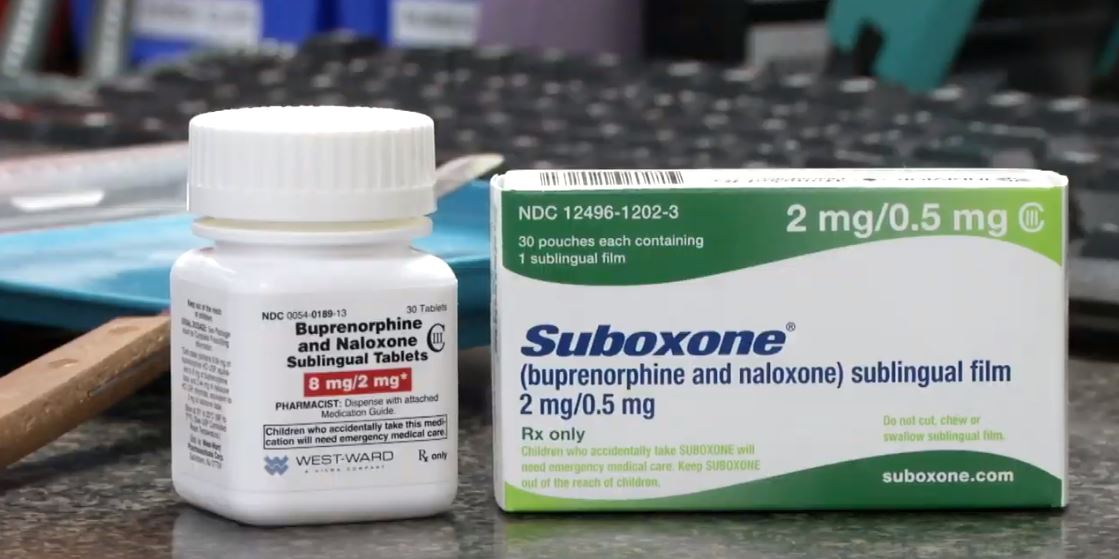









 A 2004 Dodge Nissan driven by Justin Pate, 22, Manhattan, struck a pedestrian identified as 47-year-old Curt Bilinger of Manhattan near the 1000 Block of Westloop Place, according to a media release.