Listen as the ‘Voice of the Chiefs’ Mitch Holthus recaps last week’s loss to the Patriots in the AFC Championship Game and puts a wrap on the 2018 season.
The Holthus Hotline airs Saturday mornings on your home for Chiefs football, KFIX (96.9-FM), at 8 a.m. during the Chiefs season.
PRATT – At its Jan. 17 meeting in Lawrence, the Kansas Wildlife, Parks and Tourism Commission voted on just one item during the Public Hearing session. Commissioners passed a regulation setting the season for hunting on Controlled Shooting Areas to Sept. 1-April 30, extending the season one month, which was approved during last year’s legislative session.
The Commission heard a variety of briefings on proposed regulations during the Workshop Session, including:
Allowing e-bicycles (pedal assist) on trails and in parks
A change to the Public Lands regulations allowing portable blinds to be left out overnight
Allowing the use of calls for squirrel hunting
Changes to the furharvesting regulations, including increasing the season limit on otters to five
The adoption of U.S. Coast Guard navigation rules
A report on the use of unmanned aerial vehicles (drones)
A recommendation to eliminate the $10 duplicate license fee
Antelope season dates: Archery– September 21-29, 2019; Muzzleloader– Sept. 30-Oct. 7, 2019; and Firearm – Oct. 4-7, 2019
Elk season dates: on Fort Riley – Firearm Any-elk, Oct. 1- Dec. 31, 2019; Antlerless-only, Oct. 1-31, 2019, Nov. 1-30, 2019, and Dec. 1-31, 2019; outside of Fort Riley – Muzzleloader, Sep. 1-30, 2019; Archery, Sept. 16-Dec. 31, 2019; and Firearm – August 1-31, 2019, Dec. 4-15, 2019, and Jan. 1-March 15, 2020
Moving the application deadline for resident firearm either-species deer permits and Fort Riley elk permits to the second Friday in June, which coincides with the antelope firearm permit application deadline
Deer season dates: Youth and Hunters with Disabilities – Sept. 7-15, 2019; Muzzleloader – Sept. 16-29, 2019; Archery – Sept. 16-Dec. 31, 2019; Pre-rut Whitetail Antlerless-only – Oct. 12-14, 2019; and Firearm – Dec. 4-15, 2019.
Each of these items will be voted on during the Public Hearing portion of the March 28, 2019 Commission meeting in Topeka, which will be conducted at the Capitol Plaza Hotel. For more information on the Commission, as well as future and past meetings, visit www.ksoutdoors.com.
Teachers from USD 248 Great Bend, USD 489 Hays, and USD 350 St John-Hudson are among the more than 3,900 teachers nationwide who achieved the highest professional credentials they can earn – they attained first-time certification from the National Board for Professional Teaching Standards in 2018.
Traci Miller, from USD 248, Kristy Oborny, from USD 489, and Angie Webb, from USD 350, are now national board certified teachers.
Miller teaches second grade at Riley Elementary School in Great Bend and earned her certification in exceptional needs specialist/early childhood through young adulthood.
Oborny teaches fourth grade and is the librarian for O’Loughlin Elementary in Hays and earned her certification in literacy: reading-language arts/early and middle childhood.
Webb is a technology teacher at St John Elementary School and earned her certification in literacy: reading-language arts/early and middle childhood.
National board certification is recognized nationwide as a model for identifying accomplished teaching practice. Teachers were notified in December if they achieved the certification.
“This process of board certification is similar to how a doctor becomes certified in a special area,” said Alvin Peters, director of Emporia State University’s program which assists teachers working toward national certification. “This is voluntary – no state, school district, or program is demanding them to go through this process and each teacher can take from one to three years to complete the process.”
Before certification, teachers must have a bachelor’s degree, a valid state teaching license and three years experience in the classroom. Miller is the lone national board certified teacher in USD 248 Great Bend. USD 489 Hays now has 12 with the addition of Oborny. Webb is the lone national board certified teacher in USD 350.
The national board process is often misunderstood to mean a teacher passed a test or was nominated for the award. Peters adds, “National Board certification is a different kind of honor. Teachers must submit extensive documentation of their instruction, including videos of their students at work in the classroom.”
The accomplishment of national board certification benefits the teachers, the schools they work in, and studies have shown NBCTs improve student learning. The program hosted at ESU, Great Plains Center for National Teacher Certification, has a 78% initial certification rate over the past 13 years. This is nearly twice the national initial certification rate of 40%.
The national board standards were created by teachers. The standards represent a consensus for 25 certificate areas in 16 disciplines, including art, English, mathematics, science, world languages, school education and physical education, from pre-kindergarten through high school and six student development levels from early childhood through adolescence.
Kansas currently has a total of 449 national board certified teachers. To date, more than 122,000 teachers in all 50 states are NBCTs.
The National Board for Professional Teaching Standards was launched in 1987. A decade of research shows board-certified teachers positively impact student learning. The goal is to create standards for high-quality teaching and to professionalize teaching through licensure, following the lead of fields like medicine, engineering, and architecture. More information about ESU’s program can be found at www.emporia.edu/teach/great-plains/.
Alicia BoorSevere winter weather is not only hard on people but can be a life and death struggle for birds.
Though birds also require water and shelter, food is often the resource most lacking during cold weather. Many different bird food mixes are available because various species often prefer different grains. However, there is one seed that has more universal appeal than any other: black oil sunflower. If you are new to the bird-feeding game, make sure there is a high percentage of this seed in your mix. White proso millet is second in popularity and is the favorite of dark-eyed juncos and other sparrows as well as the red-winged blackbird.
As you become more interested in bird feeding, you may want to use more than one feeder to attract specific species of birds. Following is a list of bird species with the grains they prefer.
• Cardinal, evening grosbeak and most finch species – sunflower seeds, all types.
• Rufous-sided towhee – white proso millet.
• Dark-eyed junco – white and red proso millet, canary seed, fine cracked corn.
• Many sparrow species – white and red proso millet.
• Bluejay – peanut kernels and sunflower seeds of all types.
• Chickadee and tufted titmouse – peanut kernels, oil (black) and black-striped sunflower seeds.
• Red-breasted nuthatch – oil (black) and black-striped sunflower seeds.
• Brown thrasher – hulled and black-striped sunflower seeds.
• Red-winged blackbird – white and red proso millet plus German (golden) millet.
• Mourning dove – oil (black) sunflower seeds, white and red proso plus German (golden)millet.
Extended cold periods can also make water unavailable. A heated birdbath can be a tremendous draw for birds during times when all other water is frozen. Energy use is usually less than what most people expect IF the heater has a built-in thermostat.
If you would like more information, Chuck Otte, Agriculture Extension Agent for Geary County has a series of backyard birding guides at https://gearycountyextension.com/NRMW.htm
Alicia Boor is an Agriculture and Natural Resources agent in the Cottonwood District (which includes Barton and Ellis counties) for K-State Research and Extension. You can contact her by e-mail at [email protected] or calling 620-793-1910
It was another busy week on the KAYS Eagle Morning Show. Here’s what you missed last week!
Monday
TMP-Marian STUCO Secretary Leanne Rack and President Ethan Lang
Leanne and Ethan joined the show to talk about their roles in Student Council and the upcoming Catholic Schools Week:
Rack and Lang explain what their jobs are in Student Council
Here’s what STUCO has planned for Catholic Schools Week next week
Tuesday
Ellis County Commission Recap with Jonathan Zweygardt
Jonathan was joined by county administrator Phillip Smith-Hanes and new county commissioner Dustin Roths to review this week’s Ellis County Commission meeting:
Dustin Roths introduces himself to the Eagle Morning Show
Consent to Annexation of Non-Adjoining Land into the City of Hays for Property Located at 183 Bypass and West 33rd Street
Stacy made his monthly visit to the show to talk about upcoming ag programs:
Stacy gives us the dates, times and information of the grain sorghum school on February 6th and the farm land lease meeting on February 12th.
Protect & Serve: Ellis County Fire Chief and Emergency Manager Darin Myers
Darin Myers joined the Eagle Morning Show to talk about fire prevention in the upcoming spring months:
Making an effort around your home to prevent fires
Thursday
USD 489 Report: Hays Middle School Principal Tom Albers
Mr. Albers joined C.D. and Mike to talk about what’s going on at the middle school in the second semester:
Update on the second semester activities at Hays Middle School
The Eagle Morning Show airs LIVE on KAYS (1400 AM/94.3 FM), Eagle Channel 14 & 614, and on the KAYS App or TuneIn from 7-9am on weekday mornings. Here’s what’s coming up next week on the Eagle Morning Show:
Let’s say you’re arrested. You’re booked into your local jail and the district attorney decides to press charges.
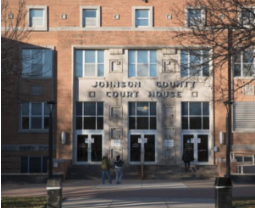
An approach to setting bail in Johnson County could spread across the state. NOMIN UJIYEDIIN / KANSAS NEWS SERVICE
The next day, you make your first court appearance in front of a judge, who then has to make a decision. Let you go home before trial — or keep you in jail? And under what conditions?
A pretrial stint in jail could last for weeks and keep you from your children, your car payments and your job. You could lose access to resources you need to win your case. You could spend sleepless nights in a crowded, dangerous, poorly maintained detention center — all without being convicted of a crime.
Unless, of course, the judge lets you bail out: pay a certain amount of cash, get released from jail, and get the money back if you show up for court.
But the amount might be too high for you to afford. So you might pay a bond company a nonrefundable percentage of your total bail. In return, that company bails you out — and hunts you down for the full amount if you skip your court date. Can’t rustle up the money for a bond company? Sit things out in jail.
Cash bail is supposed to ensure that you come back for trial. But the traditional bail system draws fire for discriminating against the poor and disproportionately affecting the livelihoods of racial minorities, who are already more likely to be arrested and charged with crimes.
Now Kansas courts want to rethink the concept. The Kansas Supreme Court has convened a task force of judges, attorneys and corrections officials to study pretrial reforms and submit recommendations in mid-2020. The state could eventually join California, New Jersey and others by overhauling its conditions for awarding bail in state courts.
“We need to find out what works best in our state,” said Judge Karen Arnold-Burger, chair of the Pretrial Justice Task Force and chief judge of the Kansas Court of Appeals. “Before we do something that’s going to completely disrupt someone’s life, and before they’ve been convicted of any crime, we want to make sure we know how we’re making the most educated decision.”
An ancient system
Bail originated in England centuries ago.
Both the U.S. and the Kansas Constitutions guarantee the right to bail in non-capital offenses — crimes not punishable by the death penalty.
Proponents of cash bail argue that it’s essential for keeping people out of jail and ensuring they still show up to their trial because bondsmen are inherently motivated to get their money back.
But tides have shifted in recent decades. Advocates who oppose bail say it discriminates against poor people by basing release decisions on a person’s ability to pay. Some say any form of pretrial detention violates the U.S. Constitution by imprisoning a person before they’re convicted.
The justice system and law enforcement also recognize that jail time can wreak havoc on the lives of people whose unproven charges are often low-level offenses that cause little or no harm to others. The effects are harder on the poor.
“There are lots of collateral consequences to periods of detention, even short periods of detention, from loss of jobs to loss of schooling, to loss of benefits, public assistance, veteran’s benefits,” said Arnold-Burger. “The list is long.”
A new way of assigning bail
One possible alternative is a statistics-based system already used by some of the most populous counties in Kansas. Data-based pretrial risk assessment takes information gathered from years of arrests and trials. It pinpoints which characteristics are related to two outcomes the corrections system wants to avoid: a defendant skipping their court date or committing another crime once they’re released on bail.
Depending on which factors they meet, defendants are assigned a risk level with a corresponding recommendation for a bail amount. In Johnson County, which has used a form of risk assessment since 2009 for minor crimes, that amount ranges from $0 to more than $50,000.
The county has had a custom risk assessment based on its own arrest data since 2014 and has revised it multiple times. County corrections director Robert Sullivan said the system is currently being used to assess people who have been charged with crimes that are likely to carry a sentence of probation, rather than prison. The county plans to expand the assessment to all detainees in February.
“What we’re trying to do is move away from basing release from jail on (a defendant’s) ability to make bond,” said Sullivan, “and base it more on a detainee’s risk of failing to appear for court.”
The county hired University of Missouri-Kansas City professor Alex Holsinger to develop the system. Holsinger analyzed data from 2011 and 2012 to find which characteristics were most related to a failure to appear in court or committing another crime.
Holsinger found that people who live outside of the state are more likely to skip court than people who live in Kansas. Prior arrests, substance abuse and being unemployed are other risk factors.
The nature of the charge also has an effect.
“If your charge is DUI related, that’s considered a risk factor. If it’s drug related, that’s considered to be even more of a risk factor,” Holsinger said. “Somebody who doesn’t have any (previous) jail time is considered less risky than somebody who does.”
The factors are tallied into a numerical score. That’s handed to judges, who decide whether to set cash bail or other conditions of release based on a defendant’s risk level and other factors.
The result is a system that recommends the highest cash bonds — of $50,000 or more — for people who are deemed to be “extreme” risk. That category includes those who are charged with felony crimes that are likely to carry a prison sentence if the defendant is found guilty.
Much lower amounts — between $0 and $2,500 — are recommended for people deemed “low,” “moderate” or “significant” risk. Those defendants are generally charged with misdemeanors, or felonies that carry a presumptive sentence of probation, rather than prison.
For example, a person who is charged with a misdemeanor DUI, who lives outside of Kansas but doesn’t have any other risk factors, would receive a score of 3. That means the person is considered “low risk,” and could be released, not on cash bail, but on a personal recognizance bond — a signature promising to come back.
But another person charged with the same crime might receive a higher score if they are unemployed, have been in jail before, have a history of substance abuse, live outside of Kansas, and were first charged with a crime below the age of 21 — all risk factors. That person would receive a risk score of 8 and would be considered “serious risk,” which carries a recommended bond amount of up to $2,500.
Holsinger said the scoring system helps judges make more objective decisions while still allowing them discretion.
“The risk assessment does not make the decision for anybody,” he said. “You still have professionals and human beings that are ultimately making and implementing the decisions.”
One of those professionals is Daniel Vokins, who has been a judge in Johnson County for more than 13 years. The score and the information provided by the risk assessment, he said, are a far cry from years past when defendants had to rely on defense attorneys to pass on information — that is, if they could even afford to hire one before their first court appearance.
“We didn’t have any information that zeroed in on what was going on in the defendant’s lives as far as work and home life,” Vokins said. “This tool gives us a lot more information, not only when they are in court for the first time, but even when I review cases to decide whether to issue arrest warrants or not.”
The results of the risk assessment help Vokins choose whether to assign a cash amount for bail or to let a defendant go on a personal recognizance bond — a signed promise to come back for trial. The facts provided also inform whether he’ll impose other pretrial conditions on a defendant, such as drug counseling, alcohol monitoring or house arrest.
Vokins said pretrial detention and high bail amounts are more appropriate for people who are charged with crimes like murder, sexual assault or repeated DUIs. People charged with low-level crimes pose a much smaller public safety risk if released.
“Let people out that need to be out,” he said. “Help them with any services that might be available to turn their lives around.”
‘Garbage in …’
But some critics of data-based pretrial risk assessments say the formulas don’t do enough to mitigate the negative effects of pretrial detention.
“We shouldn’t be judging people and making decisions about their freedom based on what other people have done in the past,” said John Raphling, a senior criminal justice researcher at Human Rights Watch.
Those critics say risk assessments can perpetuate racist and class-based biases built into the data. Because people of color and poor people are already more likely to be stopped by the police and arrested, Raphling argued, the data will reflect that they are more likely to re-offend or skip court if they’re let out on bail.
“The arrest history that’s used to estimate whether you’re going to commit a future crime or not is already biased out the gate,” Raphling said. “The theory is: ‘garbage in, garbage out.’”
He argues in favor of more individualized attention for each person who is arrested.
“There should be real due process,” Raphilng said, “not some hokey machine that the estimates the likelihood of them coming back to court.”
Holsinger, on the other hand, argues that degree of individual attention is impossible in a crowded court system.
“It’s not a therapy session,” he said. “Justice systems are typically very busy systems.”
He said he controlled for demographics in his statistical analysis, isolating variables affecting defendants’ likelihood of skipping court or committing another crime, regardless of characteristics such as race or sex.
Data provided by Johnson County show that between March 2016 and May 2017, 15 percent of white defendants were assigned a “low” risk level, 28 percent were assigned a “moderate” risk level and 57 percent were assigned a “high” risk level. Those proportions were almost exactly the same for black defendants, the only other racial group for which data was provided.
Next steps
Racial bias, public safety and reducing jail and prison populations will be on the minds of the members of Kansas’ Pretrial Justice Task Force as they develop their recommendations over the next year and a half. Data-based pretrial risk assessment is likely to be on the list of recommended reforms.
“There’s a wide range of approaches,” said Arnold-Burger, chair of the task force. “And we need to find out what works best in our state.”
Meanwhile, Holsinger has plans for another revision of Johnson County’s pretrial assessment.
After a few years, the data showed that a history of mental and behavioral health issues wasn’t as good a predictor of negative outcomes as Holsinger thought it would be. He plans to remove the mental health flag from the list of risk factors associated with skipping court and committing another crime.
“That’s a part of the ongoing evolutionary nature,” he said, “of this entire endeavor.”
MANHATTAN — Together, the Kansas Department of Agriculture and the Kansas Department of Commerce were recently awarded a $200,000 State Trade Expansion Program (STEP) Grant award for use in 2019. Since the grant’s inception in 2012, more than 100 Kansas small businesses have participated and achieved $23 million in actual export sales. To further broaden Kansas’ exporter base and to increase the export value and volume, the two departments have joined forces during the 2019 grant year to focus on three main areas: export training, foreign trade shows and trade missions, and market entry support.
The following KDA STEP Grant trade missions are planned for 2019. All dates are tentative.
• Thailand: livestock genetics/equipment and animal health sector, March 28-31, 2019
• Agritech Expo, Zambia: livestock genetics/equipment and animal health sector, April 11-13, 2019
• Foro Mascotas Pet Food International, Mexico: pet food and pet food manufacturing equipment, May 28-30, 2019
• AGRO 2019, Ukraine: agriculture equipment, June 4-7, 2019
Additionally, KDA has planned the following U.S. Livestock Genetics Export trade missions in 2019. The goal of these missions is to provide an opportunity for Kansas’ purebred cattle producers and allied industry to develop relationships with livestock producers to increase market opportunities for U.S. and Kansas beef and dairy genetics.
• La Exposición Rural and ranch visits, Argentina: late July 2019
• Expo Prado and ranch visits, Montevideo, Uruguay: mid-September 2019
Applications for trade missions are due approximately two months prior to tentative travel date. For additional information about the 2019 international travel opportunities, and to apply for any of the missions, please visit www.agriculture.ks.gov/international or contact Suzanne Ryan-Numrich, KDA international trade director, at 785-564-6704 or [email protected].
Total Kansas agriculture exports totaled $3.6 billion in 2017. KDA’s mission is to provide an environment that enhances and encourages economic growth of the agriculture industry domestically and internationally.
Hays – The TMP-Marina Monarchs basketball teams split a non-conference doubleheader with Abilene Friday at Al Billinger Fieldhouse.
Girls: TMP 44, Abilene 35
The TMP Lady Monarchs held Abilene scoreless for just over six minutes and twenty second in the third quarter while they built a double-digit lead on their way to a 44-35 win.
Rose McFarland postgame interview
Emily Schippers scored seven of the first nine points for the game as the Monarchs jumped out to a 9-2 lead to open the game. But the Cowgirls answered with a 9-0 run to end the first-quarter. They extended the run to 13-4 run to end the first-half to take a 15-13 lead into the break.
An Abilene free throw just 15 second into the second half gave the Cowgirls a 16-13 lead. The Monarchs scored 15 points over the next six minutes and twenty-one second to lead 28-16. Adell Riedel connected on a pair of three-pointers during the run and Jillian Lowe added a third three to put the Monarchs up 12.
After a brief Abilene run to cut the deficit to six but the Monarchs finished the quarter with four straight to lead by 10 at 32-22.
In the forth quarter the Monarchs built an 18-point lead before Abilene closed the gap to nine at 44-35.
Emily Schippers led the way for the Monarchs and tied for a game-high with Hannah Willey with 16 points each.
Game highlights
TMP improved to 9-4 on the season while Abilene dropped to 10-2.
Boys: Abilene 62, TMP 45
Abilene outscored the TMP 17-5 in the second quarter as they won their 10th straight game over the Monarchs in a 62-45 victory Friday.
Bill Meagher postgame interview
The Monarchs opened the game on a 4-0 run but the Cowboys stormed back with a 9-0 lead and lead 17-13 after the first quarter.
In the second quarter TMP cut the deficit to two on a pair of Jared Mayers free throws but the Cowboys answered with a 17-5 run and led 34-20 midway through the second quarter.
Abilene never trailed the rest of the way as they earned a 62-45 win.
Ryan Karlin led the Monarchs with 14 points and Jackson Schulte also finished in double-figures with 12.
Game highlights
TMP falls to 8-5 with the loss while Abilene improved to 9-4.
JOHNSON COUNTY—Law enforcement authorities are investigating the death of a a 75-year-old suburban Kansas City woman.
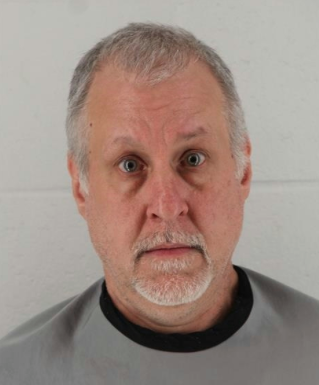
McMannes -photo Johnson County
Just after 3p.m. Wednesday, police responded to a home in the 300 Block of South Cardinal Drive in Olathe to investigate a medical call and a woman not breathing, according to a media release from police.
First responders determined that the woman had died. Her cause of death later was ruled a homicide. On Thursday, police arrested Raymond Thomas McMannes, 51, and booked him into the Johnson County jail, according to online booking records.
McMannes is being held on a $1,000,000.00 bond. His first court appearance is scheduled for 1:30p.m. Friday. Police have not released how the victim died or her name.
WASHINGTON (AP) — The Latest on the partial government shutdown (all times local):
Trump makes comments from the Rose Garden Friday afternoon-courtesy White House
9:25 p.m.
President Donald Trump has signed a bill that temporarily opens the federal government for three weeks, ending the longest shutdown in U.S. history at 35 days.
The White House says Trump signed the measure after the Senate and House each passed it Friday.
Trump backed down from his demand that Congress provide more border wall money before federal agencies get back to work. But he warns that the government could shut down again “if we don’t get a fair deal from Congress.”
He is also holding out the possibility of taking executive action.
The agreement to open the government came as about 800,000 federal employees missed their second consecutive paycheck.
As part of the deal, a bipartisan committee of House and Senate lawmakers is being formed to review border security recommendations.
___
7:55 p.m.
President Donald Trump is pushing back against criticism of his agreement to reopen the federal government without winning a promise of new funding for a border wall.
With even some conservatives casting the agreement as a retreat by the president, Trump is tweeting that it “was in no way a concession” on his part.
Trump says the deal will take care of millions of people who were getting badly hurt by the shutdown.
And he’s emphasizing that it was only done “with the understanding that in 21 days, if no deal is done, it’s off to the races!”
The shutdown was ending as Democratic leaders had insisted it must — reopen the government first, then talk border security.
As part of the deal, a bipartisan committee of lawmakers will consider additional border spending in the weeks ahead.
___
7:50 p.m.
President Donald Trump will not be delivering his State of the Union Address next Tuesday, even though the federal government is expected to be reopened by then.
Trump had postponed the joint address to Congress amid the partial shutdown. House Speaker Nancy Pelosi had suggested he do so and — after some high-profile back-and-forth between the two — the president ultimately agreed.
With Trump and congressional leaders reaching a deal Friday to reopen the government, the speech is expected to be rescheduled.
But it will not be next week as once planned, according to a person familiar with the planning but unauthorized to discuss it.
___
2:25 p.m.
President Donald Trump says he’ll sign legislation shortly to reopen shuttered government departments for three weeks — until Feb. 15.
Trump’s action would end what has become a record, 35-day partial shutdown.
Some 800,000 federal workers have had to work without pay or have been kept from doing their jobs as Trump and congressional Democrats were locked in a stalemate over the billions of dollars that Trump has demanded to build a U.S.-Mexico border wall.
Trump spoke at the White House on Friday as intensifying delays at some of the nation’s busiest airports and widespread disruptions brought new urgency to efforts to break the impasse.
PAWNEE COUNTY —Law enforcement authorities are investigating two suspects on drug charges after a traffic stop.
Jessica Hupp
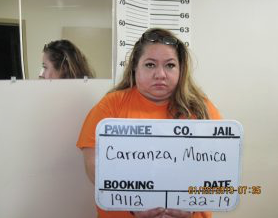
Jessica Hupp, 35 of Indio, California, and Monica Carranza, 48 of Coachella, California, were arrested without incident by the Pawnee County Sheriff’s Department January 22, 2019, following a traffic stop on a probable cause suspicion of possession of heroin and methamphetamine with intent to distribute. The K-9 unit was utilized in the search of the suspect vehicle, according to a media release from the Pawnee County Sheriff.
Following review of the probable cause affidavits, the Pawnee County Attorney’s Office charged Hupp with (1) Possession in excess of 100 grams of Heroin with intent to distribute; (2) Possession in excess of 100 grams of Methamphetamine with intent to distribute; (3) Possession of Methamphetamine; (4) Possession of Drug Paraphernalia, to wit: smoking device; and (5) Failure to Use Proper Turn Signal. Carranza was charged with (1) Possession in excess of 100 grams of Heroin with intent to distribute; (2) Possession in excess of 100 grams of Methamphetamine with intent to distribute; Possession of Methamphetamine; and (3) Possession of Drug Paraphernalia.
Under Kansas law, there is a rebuttable presumption of intent to distribute if any person possesses a quantity of at least 3.5 grams or more of heroin or methamphetamine. In addition to the two kilo of heroin and two and half kilos of methamphetamine being seized, the defendants’ rental vehicle and cellular telephones were also seized. The investigation remains open.
Monica Carranza photo Pawnee Co.
The defendant’s made their First Appearance in the Pawnee County District Court Friday morning (Jan. 25) and were advised by Magistrate Judge Dale Snyder that the distribution charges carry presumptive prison sentences of between 138 and 204 months on each count depending on their criminal history. Both defendants requested court appointed counsel.
Bond was set at $100,000 cash or surety. Judge Snyder also entered an order prohibiting the defendants from leaving the State of Kansas should they post bond.
Preliminary Hearings have been scheduled for February 8, 2019.


 Listen as the ‘Voice of the Chiefs’ Mitch Holthus recaps last week’s loss to the Patriots in the AFC Championship Game and puts a wrap on the 2018 season.





 Today
Today