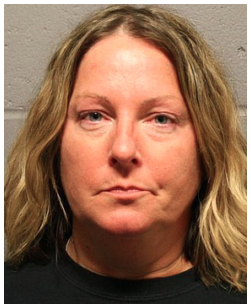
LAWRENCE, Kan. (AP) — A woman convicted in the killing of a 9-month-old boy at a Kansas day care has been sentenced to more than 10 years in prison.
Forty-five-year-old Carrody Melissa Buchhorn was found guilty in July of second-degree murder in the September 2016 death of Oliver Ortiz at the Sunshine Kids Group Daycare Home in Eudora.
She was sentenced Monday.
A coroner ruled Oliver’s death a homicide caused by blunt force trauma. He testified that Oliver had a fractured skull caused by enough force to make him immediately unresponsive and, without intervention, died within minutes.
Oliver’s parents last year filed a wrongful death lawsuit against the day care operators in whose home Oliver died, Gina Brunton and husband Morgan Eric Brunton. The court later approved a settlement.
The gas cloud in the air on the day of the incident.
TOPEKA, KAN. – An Atchison, Kan., company today pleaded guilty to violating the federal Clean Air Act and is expected to pay a $1 million fine, according to U.S. Attorney Stephen McAllister.
MGP Products, Inc. pleaded guilty to a misdemeanor offense of negligently violating the Clean Air Act. In its plea, the company admitted that on Oct. 21, 2016, a greenish-yellow chlorine gas cloud formed when 4,000 gallons of sulfuric acid were mistakenly combined with 5,800 gallons of sodium hypochlorite. The Atchison County Department of Emergency Management ordered community members to shelter in place and to evacuate in some areas. Approximately 140 individuals including members of the public, first responders, employees of MGP Ingredients and Harcos Chemicals sought medical attention.
Sentencing is set for Feb. 24. The company could be sentenced to a term of probation up to five years.
Victims can get more information on US v. Midwest Grain Products, Inc., by visiting https://www.justice.gov/usao-ks/victim-witness and filling out a victim questionnaire, leaving a message on a designated phone line at 913-551-6543 or emailing questions to [email protected] .
WICHITA, Kan. (AP) — An associate professor in Kansas accused of secretly working for a Chinese university contends in a court filing that a visiting scholar fabricated the allegations against him after unsuccessfully trying to extort him for $300,000.
Feng “Franklin” Tao photo courtesy KU
Attorneys for Feng “Franklin” Tao filed a motion on Sunday seeking to dismiss the federal indictment charging him with one count of wire fraud and three counts of program fraud. It alleges the Lawrence man was working full time for Fuzhou University in China while also doing research in Kansas on projects funded by the U.S. government and then failed to report it on a conflict-of-interest form.
Tao contended in his court filing that he never accepted the offer for a teaching position in China and therefore had no obligation to disclose it as a conflict to the University of Kansas.
The defense filing alleges that an unpaid visiting scholar was angry at Tao because she thought she should have received greater credit as a co-author on certain research manuscripts at the Kansas university. After Tao would not change the attribution, she demanded he pay her $300,000 or else she would falsely accuse him of economic espionage, his attorneys wrote.
That court filing also included as exhibits emails from the scholar, including one dated April 21 in which she wrote, “Do not consider it too much. You ruined my future.” Another sent the next day warned that “when anything that belongs to me is taken away, my counterattack will be very strong and very extreme.”
The woman filed authorship dispute complaints to the Office of Integrity and Compliance and with the university’s Internal Audit Office on June 4, and 15 minutes later emailed Tao saying, “it seems the term ‘tech spy’ is very popular nowadays. You should be careful. I have given you many chances and you didn’t care.”
Tao’s attorneys wrote in their court filing that the woman later admitted to the FBI that she hacked into Tao’s email account to fish for “evidence” she could provide the FBI. The defense contends she used phony aliases to make false complaints to both the university and to the FBI.
Her lies to the FBI “succeeded in wreaking her revenge,” Tao’s attorneys wrote. The FBI immediately opened a grand jury investigation, which culminated in Tao’s arrest and indictment. Rather than prosecuting the visiting scholar for extortion, false statements and computer fraud — and notifying Tao that he was the victim of a federal computer crime — the government instead charged Tau with fraud for failing to disclose to his university the job offer from China, according to the defense motion.
Jim Cross, the spokesman for the U.S. attorney’s office in Kansas, said in an email that prosecutors are evaluating the defense motion and will be responding in court.
The visiting scholar, who has not been charged with any crimes, did not respond to an email from The Associated Press seeking comment.
Tau, an associate professor of engineering at the University of Kansas, was born in China and moved to the United States in 2002. He has been employed since August 2014 at the Kansas university’s Center for Environmentally Beneficial Catalysis in Lawrence. The center conducts research on sustainable technology to conserve natural resources and energy.
Scene of the domestic violence incident under investigation photo courtesy KWCH
WICHITA, Kan. (AP) — Authorities say a man is suspected of shooting and critically wounding his girlfriend before fatally shooting himself in a Wichita home.
Wichita police said Monday the man involved in the Saturday night shooting was 23-year-old Brandon Sandoval. The woman’s name has not been released.
Wichita police said a man who lives in the home told police that Sandoval shot the 22-year-old woman during a fight. When officers got the woman on the phone, she told them she had been shot and then started screaming.
Police say as officers forced their way into the home, they heard another gunshot. The woman was suffering from a bullet wound to her abdomen and Sandoval was shot in the head. Police say his wound appeared to be self-inflicted. The roommate wasn’t hurt.
___
SEDGWICK COUNTY —Law enforcement authorities are investigating a domestic violence aggravated battery incident that left one dead and another critically injured.
Just after 11:15 p.m., Saturday, police responded to a domestic violence with a weapon call at a residence in the 2800 block of south Emporia in Wichita, according to officer Charley Davidson.
A 23-year-old male resident reported to officers a physical disturbance between a 22-year-old woman and her 23-year-old boyfriend and that during the disturbance, the woman’s boyfriend had fired a handgun toward her.
Upon arrival, officers were able to contact the woman by phone who reported being shot, and then the she began screaming in distress. Officers immediately made forced entry into the home, and they heard another gunshot. Officers located the woman with a single gunshot wound to her stomach and her boyfriend with an apparent self-inflicted gunshot wound to his head, and a 24-year-old male roommate who was not injured, according to Davidson.
Officers began lifesaving measures on the woman before she was transported to an area hospital in critical condition. Her boyfriend was pronounced dead on the scene.
Police have released not released the name of the victims or additional details.
SEDGWICK COUNTY—Law enforcement authorities are investigating how a sheriff’s department K9 got out of his enclosure Sunday and bit a boy Monday morning.
Bocephus photo Sedgwick County Sheriff’s Dept.
Just after 7:00 p.m., Sunday, a K-9 named Bocephus with the Sedgwick County Sheriff’s department wandered from his home in the area of 21st Street North and 119th Street West, according to Lt. Tim Myers.
Around 10:30 p.m., a citizen found the K-9 in the area of 2100 N. Parkridge in Wichita, according to Myers.
A citizen put the K-9 on a leash and walked around the neighborhood trying to locate the owner of the dog. No one in the neighborhood claimed ownership of the dog. The citizen returned home and the dog was placed in the bedroom of a 14-year-old boy.
At approximately 5:30 a.m., the 14-year-old was walking the dog in the neighborhood in the area of 2000 N. Parkridge. While the boy was attempting to remove the leash, the dog bit the boy on his chest and face, according to Myers.
The boy returned home, and the dog remained outside. At approximately 6:00 a.m., the K-9 handler located the dog.
The boy was taken by his mother to the Wesley Minor Emergency Clinic for his minor injuries and returned home, according to Myers.
Alberto Escartin Ramos / Polk County (Fla.) Sheriff’s OfficeLAKELAND, Fla. (AP) — Authorities in Florida say a man punched a Little League umpire and broke his tooth over a disputed call after a game.
The Polk County Sheriff’s Office says in a news release Monday that 22-year-old Alberto Escartin Ramos was arrested on a charge of felony battery of a sports official.
Deputies say Escartin Ramos disagreed with a call the umpire made during a game Friday night.
Deputies say after the game Escartin Ramos went to the clubhouse to complain to the umpire and started screaming at him. When the umpire asked Escartin Ramos to leave, they say he punched the umpire in the face, breaking a tooth and cutting his lip.
The online court docket showed no attorney for Escartin Ramos. He was released from jail on a $1,000 bond.
Just after 11:30p.m. Sunday, fire crews responded to report of a fire at a home in the 2000 Block of North Jackson in Wichita, according to Lt. Jose Ocadiz. The initial call indicated a victim was trapped in the residence.
Fire crews found the victim in a first-floor bedroom and were able to remove her from the home. EMS started life-saving measures but were unsuccessful.
The fire started in a laundry room, according to Ocadiz. The estimated dollar loss is $30,000 damage including $10,000 in contents. Authorities have not released the victim’s name.
KANSAS CITY (AP) — Authorities say an autopsy has found no signs of foul play in the death of a man whose body was found in a freezer in his wife’s bedroom inside the couple’s southwest Missouri home.
Watters photo Joplin police
Joplin police say the autopsy also confirmed that the man was Paul Barton, whose wife, 67-year-old Barbara Watters, is charged with abandonment of a corpse.
The body was found last week after a witness told police that Barton’s body had been in Watters’ freezer since his death on Dec. 30, 2018. No details were provided about how the witness knew the couple.
No charges have been filed in Barton’s death. Police said before Watters’ arrest on Thursday that she has unspecified “mental disorders” and is known to carry firearms. Police say the investigation is ongoing.
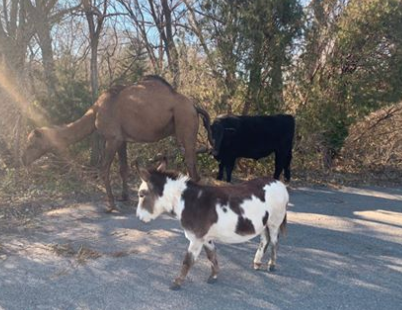
GODDARD, Kan. (AP) — Authorities have found the owners of a camel, cow and donkey that were spotted roaming together along a Kansas road in a grouping reminiscent of a Christmas Nativity scene.
Police in Goddard had asked for help over the weekend in a Facebook post locating the owners of the “three friends traveling together (towards a Northern star).” The post said that if police couldn’t find the owners, they would be “halfway toward a live nativity this Christmas season.”
No details were provided about the owners. And no one was immediately available at the police department to answer questions. Amid the search, one poster inquired, “Are there 3 wise looking men near?” Another said, “who knows, they may lead you to the second coming.”
KANSAS CITY— Additional charges have been filed against a former Kansas City Chiefs football player and eight co-defendants for their roles in a drug-trafficking conspiracy that operated primarily in Eastern Jackson County, according to the United State’s Attorney.
Saousoalii P. Siavii Jr., -photo Jackson Co.
Saousoalii P. Siavii Jr., also known as “Junior,” 41, of Independence, Missouri, was charged in a nine-count superseding indictment returned under seal by a federal grand jury in Kansas City, Missouri November 13.
The superseding indictment replaces the original indictment against Siavii and includes additional charges and eight additional defendants. The indictment was unsealed today following the arrests and initial court appearances of some of those defendants.
The federal indictment alleges that Siavii, along with Marion D. McCrorey, also known as “Doug,” 40, Andrew A. Tofaeono, also known as “Drew,” 35, Isaac M. Butler, 34, Michelle M. Andrews, 37, Katie M. Thompson, also known as “Muneca,” 25, Michelle L. Morris, 25, and James J. Leach, 39, all of Independence; and Kristannie Casteel, 31, of Blue Springs, Missouri; participated in a conspiracy to distribute methamphetamine from July 11, 2018, to Nov. 13, 2019.
In addition to the conspiracy, Siavii is charged with two counts of possessing a firearm in furtherance of drug trafficking. Siavii allegedly possessed a Sturm Ruger 9mm semi-automatic handgun on Aug. 4, 2019, and a Smith and Wesson 9mm semi-automatic pistol on Aug. 24, 2019.
Siavii and Andrews are also each charged with one count of being a drug user in possession of a firearm. Siavii allegedly possessed a Phoenix Arms .22-caliber semi-automatic pistol on April 7, 2019. Andrews allegedly possessed a Kel-Tec .380-caliber pistol July 10, 2019.
Siavii is also charged with two counts of possessing methamphetamine with the intent to distribute. Tofaeono is also charged with one count of possessing methamphetamine with the intent to distribute.
Leach is also charged with being a felon in possession of a firearm. Leach, who has prior felony convictions, allegedly possessed a Ward’s Western Field 12-gauge pump-action shotgun on Sept. 30, 2019.
According to an affidavit filed in support of the original criminal complaint, Siavii was arrested on Aug. 24, 2019. Independence police officers responded to parking lot on U.S. 40 Highway, where a witness said he located his friend’s stolen 2017 Jeep Wrangler Sport. The witness told police he saw a man, later identified as Siavii, getting out of the driver’s seat of the vehicle.
Officers contacted Siavii, the affidavit says, who disregarded their commands, and an officer deployed his Taser on Siavii. Siavii, who is six feet, five inches tall and weighs approximately 330 pounds, fell to the ground. Officers attempted to gain control as he began to actively resist arrest. Siavii began pushing himself up off the ground, at which time a loaded Smith and Wesson 9mm pistol fell directly in front of him within his reach
An officer drew his duty weapon and put it to Siavii’s back, due to him not being under physical control, while another officer grabbed Siavii’s firearm and threw it several feet away. Officers continued to fight with Siavii, the affidavit says, while giving him commands to stop resisting and to place his hands behind his back. An officer deployed his Taser on Siavii again with little effect. Siavii was able to get on top of the officer, who was on the ground at this point. Another officer was eventually able to put Siavii in a neck restraint and render him unconscious long enough to handcuff him. Siavii continued to resist even after being handcuffed.
In addition to the Aug. 24 incident, the affidavit cites several more incidents in which Siavii was arrested while in possession of illegal drugs and firearms. In one incident, when officers responded to a report of a stolen Chevrolet Silverado that was tracked by On-Star to a motel parking lot, Siavii attempted to flee on foot, then resisted arrest, and fought with officers. In another incident, Siavii led officers in a vehicle pursuit that reached speeds up to 101 m.p.h. Siavii’s vehicle eventually left the roadway and he fled on foot before being located by officers and taken into custody.
The charges contained in this indictment are simply accusations, and not evidence of guilt. Evidence supporting the charges must be presented to a federal trial jury, whose duty is to determine guilt or innocence.
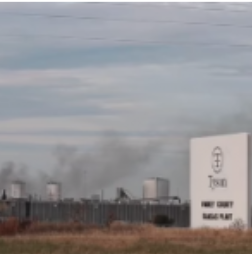
HOLCOMB, Kan. (AP) — A fire-damaged Tyson meat processing plant in Kansas is expected to resume operations in December.
Smoke rising from the Tyson plant fire in August photo courtesy Shrimplin Photography
Tyson announced Monday in a news release that reconstruction of the Holcomb plant is nearing completion. The company says it will begin processing beef again in the first week of December and be fully operational by the first week of January.
The fire started in August in an area of the plant near where animals are killed, causing part of the roof to collapse. Reconstruction included replacing support beams and the roof, as well as installing more than 50,000 feet of new wiring.
The plant employees about 1,200 people. The company says it continued to pay full-time workers during the shutdown.
Holcomb is located less than 10 miles west of Garden City.
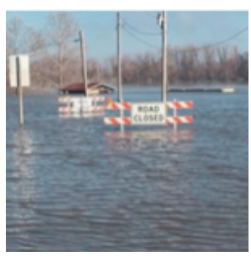
TOPEKA, Kan. (AP) — More than six months after floodwaters overwhelmed Lakeside Village’s well system, the roughly 150 residents of the northeast Kansas community drink, cook and bathe with water hauled in by the Kansas National Guard – up to 40,000 gallons daily.
It’s one example of the lingering damage from floodwaters that rose across Kansas and the region earlier this year. Lawmakers at the Capitol last week heard from state and federal officials who told them to be ready for more.
Kansas Adjutant General Lee Tafanelli said excess water that hasn’t evaporated, heavier snowfalls and early storms could set the conditions for a 2020 with more flooding.
This year’s floods damaged at least $15 million worth of infrastructure and generated $3.8 million in federal flood insurance claims.
National Weather Service meteorologist Chad Omitt said it’s hard to be sure whether Kansas can expect similar flooding in the coming years, but it’s important for the state to be ready.
“This is a land of extremes,” he said.
Earlier this year a March “bomb cyclone,” or a storm that grows quickly, rapidly melted snow and led to the wettest May in recorded Kansas history.
Areas that typically receive 4 or 5 inches of rain got 20 inches or more that month, driving more than 90 percent of the state’s monitored rivers above flood stage.
Floodwaters damaged 11 dams, mostly in eastern Kansas. Wastewater treatment facilities struggled to keep up, with some 1.3 billion gallons of sewage flowing into Kansas rivers and streams in May, according to the state Department of Health and Environment. Line breaks, water pressure loss and inundated wells prompted officials to issue 14 boil-water advisories.
Lakeside Village was one of three communities that had to find alternative water sources.
Village board President Jerry White said residents have been encouraged to conserve as much as possible. Water still comes out of the tap, but only because the National Guard brings in a fresh supply daily. It’s possible the community will get its well water back by the end of the year.
Annual average precipitation in the United States has increased by 4 percent since 1901, according to the congressionally mandated Fourth National Climate Assessment. The frequency and intensity of heavy rain is projected to continue increasing over the next century. Extreme rainstorms once expected every 25 years may occur every five or 10 years.
“It’s not just that, ‘Oh, it’s going to be wetter, or it’s going to be dryer.’ But it’s that the rain that does arrive is going to be arriving at different times in the year and at different intensities,” said Anna Weber, a senior policy analyst at the Natural Resources Defense Council, an environmental group.
Weber says governments need to examine whether infrastructure is built to handle a more punishing weather.
Senate Vice President Jeff Longbine, an Emporia Republican, chaired special committee last week that examined the Kansas floods. He said research shows more frequent flooding and flooding of longer duration.
Longbine said “I don’t think we know” when asked whether the floods are a consequence of climate change.
“We can often go from extremely rainy seasons to extreme drought very quickly. So it’s a matter of determining if there is anything we can do,” Longbine said. “We can’t legislate Mother Nature, but what we can do is be better prepared for the extremes.”
For decades, a university education meant students had to load up on math, history and English courses. Now, Kansas universities are slashing those general education requirements so more students can graduate on time and have more room for classes in their major.
This week, Wichita State University became the latest school to reduce how many gen ed classes their undergraduates need to take.
By cutting back on gen ed credits or ditching philosophy and history requirements in favor of specific goals, schools are hoping students can learn skills like ethical reasoning from an engineering course. But liberal arts professors warn the change will take away a core aspect of what a university education provides — a broad knowledge of the world that goes beyond what’s taught in their major.
“Our students will be less competitive, less prepared for the world that they enter when they leave here,” Wichita State University associate sociology professor Chase Billingham said at the faculty vote.
Cutting class
The main driver of Wichita State’s general education cuts is a requirement by the Kansas Board of Regents to reduce credit hours.
In 2017, the board made it their goal to cap most bachelor’s degree program requirements at 120 credits, the minimum needed for a degree. The majority of students fail to earn their degree in four years, forcing them to pay for an extra semester or more of school, so the regents think fewer classes will make it easier for students to graduate on time.
But an across-the-board general education wasn’t the target of the regents’ cap.
Fine arts and engineering faculty at Wichita State complained they already cut as many classes as they could and were still coming in above the credit limit. That’s why they believed general ed cuts should make up the rest.
“We have already cut to the bone our core course,” Wichita State voice professor Pina Mozzani said during the faculty vote. “Our students are going out impoverished in their own area.”
The regents have exempted engineering programs at state universities from requiring more classes, though engineering professors want gen ed cuts so they can put back in more of the major’s core classes.
Faculty pushing for the cuts also argued that Wichita State required 14 gen ed classes, which is more than other competing schools. But some liberal arts professors said their classes shouldn’t be viewed as a burden. Instead, they said, the classes should be celebrated as better preparing students for the post-college world by developing wide-ranging skills.
“I don’t want to get engaged in a race to the bottom,” said John Dreifort, a history professor at Wichita State. “We should still maintain that there are courses in a university that are important for an educated person to have access to.”
Some professors also expressed concern that fewer gen ed requirements would mean fewer students taking their classes. But they also worried that without general education, you end up with state vocational schools.
“This is Wichita State University,” associate history professor George Dehner said. “It’s not Wichita State Tech.”
Ultimately, many liberal arts professors at Wichita State supported the gen ed reduction, swayed by the argument that losing two classes was better than a proposal for four classes.
Professors also went into the vote expecting this to be the last time gen ed was touched for years, though some suggested this was just a patch job and a hard look at reshaping general education was still needed in the years ahead.
“It’s just a Band-Aid on what is a much bigger question about what general education should be in 2019 for our students,” said Aleksander Sternfeld-Dunn, the director of Wichita State’s school of music.
Rethinking requirements
One possibility for WSU’s future is taking a page from Kansas State: ditch the classic university model in which students take specific subjects offered by specialized departments, and instead have them focus on concepts.
In 2012, K-State overhauled its gen ed program (and the University of Kansas made a similar change in 2013). Students in Manhattan still have to take some liberal arts classes. But now a taxation class offered by the accounting department can count toward social science requirements. An animal behavior class from the agriculture department satisfies the empirical and quantitative reasoning goal.
K-State is still evaluating how effective the change has been, but the university said it has seen positive early results.
“It’s not impinging upon any one or two departments to teach all these classes,” said Brian Kovar, a member of the university’s general education council. “It really allows a lot of people to be involved in this.”
Elsewhere, Fort Hays State University is considering allowing some major classes to count toward gen ed, though its main focus is cutting down credits. Pittsburg State University cut gen ed credit this year, while Emporia State University is also looking to do the same.
Stephan Bisaha reports on education and young adult life for the Kansas News Service. You can follow him on Twitter @SteveBisaha or email him at bisaha@kmuw. org. The Kansas News Service is a collaboration of KCUR, Kansas Public Radio, KMUW and High Plains Public Radio focused on the health and well-being of Kansans, their communities and civic life.